

Islands destinationMontserrat IslandLesser Antilles | Caribbean Sea
Last updated on 10/02/2026 at 12:30 AM
Montserrat Island, nicknamed the « Emerald Isle of the Caribbean », is a small volcanic island located about 50 miles north of Guadeloupe, part of the Lesser Antilles arc in the Caribbean Sea. With its lush landscapes, rugged mountains, and history shaped by volcanic activity, Montserrat is a Caribbean destination well worth discovering!

Aerial view of Montserrat Island in the Caribbean © Axelspace Corporation sous licence Creative Commons
Soufrière Hills volcano and Plymouth
A volcano at the heart of the island
One of the main attractions in southern Montserrat remains its volcano, Soufrière Hills, which rises to 3,002 feet above sea level, although access to the southern part of the island is strictly controlled for safety reasons. Boat excursions offer an opportunity to observe the apocalyptic landscape left by the eruption and understand the impact of the volcano on the island's geography. The Montserrat Volcano Observatory (MVO) provides detailed information about volcanic activity and helps visitors better understand the natural phenomena that have shaped Montserrat.
Plymouth, a buried city
The eruption of Soufrière Hills, which began in 1995, profoundly transformed the island, particularly during the major event of June 25, 1997. The disaster forced more than half of the population to evacuate, with some relocating to the United Kingdom. Plymouth, once the administrative and economic center of Montserrat, was buried beneath volcanic material and largely destroyed by pyroclastic flows and mudflows laden with volcanic debris, known as lahars. The former capital is now an abandoned city, often compared to a modern-day Pompeii. Partially buried ruins remain visible and bear witness to the power of the eruption.
Lush nature in the north
Despite these hardships, Montserrat remains an island of spectacular beauty. The northern part of the island, which was unaffected by the eruptions, offers lush landscapes with mountains covered in tropical forests. Garibaldi Hill offers hiking trails through lush forests that are home to a rich variety of wildlife, with beautiful views of the island and the surrounding Caribbean Sea from the summit.
The island is also a haven for nature and biodiversity enthusiasts. Montserrat is known as a sanctuary for several endemic bird species, particularly the Montserrat oriole (Icterus oberi), the island's national bird.
Marine life and underwater landscapes
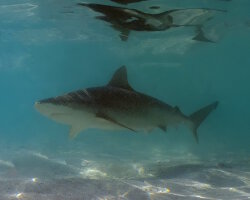
The marine life is just as rich, with coral reefs that attract scuba diving and snorkeling enthusiasts. The waters around Montserrat are home to a wide variety of tropical fish, sea turtles, and other species associated with reefs and rocky seabeds. Several dive sites also offer the opportunity to explore underwater landscapes shaped by volcanic activity.
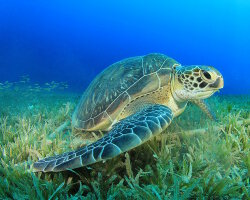
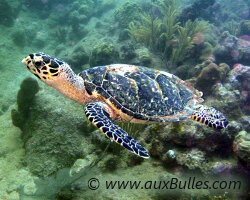
The coast of Montserrat also provides important habitats for sea turtles. The hawksbill sea turtle and the green sea turtle are among the species found in the waters around the island, while some beaches serve as nesting sites. The diversity of the seabed, from reefs and volcanic rocks to sandy areas, makes Montserrat an interesting destination for discovering the marine life of the Lesser Antilles.
Montserrat's heritage and culture
A history much older than the eruption
Montserrat's history is not limited to the eruption of Soufrière Hills. The island has a heritage dating back to the pre-Columbian era and preserves traces of centuries of human settlement. The Montserrat National Museum, located in Little Bay, presents elements of the island's history and culture from the earliest inhabitants to the modern era.
Archaeological research, particularly around Little Bay, has helped document Montserrat's past in greater detail. Several historic sites and remains associated with former plantations add to this heritage. These traces are a reminder that the island had a well-established history and social organization long before the Soufrière Hills eruption profoundly disrupted the lives of its inhabitants.
An island shaped by resilience
Today, life in Montserrat has largely been rebuilt in the northern part of the island, around small communities such as Brades, Salem, and Little Bay. This contrasts with the major resort destinations of the Caribbean: Montserrat retains a rural character and a more limited level of tourism, with an emphasis on nature, history, and local culture.
The landscapes themselves tell this recent story. In the south, valleys and former inhabited areas still bear the marks of volcanic activity, while the north retains forests, beaches, and villages. This contrast between land transformed by the volcano and preserved natural areas is one of Montserrat's distinctive features and largely explains its nickname, the « Emerald Isle of the Caribbean ».
How to get there ?
From Antigua
Getting to Montserrat primarily involves traveling through the island of Antigua, located about 40 miles northwest of Montserrat. Air services connect V. C. Bird International Airport in Antigua with John A. Osborne Airport in Montserrat. Several operators, including Fly Montserrat and SVG/BMN Air, serve this route, and flight frequencies may vary depending on the season and demand.
Be sure to check schedules when making your reservation, as air service can change. Montserrat authorities monitor air and sea connections and publish information about available services. It is therefore advisable to allow plenty of time between an international flight arriving in Antigua and your onward connection to Montserrat.
By ferry
A ferry service between Antigua and Montserrat has been offered at various times, particularly during certain tourist periods, but it has not operated on a permanent basis. The most recent temporary regular service ended in April 2024, and the authorities have continued to look for ways to strengthen the island's sea connections.
The situation is evolving, however. In September 2026, the Government of Montserrat issued a tender for a new passenger ferry service between Little Bay and Antigua, with a proposed operating period from December 2026 through May 2027 and a planned frequency of five to six days per week. If you are planning a trip to Montserrat, be sure to check the latest ferry arrangements before departure.
The marine species in Montserrat
Leeward and Windward islands
Anguilla island
Antigua island
Barbados island
Guadeloupe island
Nevis island
Saint Barthélemy island
Saint Kitts island
Saint Martin island
The islands from caribbean Sea
Aruba island

Cayman Brac island
Cayo Sombrero

Little Cayman island
Saintes island
Saona island
St. Croix island
St. Thomas island
Explore new islands


Our latestUpdates
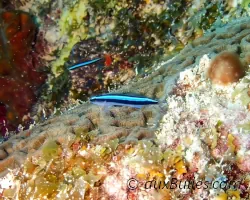
The neon gobyDiscover the neon goby (Elacatinus oceanops), a small western Atlantic reef fish known for its brilliant blue stripe and its role as a cleaner fish that removes parasites from other fish.Read more
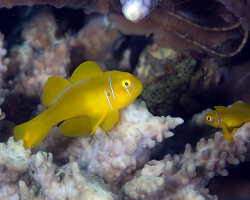
The poison gobyDiscover the poison goby (Gobiodon citrinus), a tiny reef fish with a bright yellow body and distinctive blue markings. It lives among branching Acropora corals in the tropical waters of the Indo-Pacific.Read more
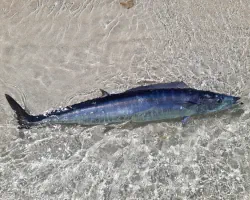
The wahooDiscover the wahoo (Acanthocybium solandri), a powerful pelagic predator found in tropical and subtropical oceans. Recognizable by its streamlined body and distinctive blue vertical stripes, it is a fast swimmer that feeds mainly on fish and squid.Read more
Photo of the Day

Anémone encroûtante
(Parazoanthus axinellae)
(Parazoanthus axinellae)
 Copyright © 2007-2026 auxBulles.com - All rights reserved. Legal notices.
Photo credits - Our partners