

Islands destinationLittle Cayman IslandCayman Islands | Caribbean Sea
Last updated on 08/31/2026 at 11:55 PM
Little Cayman island, the smallest and least populated of the three Cayman islands, is a true peaceful and wild oasis in the Caribbean sea. Located about 81 miles northeast of Grand Cayman island and only 5 miles from its neighbor, Cayman Brac island, Little Cayman stretches about 10 miles long and just 1.2 miles wide. Together with Cayman Brac, it forms what are known as the Sister Islands.
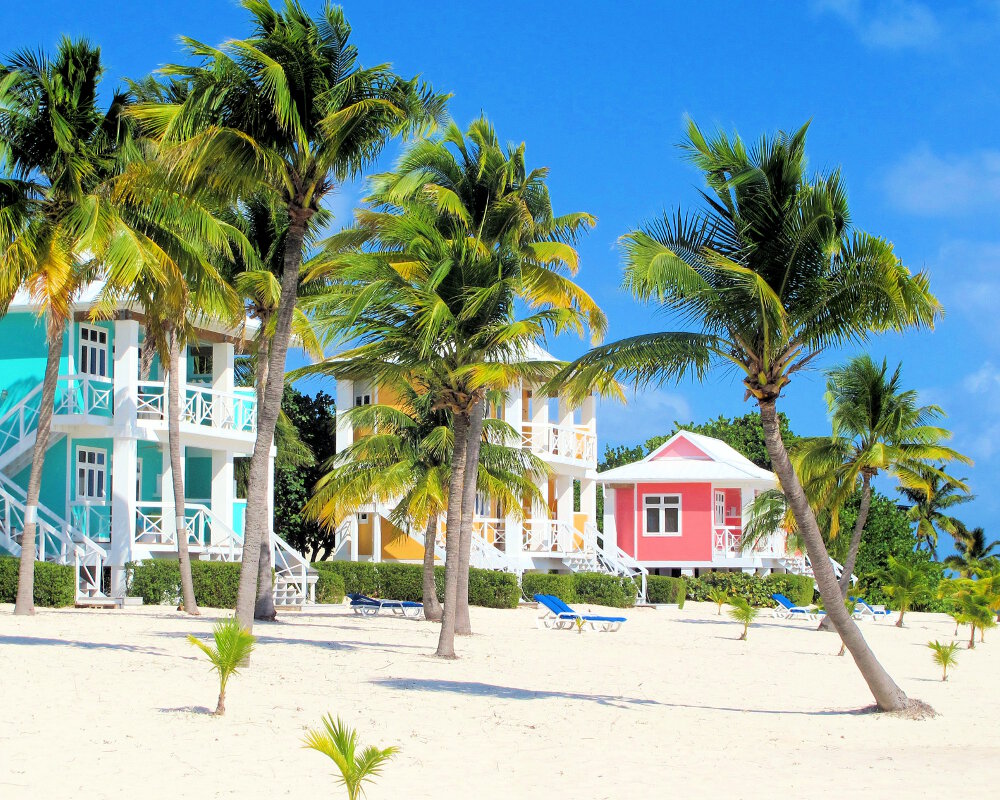
Little Cayman Island (Caribbean Sea) © Sandarina | Dreamstime.com
Little Cayman is a low-lying island, barely higher than sea level. Its environment is characterized by turquoise lagoons, lush mangroves and exceptional biodiversity both on land and in the water. The island is indeed surrounded by pristine coral reefs that shelter a wide variety of marine species.
With a population of only 200 residents, Little Cayman has managed to preserve its natural environment, exceptional wildlife and coral reefs. It remains a favorite destination for lovers of fine sandy beaches.
Booby Pond Nature Reserve
The protected nature reserve, « Booby Pond Nature Reserve », is a crucial nesting site for seabirds. It is home to one of the largest colonies of red-footed boobies (Sula sula) with over 4,000 residents in the Caribbean region, as well as frigatebirds and pelicans. It’s a must-visit spot for amateur birdwatchers and nature lovers.
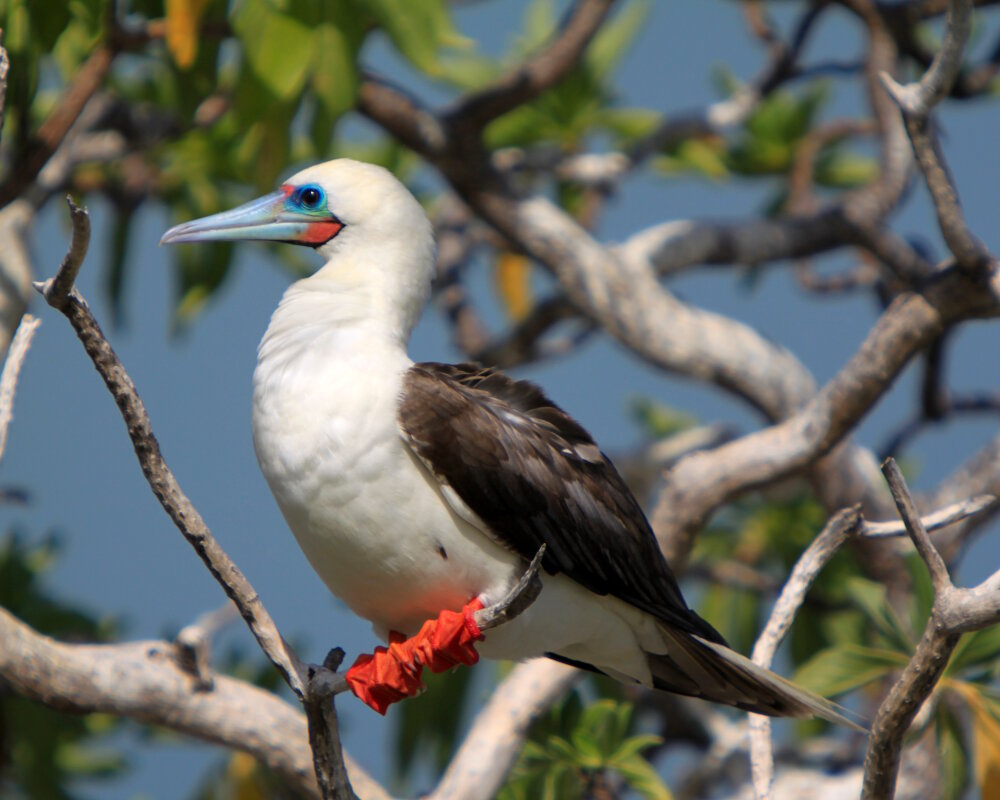
The red-footed booby is easy to identify thanks to its bright red feet © Natador | Dreamstime.com
A Robinson Crusoe experience
With its virtually deserted white sandy beaches, Little Cayman island is ideal for those seeking peace and tranquility. Owen island, a small uninhabited islet just a few hundred miles off the coast, is accessible by kayak and offers a Robinson Crusoe experience on its deserted island.
Water activities
The calm waters around Little Cayman island are perfect for kayaking or paddleboarding, allowing you to explore crystal-clear lagoons, hidden coves and mangroves while observing marine wildlife.
Where to dive ?
The economy of Little Cayman island is mainly focused on tourism, especially ecotourism and scuba diving. The clarity of the waters and the abundance of marine life make it a hidden paradise for divers !
Bloody Bay Wall
Bloody Bay Wall is a world-renowned dive site ! This spectacular underwater wall, with its sheer drop-offs and abundant marine life, offers an unforgettable experience for divers of all levels.
This dive site is located within the Bloody Bay Marine Park and features a coral-covered drop-off that descends to over 5,900 feet deep, where depending on the season, reef sharks, hammerhead sharks and eagle rays can be spotted in the open blue.
Jackson's Bight
Jackson's Bight is a great wall dive that features tunnels, chimneys and sponge-covered slopes. Expect clear waters and encounters with reef sharks and eagle rays.
How to get there ?
Little Cayman Island is primarily accessible by air from Grand Cayman. Cayman Airways Express operates inter-island flights to Edward Bodden Airfield, a small airstrip located in the heart of the island and designed for smaller aircraft. Flights are also available from Cayman Brac, making it easy to combine both Sister Islands, Cayman Brac and Little Cayman, during the same trip.
If you are arriving from abroad, you will generally need to travel to Grand Cayman before taking a connecting flight to Little Cayman. Allow at least 60 minutes for your connection to the second flight, operated by small aircraft capable of landing on the island's short runway.
You can also arrange a private boat transfer, but flying remains the fastest and most convenient way to reach Little Cayman.
Books
The marine species
Cayman islands

Cayman Brac island

Grand Cayman island
The islands from caribbean Sea
Barbados island
Petite Terre island
Saint Barthélemy island
Saint Martin island
Saona island
The Dominican Republic
U.S. Virgin islands
Virgin Gorda island
Explore new islands
Eleuthera island
Embiez island

Exumas islands
Golden island

Hawaii islands
Long Island
Mariana islands
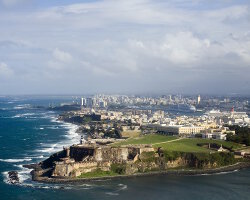
Puerto Rico island
Our latestUpdates
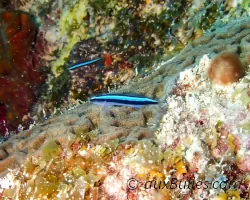
The neon gobyDiscover the neon goby (Elacatinus oceanops), a small western Atlantic reef fish known for its brilliant blue stripe and its role as a cleaner fish that removes parasites from other fish.Read more
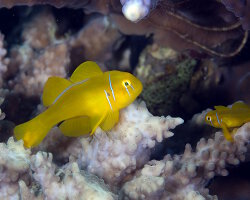
The poison gobyDiscover the poison goby (Gobiodon citrinus), a tiny reef fish with a bright yellow body and distinctive blue markings. It lives among branching Acropora corals in the tropical waters of the Indo-Pacific.Read more
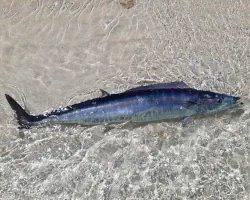
The wahooDiscover the wahoo (Acanthocybium solandri), a powerful pelagic predator found in tropical and subtropical oceans. Recognizable by its streamlined body and distinctive blue vertical stripes, it is a fast swimmer that feeds mainly on fish and squid.Read more
Photo of the Day

Fou à pieds rouges
(Sula sula)
(Sula sula)
 Copyright © 2007-2026 auxBulles.com - All rights reserved. Legal notices.
Photo credits - Our partners