Travel guideIsland hopping in the CaribbeanIsland hopping worldwide
Last updated on 08/01/2025 at 11:37 PM
The islands of the Caribbean sea stretch across thousands of miles, including a group of islands that forms an arc, known as the Antillean arc, which marks the boundary with the Atlantic ocean.
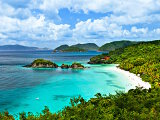
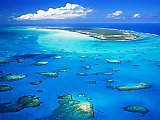
These islands offer incredibly diverse landscapes, ranging from white-sand beaches and turquoise waters to wide sugarcane plains and volcanic mountains covered in lush tropical vegetation. The surrounding coral reefs, some of the largest in the world, are home to a rich variety of marine life.
Shaped by European colonization and African influences, these islands are now a cultural crossroads where Creole, Latin and Indigenous traditions coexist.
The islands from Caribbean sea

Grand Cayman island

Cayman Brac island

Little Cayman island
Lesser AntillesThe Lesser Antilles are a group of islands divided into two main groups
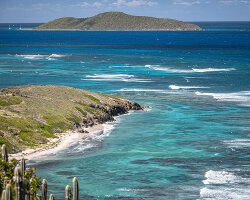
St. Croix island
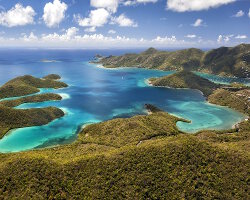
St. John island
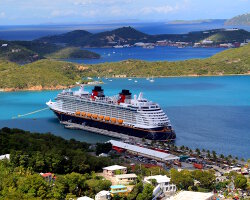
St. Thomas island
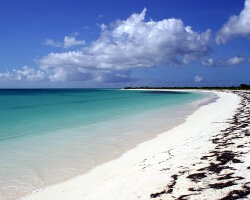
Anegada island
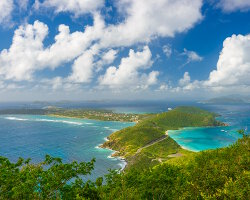
Virgin Gorda island
Leeward and Windward islandsThe Leeward and Windward islands (from north to south)
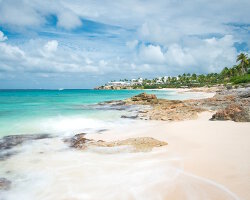
Anguilla island
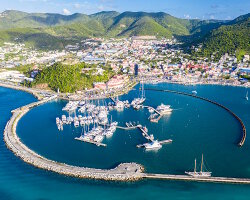
Saint Martin island
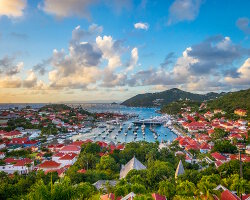
Saint Barthélemy island
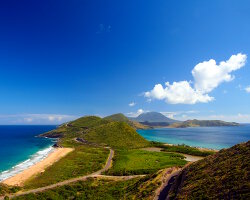
Saint Kitts island
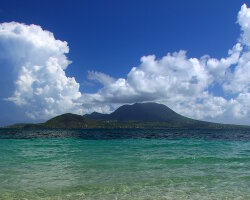
Nevis island
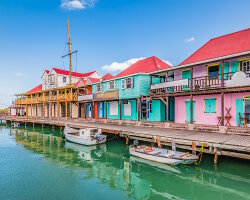
Antigua island
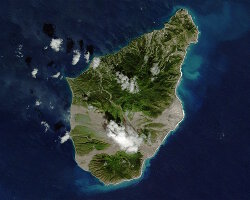
Montserrat island
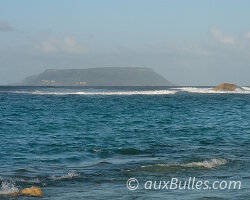
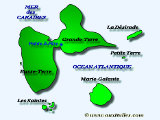
Désirade island
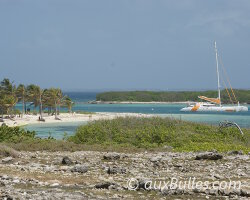
Petite Terre island

Saintes island
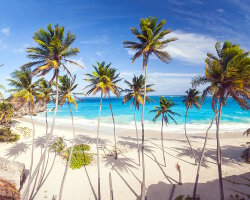
Barbados island
Leeward AntillesFrom east to west
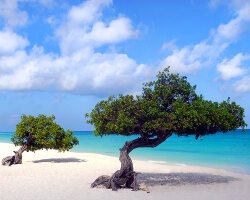
Aruba island