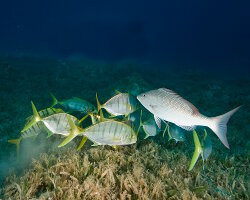
Sealife guideThe poison gobyGobiodon citrinus
Last updated on 10/16/2026 at 11:48 PM
The
poison goby (
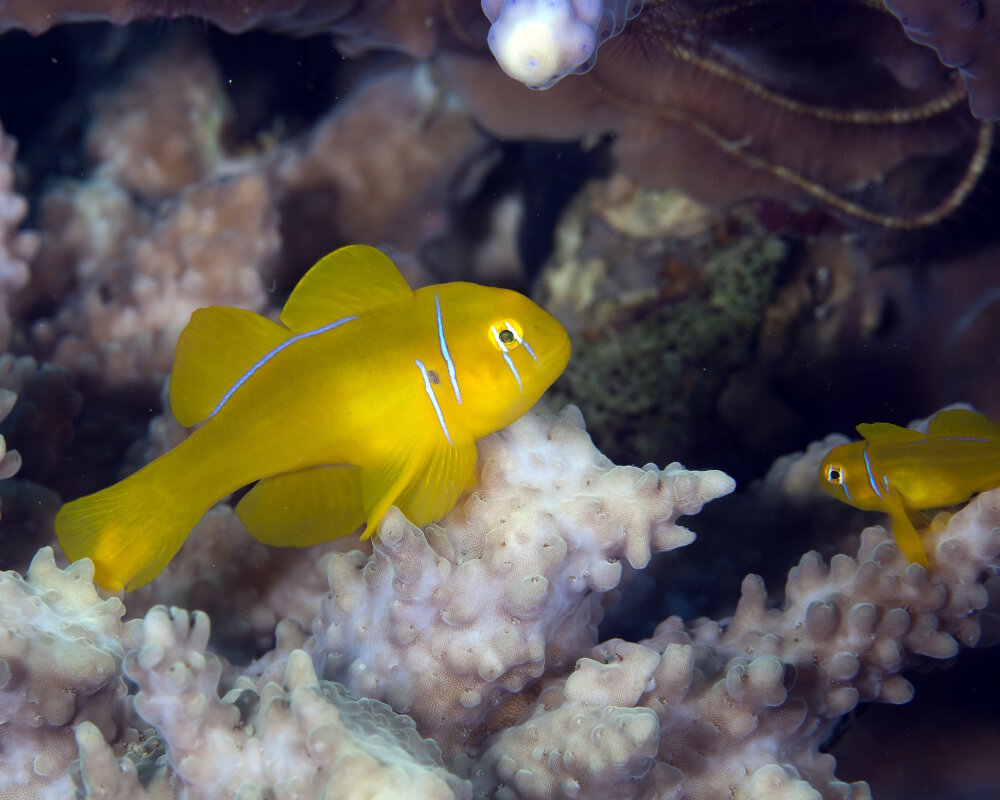
Gobiodon citrinus) is a small reef fish, recognizable by its yellow to yellowish-green coloration and the blue markings on its head. It lives in the tropical waters of the western Indo-Pacific, where it finds shelter among the branches of corals in the genus
Acropora.
Unlike many reef fish that frequently move between different shelters, this goby generally stays close to the coral it inhabits. It may live alone or in pairs and benefits from the protection provided by the coral's branching structure.
Taxonomy
English names
Poison gobyLemon coral goby
French namesGobie corail citron
Scientific nameGobiodon citrinus (Rüppell, 1838)
Description
The poison goby has a short, deep, laterally compressed body that reaches about 2.4 to 2.8 inches in length. Its coloration ranges from bright yellow to yellowish green and can sometimes be black. Two pairs of blue markings are distinctive: one crosses the eyes, while the other is located toward the back of the head. A blue line also runs along the base of the dorsal fin, and a small dark spot is visible above the base of the pectoral fins.
Its fins are relatively short, and its sturdy body allows it to move between coral branches. Like other members of its genus, it has no scales, and its skin is covered with protective mucus.
Geographic range
The poison goby inhabits tropical waters of the western Indo-Pacific, from the Red Sea and the eastern coast of Africa, including Mozambique, eastward to Samoa, north to southern Japan, and south to
Australia's
Great Barrier Reef.
The poison goby is found around Palawan in the Philippines and Zanzibar, Tanzania, among other locations, where coral reefs provide the branching corals on which it depends.
Habitat
The poison goby lives on tropical coral reefs, generally at depths of 6.5 to 66 feet. It is closely associated with branching corals of the genus
Acropora, whose branches provide shelter from predators. It often stays inside or very close to its host coral.
It may be observed alone or in pairs. Closely associated with branching corals, it finds shelter among their branches but depends on the presence of coral colonies suited to its needs.
Diet
The poison goby feeds on small invertebrates and tiny organisms in the water, particularly zooplankton. It finds food near the corals that provide shelter, allowing it to remain close to its refuge.
Reproduction
The poison goby is an egg-laying fish that deposits its eggs on a surface. Studies conducted in captivity have shown that the eggs are adhesive and remain attached to the substrate, where they are guarded by the parents. Several clutches may also be laid at intervals of a few days.
Did you know ?
The poison goby produces skin mucus containing toxic substances that may deter some predators. In gobies of the genus
Gobiodon, these secretions provide a form of chemical defense that complements the protection offered by the branching corals in which they live.
The poison goby is listed as many other marine species within The
IUCN Red List of threatened species. The poison goby appears in the
IUCN Red List since 2019 within the category Least Concern !
Within the same family
Arcfin shrimpgoby
(Amblyeleotris arcupinna)
Flagtail shrimpgoby
(Amblyeleotris yanoi)
Mural goby
(Valenciennea muralis)
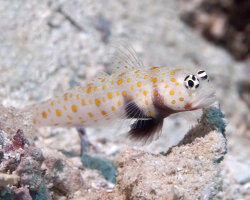
Orange spotted prawn goby
(Amblyeleotris guttata)
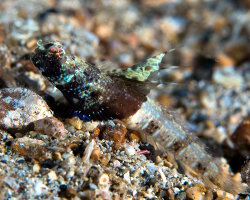
Scaleless shrimpgoby
(Tomiyamichthys nudus)
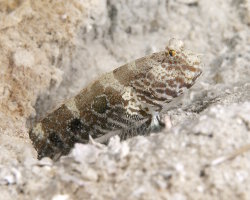
Target shrimp goby
(Cryptocentrus strigilliceps)
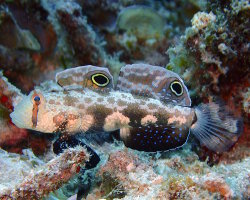
Twinspot goby
(Signigobius biocellatus)
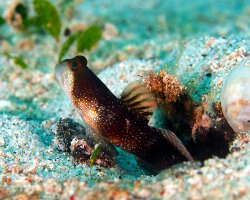
Y-bar shrimp goby
(Cryptocentrus fasciatus)
Discover also
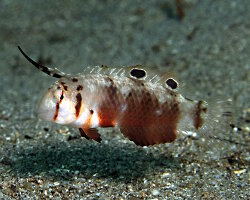
Blackspot razorfish
(Iniistius dea)
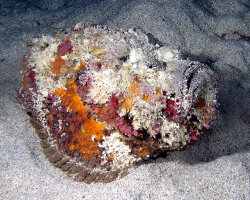
Common stonefish
(Synanceia verrucosa)
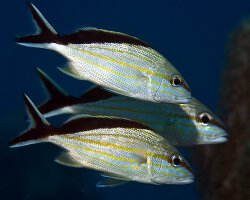
Cottonwick grunt
(Haemulon melanurum)
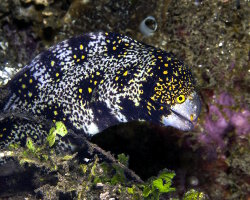
Snowflake moray
(Echidna nebulosa)
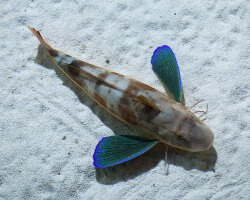
Tub gurnard
(Chelidonichthys lucerna)
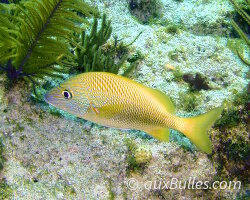
White grunt
(Haemulon plumierii)
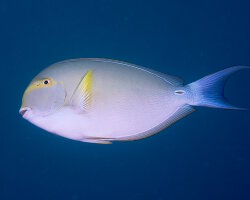
Yellowfin surgeonfish
(Acanthurus xanthopterus)
Zigzag wrasse
(Halichoeres scapularis)
The marine species in the western Indo-Pacific
Bengal snapper
(Lutjanus bengalensis)
Black-spot surgeonfish
(Acanthurus bariene)
Copperband butterflyfish
(Chelmon rostratus)
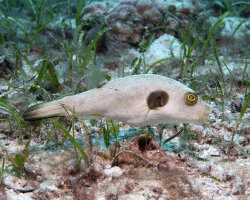
Immaculate pufferfish
(Arothron immaculatus)
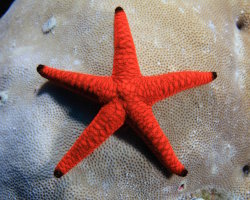
Indian sea star
(Fromia indica)

Orangespotted trevally
(Flavocaranx bajad)
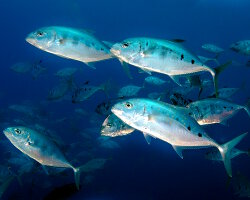
Yellowspotted trevally
(Turrum fulvoguttatum)