

Sealife guideRays: graceful gliders of the seaMarine vertebrates
Last updated on 08/22/2025 at 10:42 PM
Rays, just like sharks, are fish with the unique feature of having a cartilaginous skeleton. They are part of the elasmobranchs, a subclass of cartilaginous fish grouped within the class Chondrichthyes.
Classification
Rays are classified into three main orders, namely:
- the order Myliobatiformes13 species
- the order Rajiformes3 species
- the order Torpédiniformes6 species
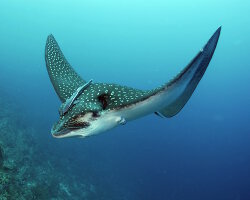
Atlantic white-spotted eagle ray
(Aetobatus narinari)
(Aetobatus narinari)
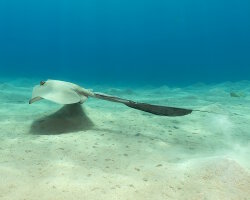
Fantail stingray
(Pastinachus sephen)
(Pastinachus sephen)
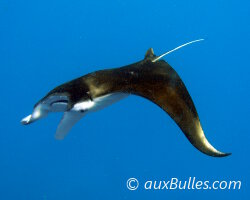
Giant manta
(Mobula birostris)
(Mobula birostris)
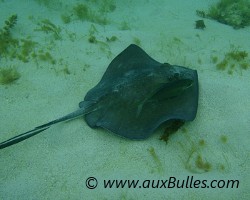
Southern stingray
(Dasyatis americana)
(Dasyatis americana)
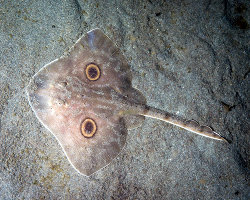
Big skate
(Raja binoculata)
(Raja binoculata)

Blonde skate
(Raja brachyura)
(Raja brachyura)
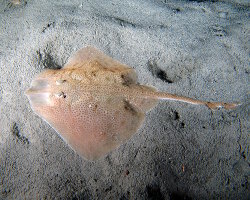
Thornback ray
(Raja clavata)
(Raja clavata)
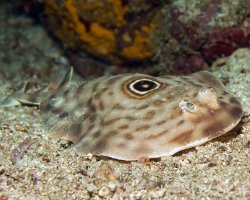
Bullseye electric ray
(Diplobatis ommata)
(Diplobatis ommata)
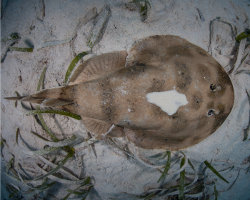
Lesser electric ray
(Narcine bancroftii)
(Narcine bancroftii)
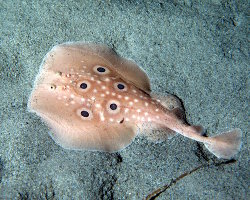
Ocellate torpedo
(Torpedo torpedo)
(Torpedo torpedo)
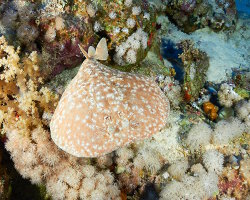
Panther electric ray
(Torpedo panthera)
(Torpedo panthera)
Description
Rays are characterized by a flattened body that extends on each side into large pectoral fins called “wings.” The body and pectoral fins form a single continuous structure. Unlike sharks, the gill slits are located on the ventral side of the ray and number five pairs for most species.
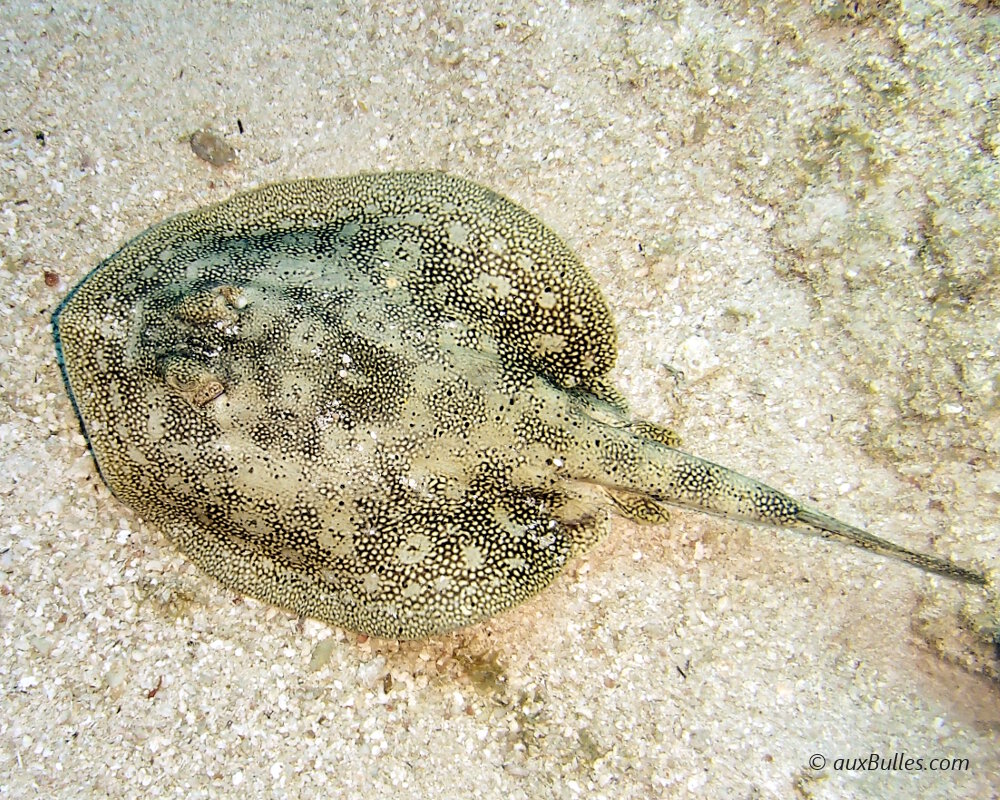
The yellow stingray has a flattened, oval-shaped body
Rays display colors and patterns that allow them to blend easily with their surroundings.
Geographic range and habitat
Rays are found in all seas and oceans across the globe, at all latitudes and depths: from warm tropical waters to icy polar regions, from shallow coastal waters and coral reefs to deep waters!
While most rays live on or buried in the seafloor, some species are pelagic, such as the manta ray or eagle rays.
Diet
Rays remain camouflaged in their environment to avoid predators and to ambush their prey more effectively.
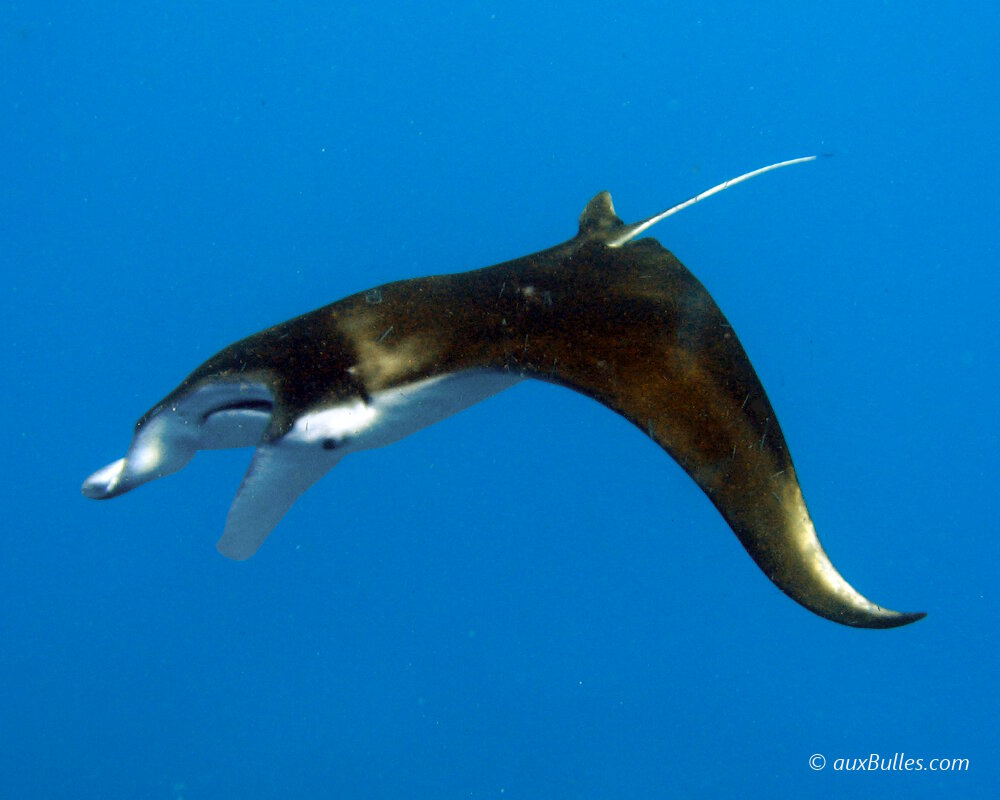
The manta ray feeds on plankton
Rays have a very varied diet. Their menu mainly includes benthic species such as gastropods, shellfish and crustaceans, while the manta ray feeds exclusively on plankton.
Reproduction
In most fish, fertilization is external, occurring after the release of male and female gametes into the seawater. However, rays, like sharks, are an exception to this rule and exhibit internal fertilization.
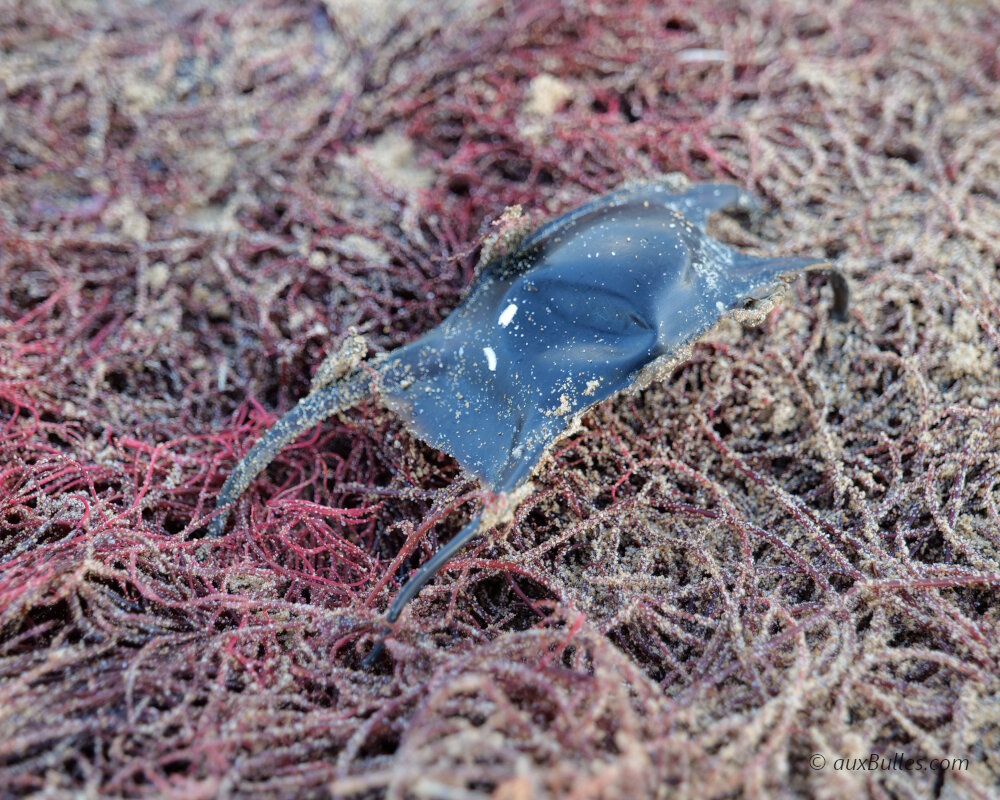
A ray egg case washed up on a beach in Vendée, France
All rays exhibit internal fertilization, but the development and nourishment of the embryo vary depending on the species. Some rays are oviparous, while others are ovoviviparous.
Did you know ?
- The manta ray is the largest ray in the world, reaching up to 30 feet in length for the largest individuals!
- Some ray species have a stinger at the base of the tail, whose sting can be painful and sometimes even lethal.
- Rays are capable of leaping out of the water !
Discover rays
Big skate
(Raja binoculata)
(Raja binoculata)
Black blotched stingray
(Taeniura meyeni)
(Taeniura meyeni)
Blackspotted electric ray
(Torpedo fuscomaculata)
(Torpedo fuscomaculata)
Blue spotted stingray
(Neotrygon kuhlii)
(Neotrygon kuhlii)
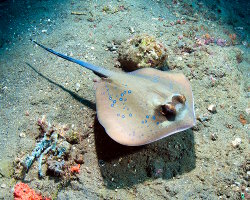
Bluespotted ribbontail ray
(Taeniura lymma)
(Taeniura lymma)
Bullseye electric ray
(Diplobatis ommata)
(Diplobatis ommata)
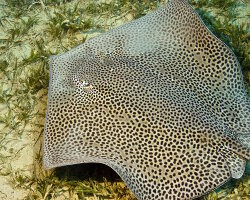
Darkspotted stingray
(Himantura uarnak)
(Himantura uarnak)
Giant manta
(Mobula birostris)
(Mobula birostris)
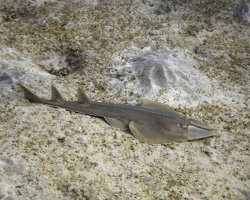
Halavi guitarfish
(Glaucostegus halavi)
(Glaucostegus halavi)
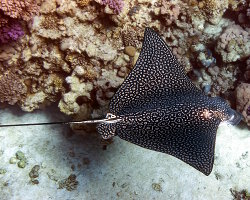
Ocellated eagle ray
(Aetobatus ocellatus)
(Aetobatus ocellatus)
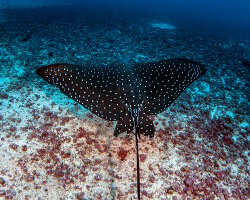
Pacific white-spotted eagle ray
(Aetobatus laticeps)
(Aetobatus laticeps)
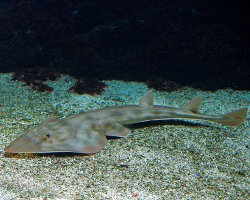
Shovelnose guitarfish
(Pseudobatos productus)
(Pseudobatos productus)
Southern stingray
(Dasyatis americana)
(Dasyatis americana)
Thornback ray
(Raja clavata)
(Raja clavata)
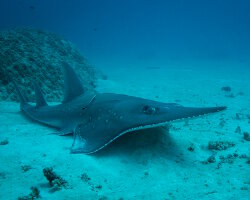
White spotted wedgefish
(Rhynchobatus australiae)
(Rhynchobatus australiae)
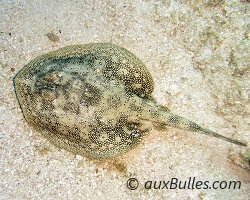
Yellow stingray
(Urobatis jamaicensis)
(Urobatis jamaicensis)
Our latestUpdates
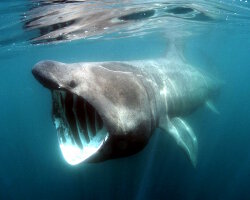
The basking sharkDiscover the basking shark (Cetorhinus maximus), the world's second-largest fish. This huge shark feeds on plankton by filtering large amounts of water.Read more
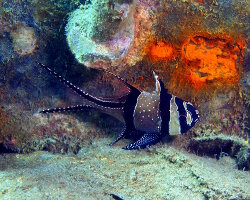
The Banggai cardinalfishDiscover the Banggai cardinalfish (Pterapogon kauderni), a small marine fish endemic to the Banggai Islands, known for its black-and-white stripes and unique reproductive behavior.Read more
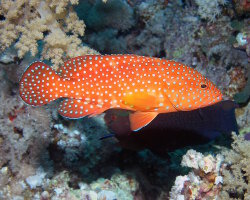
The coral hindDiscover the coral hind (Cephalopholis miniata), a colorful Indo-Pacific grouper known for its reddish-orange body covered with small blue spots.Read more
Photo of the Day
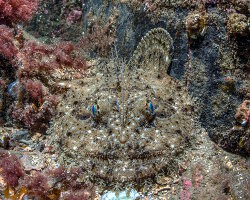
Baudroie commune
(Lophius piscatorius)
(Lophius piscatorius)
 Copyright © 2007-2026 auxBulles.com - All rights reserved. Legal notices.
Photo credits - Our partners