

Islands destinationVirgin Gorda IslandBritish Virgin Islands | Caribbean Sea
Last updated on 10/02/2026 at 12:30 AM
Virgin Gorda is the third-largest island in the British Virgin Islands, located in the Caribbean Sea, east of Puerto Rico. Famous for its stunning landscapes, spectacular rock formations, and pristine beaches, Virgin Gorda is a popular destination for travelers seeking peace and quiet, nature, and marine adventures.

Virgin Gorda Island (Mer des Caraïbes) © Sean Pavone | Dreamstime.com
A geological wonder
Virgin Gorda is home to idyllic beaches such as « The Baths », an iconic site featuring a maze of rounded boulders that divide the swimming area into numerous natural pools, as well as « Devil's Bay », a picturesque beach accessible by a trail from « The Baths » and offering an ideal setting for swimming and relaxing.
The Baths are a remarkable geological wonder on Virgin Gorda. These spectacular granite boulders, formed from volcanic rock and weathered over time, create seawater pools as well as intimate tunnels and caves flooded by the sea, where couples come to renew their wedding vows.
A contrasting landscape
Virgin Gorda was discovered by Christopher Columbus in 1493, who gave it its present name, « Virgin Gorda », meaning « fat virgin » in Spanish, referring to its shape, which reminded him of the body of a reclining woman.
Established in 1974, the Gorda Peak National Park is located in the central part of the island and protects one of the Caribbean's last remaining examples of dry forest. The national park offers hiking trails leading to the summit of Gorda Peak, which rises to about 1,365 feet above sea level, providing spectacular panoramic views of the island and the surrounding British Virgin Islands.
The park is home to endangered endemic plant species as well as the world's smallest lizard, the endemic Virgin Gorda gecko (Sphaerodactylus parthenopion) !
An island closely connected to the sea
With a population of about 4,000 and an area of roughly 8 sq mi, Virgin Gorda is a peaceful, sparsely populated island. Its residents are predominantly English-speaking, and their culture reflects a rich blend of African, European, and Caribbean influences.
The island is known for its laid-back atmosphere and a way of life closely connected to the sea, particularly through fishing and marine tourism.
The island's economic center and main port, Spanish Town, is home to shops and restaurants and serves as a starting point for exploring the island.
The nearby islets of Prickly Pear Island, Eustatia Island, and Moskito Island are ideally located for boat excursions, snorkeling, and other water activities.
How to get there ?
To reach Virgin Gorda, you can take a ferry from Tortola, the main island of the British Virgin Islands. Regular ferry services connect the islands, including routes to Spanish Town, with the crossing to Virgin Gorda taking about 30 minutes. You can also take a regional flight to Virgin Gorda Airport from some nearby Caribbean islands.
If you are traveling by boat, several marinas and anchorages welcome boaters wishing to explore the island and its famous rock formations.
Once there, you can easily get around by taxi or rental car to explore Virgin Gorda's beaches, natural parks, and iconic sites.
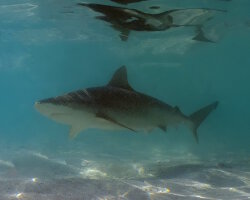
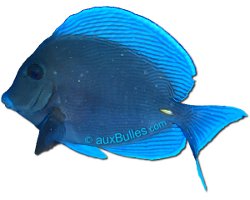
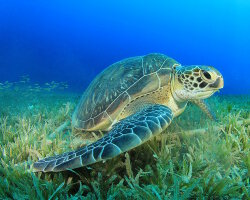
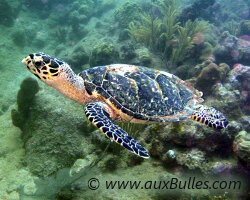
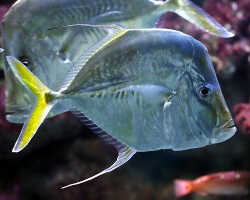
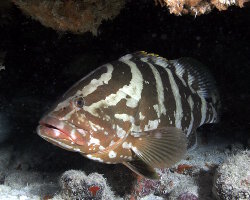
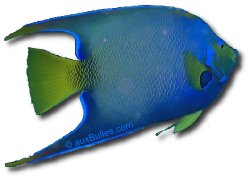
The marine species in the British Virgin Islands

The islands from caribbean Sea
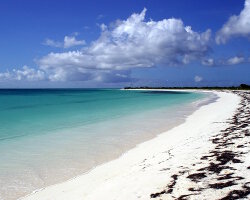
Anegada island
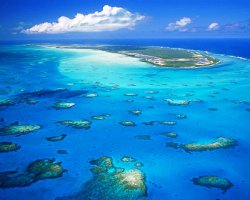
British Virgin islands

Cayman Brac island
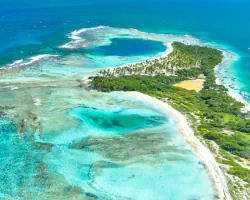
Cayo Sombrero
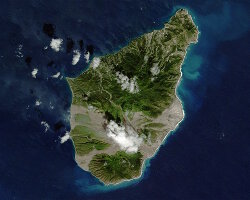
Montserrat island
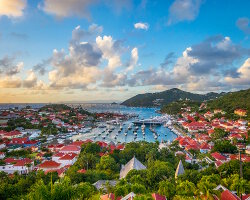
Saint Barthélemy island
Saint Martin island
Saintes island
Explore new islands

Our latestUpdates
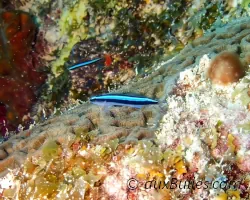
The neon gobyDiscover the neon goby (Elacatinus oceanops), a small western Atlantic reef fish known for its brilliant blue stripe and its role as a cleaner fish that removes parasites from other fish.Read more
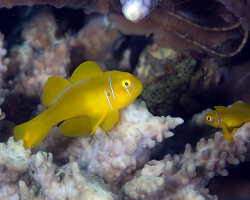
The poison gobyDiscover the poison goby (Gobiodon citrinus), a tiny reef fish with a bright yellow body and distinctive blue markings. It lives among branching Acropora corals in the tropical waters of the Indo-Pacific.Read more
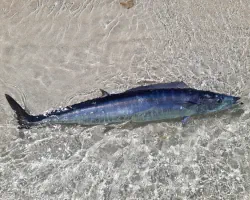
The wahooDiscover the wahoo (Acanthocybium solandri), a powerful pelagic predator found in tropical and subtropical oceans. Recognizable by its streamlined body and distinctive blue vertical stripes, it is a fast swimmer that feeds mainly on fish and squid.Read more
Photo of the Day

Anémone encroûtante
(Parazoanthus axinellae)
(Parazoanthus axinellae)
 Copyright © 2007-2026 auxBulles.com - All rights reserved. Legal notices.
Photo credits - Our partners