Sealife guideThe Caribbean king crabMaguimithrax spinosissimus
Last updated on 09/12/2026 at 01:31 PM
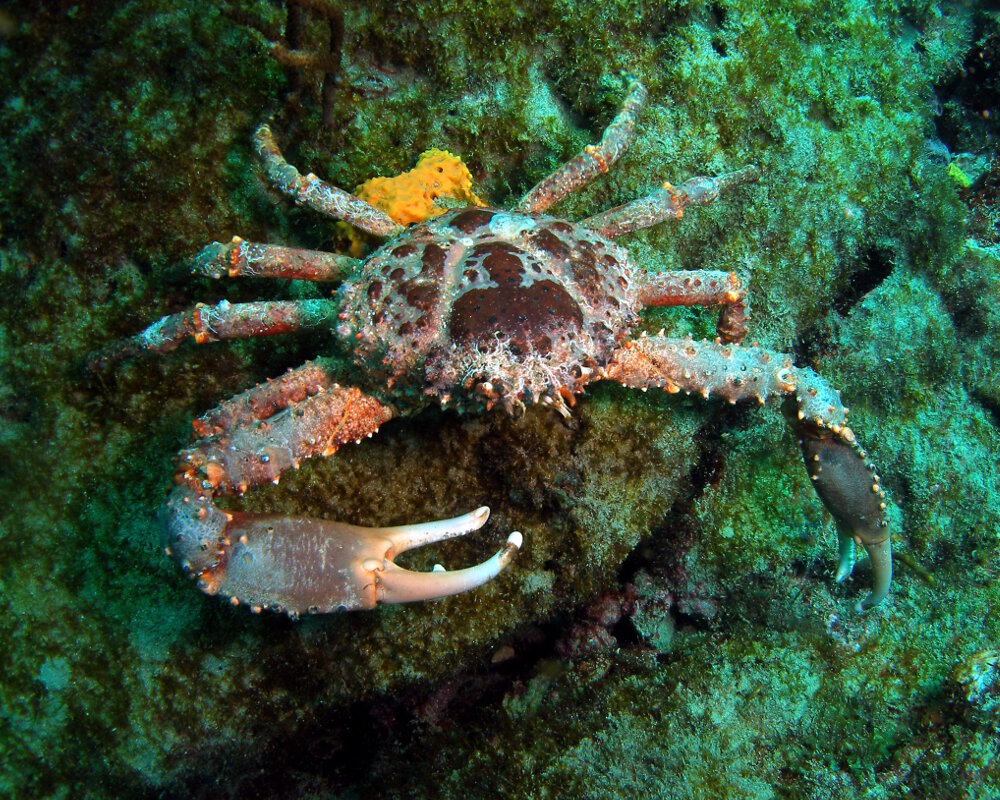
The Caribbean king crab, also known as the Caribbean king crab, is an impressive crab that lives in the tropical waters of the western Atlantic and ranks among the largest reef crabs in the Caribbean. Despite its spectacular appearance, with a shell covered in tubercles and spines, this reef giant often spends the day sheltered in crevices or beneath rocky overhangs. It nevertheless plays an important role in the ecosystem by consuming large quantities of algae that can compete with corals.
Taxonomy
- Common name: Caribbean king crab, West Indian spider crab, channel clinging crab, spiny spider crab
- French name: Crabe-araignée épineux, araignée de mer verruqueuse, crabe royal des Caraïbes
- Spanish name: Cangrejo rey del Caribe
- Scientific name: Maguimithrax spinosissimus (Lamarck, 1818)
- Family name: Mithracidae
- Order name: Decapoda
- Class name: Crustaceans [Malacostraca]
Description
The Caribbean king crab has a broad, rounded carapace that is slightly narrower toward the front, generally reddish brown to dark red with yellowish hues. Its surface is covered with numerous tubercles and large spines, while its long legs also bear numerous bumps and projections. The rostrum, located at the front of the carapace, is very short and deeply notched. Adult males are particularly large, and the largest individuals can have a carapace more than 7.5 inches wide.
Its two claws are relatively similar in size, unlike those of many other crabs in which one claw is noticeably more developed than the other. The claws of males are nevertheless more robust than those of females.
Geographic range
The Caribbean king crab inhabits the tropical and subtropical waters of the western North Atlantic, from
Florida and the
Bahamas throughout the Caribbean, including
Guadeloupe, Martinique, and Saint Barthélemy, south to Venezuela, as well as the Gulf of Mexico.
Habitat
The Caribbean king crab primarily inhabits rocky bottoms and coral reefs with abundant crevices and shelter. It seeks out cracks, cavities, and the undersides of overhangs where it can remain hidden during the day. It occurs in both shallow waters and depths of more than 330 feet.
Diet
The Caribbean king crab is primarily herbivorous. It grazes on a wide variety of algae that cover rocks and reefs. It can notably consume species of algae that some fish and other herbivores avoid because of their deterrent compounds or texture.
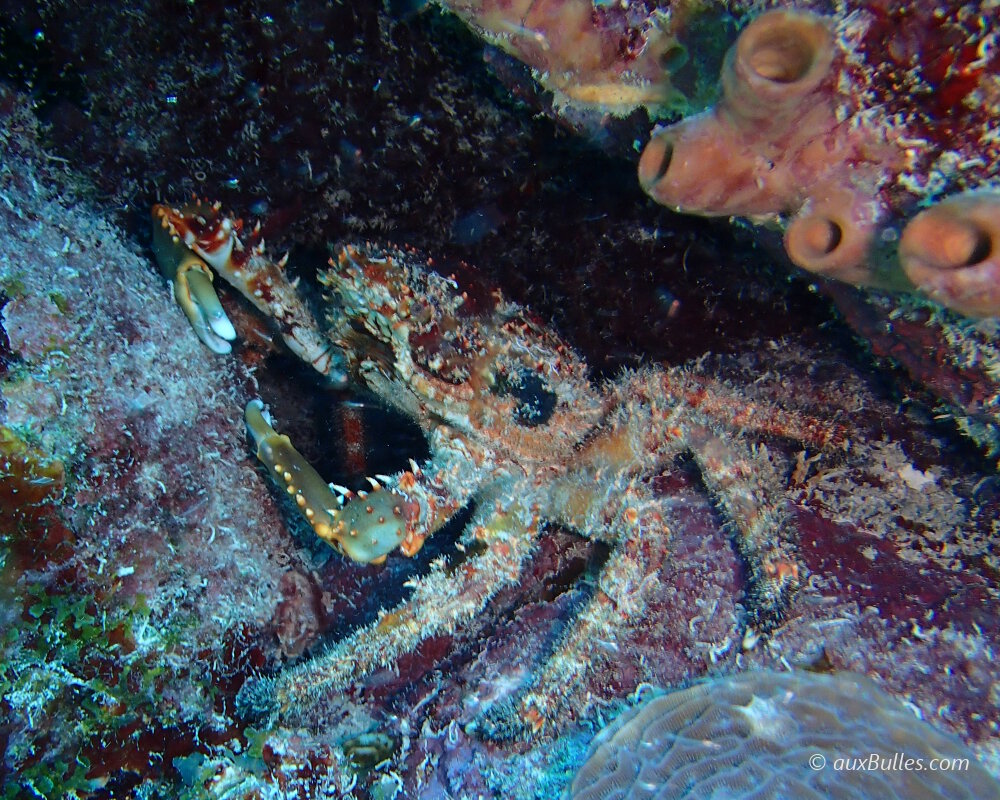
The Caribbean king crab (Maguimithrax spinosissimus)
Its diet is not exclusively plant-based, however. It can also opportunistically consume small benthic organisms, carrion, and debris. By consuming large quantities of algae, it therefore helps limit their growth on reefs.
Reproduction
Like other crabs, the Caribbean king crab reproduces by mating, after which the female carries the eggs beneath her abdomen until they hatch. When they hatch, young crabs first go through several developmental stages in the open water before gradually transforming into small crabs capable of living on the seafloor.
This relatively short developmental phase has attracted scientific interest in the semi-intensive rearing of this species in its natural environment, with the aim of contributing to coral reef restoration.
Did you know ?
Studies conducted in the
Florida Keys on the semi-intensive rearing of Caribbean king crabs for coral reef restoration have shown that by consuming large quantities of algae, they help limit its growth and leave more space for corals, thereby promoting their growth on reefs.
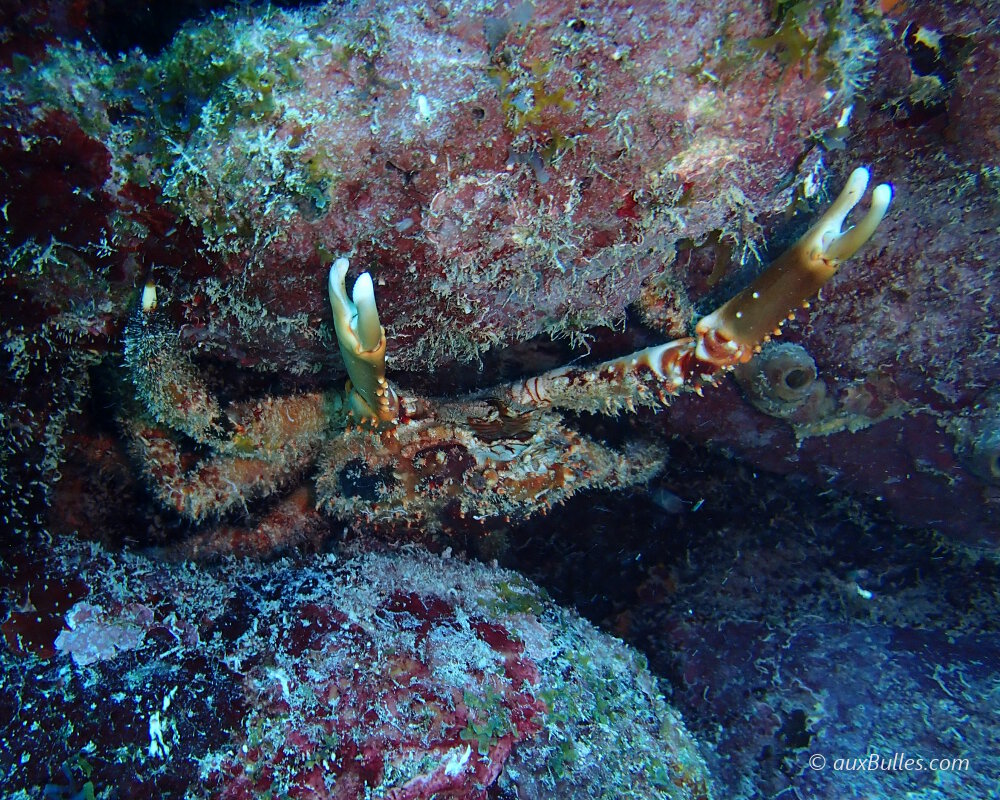
The Caribbean king crab (Maguimithrax spinosissimus)
Within the same family
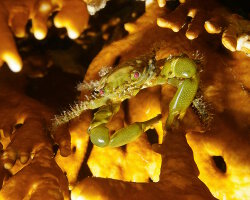
Green clinging crab
(Mithraculus sculptus)
Discover also
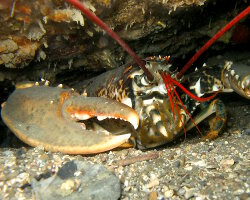
Common European lobster
(Homarus gammarus)
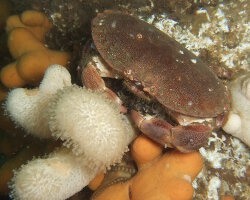
Edible crab
(Cancer pagurus)
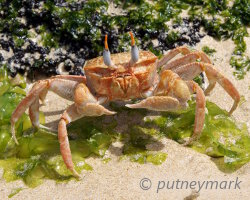
Ghost crab
(Ocypode gaudichaudii)
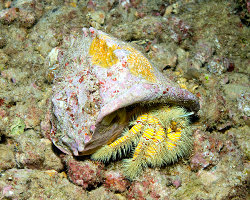
Hairy yellow hermit crab
(Aniculus maximus)
Long arm prawn
(Heteropenaeus longimanus)
Mottled lightfoot crab
(Grapsus albolineatus)
Red-eyed reef crab
(Eriphia ferox)
Red hermit crab
(Dardanus calidus)
The marine species in the Northwestern Atlantic
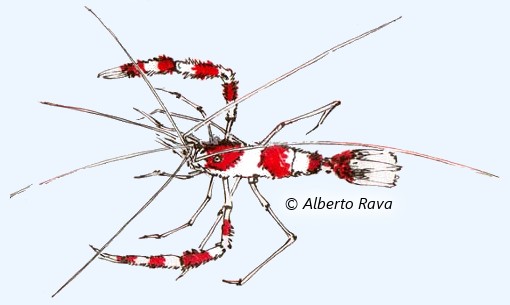
Banded cleaner shrimp
(Stenopus hispidus)
Giant caribbean anemone
(Condylactis gigantea)

Graysby
(Cephalopholis cruentata)
Green moray eel
(Gymnothorax funebris)
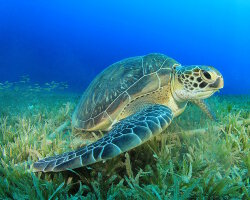
Green sea turtle
(Chelonia mydas)
Queen angelfish
(Holacanthus ciliaris)
Smooth trunkfish
(Rhinesomus triqueter)
Spotfin butterflyfish
(Chaetodon ocellatus)