

Sealife guideThe giant caribbean anemoneCondylactis gigantea
Last updated on 05/07/2026 at 10:12 PM
The giant Caribbean sea anemone is a tropical sea anemone living in the warm waters of the western Atlantic Ocean. Widely distributed in shallow reefs, it plays an important role in coastal ecosystems by providing shelter for many small marine animals while capturing its prey using its stinging tentacles.
Taxonomy
English names
Giant caribbean anemonePurple-tipped anemonePink-tipped anemoneHaitian pink-tipped anemoneGiant anemoneFlorida pink-tipped anemoneCondy anemone
French namesAnémone de mer géante des Caraïbes
Scientific nameCondylactis gigantea (Weinland, 1860)
FamilyActiniidae
OrderActiniaria
ClassAnthozoa
Description
The giant Caribbean sea anemone has a cylindrical body attached to the substrate by a pedal disc, while its upper part, the oral disc, is surrounded by numerous tentacles that can be very long and slender.

The giant caribbean anemone (Condylactis gigantea)
The giant Caribbean sea anemone shows a wide color variability, ranging from cream white to brown, as well as pink or purple shades. The tips of its tentacles may also display often pinkish or purplish coloration.
It can measure about 6 inches in height and up to 12 inches in diameter, giving it an impressive appearance for an anemone.
Geographic range
The giant Caribbean sea anemone, as its name suggests, is found in the tropical waters of the northwestern Atlantic ocean, mainly in the Caribbean sea, but also in the Gulf of Mexico, the Bahamas, and as far as southern Florida.
Habitat
The giant Caribbean sea anemone lives attached to hard substrates on rocky bottoms or coral reefs. It is mainly found in lagoons and shallow reefs where the water is well oxygenated and exposed to light, but it can also be observed in seagrass beds or sheltered coastal areas.
Diet
The giant Caribbean sea anemone is carnivorous. It captures small prey using its stinging tentacles. It mainly feeds on small fish, crustaceans such as shrimp, and zooplankton.
Some populations also live in symbiosis with microscopic algae that contribute to their energy supply through photosynthesis.
Reproduction
Reproduction in the giant Caribbean sea anemone is mainly sexual, with the release of gametes into seawater where fertilization occurs. The planktonic larvae then drift before settling on the seabed and developing into juvenile anemones.
In this species, reproduction can be seasonal but may also occur at low intensity throughout the year.
Did you know ?
The tentacles of the giant Caribbean sea anemone provide shelter for many small fish such as blennies and juvenile fish.
Discover also




The marine species in the Caribbean


Dive centers
'Les Ilets' dive center
Noa dive center

Our latestUpdates
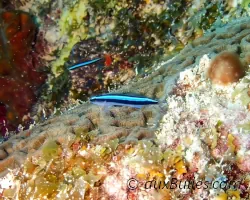
The neon gobyDiscover the neon goby (Elacatinus oceanops), a small western Atlantic reef fish known for its brilliant blue stripe and its role as a cleaner fish that removes parasites from other fish.Read more
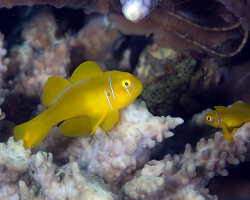
The poison gobyDiscover the poison goby (Gobiodon citrinus), a tiny reef fish with a bright yellow body and distinctive blue markings. It lives among branching Acropora corals in the tropical waters of the Indo-Pacific.Read more
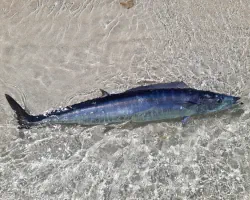
The wahooDiscover the wahoo (Acanthocybium solandri), a powerful pelagic predator found in tropical and subtropical oceans. Recognizable by its streamlined body and distinctive blue vertical stripes, it is a fast swimmer that feeds mainly on fish and squid.Read more
Photo of the Day

Fou à pieds rouges
(Sula sula)
(Sula sula)
 Copyright © 2007-2026 auxBulles.com - All rights reserved. Legal notices.
Photo credits - Our partners