

Sealife guideThe ocellate torpedoTorpedo torpedo
Last updated on 10/13/2026 at 12:52 AM
With its dark blue spots outlined in black, the ocellated electric ray (Torpedo torpedo) is hard to miss. But its real advantage is invisible: thanks to its electric organs, it can deliver shocks powerful enough to immobilize prey and defend itself.
It inhabits the eastern Atlantic and the Mediterranean Sea, where it often hides in the sediment to ambush the small fish it feeds on.
Taxonomy
English names
Ocellate torpedoCommon torpedo ray
French namesRaie torpille ocellée
Spanish namesTremolinaTembladorTembladera de lunares
Scientific nameTorpedo torpedo (Linnaeus, 1758)
FamilyTorpedinidae
OrderTorpediniformes
ClassElasmobranchii
Description
The ocellated electric ray has a flattened, thick body shaped like an almost circular disc, extending into a robust tail with two dorsal fins. Its back is generally reddish-brown, sometimes tinged with yellow, while its underside is whitish to cream-colored. It is most easily recognized by its dark blue eyespots, usually five in number, outlined in black and surrounded by a pale rim and a light beige halo. However, the number of eyespots may vary from one individual to another.

The ocellate torpedo (Torpedo torpedo) © Planctonvideo | Dreamstime.com
It typically measures between 12 and 16 inches in length, but the largest individuals can reach about 24 inches.
Geographic range
The ocellated electric ray is found in the eastern Atlantic, from the southern Bay of Biscay to the coast of Angola. It also occurs throughout the Mediterranean Sea. More common in tropical waters and the southern Mediterranean, it is also observed farther north, particularly along the French coast, where sightings are more sporadic.
Habitat
The ocellated electric ray lives close to the seabed, generally over sandy or muddy bottoms. It mainly inhabits shallow coastal waters, where it can partially bury itself in the sediment to remain hidden. It is usually found at depths of 6.5 to 230 feet, but may occasionally occur at depths of around 1,310 feet.
Its coloration and flattened body help it blend into soft-bottom habitats. It can remain concealed in sand or mud and ambush prey that comes close.
Diet
The ocellated electric ray feeds mainly on small bottom-dwelling fish, including soles, red mullets, and gobies. It also eats crustaceans, but in smaller quantities. Juveniles have a more varied diet than adults.
It is an ambush predator: it partially buries itself in sand or mud and waits for prey to approach. It then immobilizes its target with an electric shock before covering it with its body and swallowing it.
Reproduction
The ocellated electric ray is ovoviviparous: its embryos develop inside the female's uterus. They initially rely on the nutrients stored in their eggs and later receive additional nutrients produced by the mother. Fertilization is internal, and the young are born fully developed.
The female gives birth to a litter of 3 to 21 young, which measure about 3.5 inches at birth. The breeding season varies by region. In the eastern Mediterranean, mating takes place in winter, and births generally occur in late summer.
Did you know ?
The electric organs of the ocellated electric ray are located on either side of its head, beneath the skin. They consist of specialized cells arranged in stacked layers that can generate electric discharges of up to about 200 volts. These shocks allow the ray to immobilize prey and defend itself, but they can also cause a painful shock in humans.
The ocellate torpedo is listed as many other marine species within The IUCN Red List of threatened species. The ocellate torpedo appears in the IUCN Red List since 2021 within the category Vulnerable !
Within the same genus
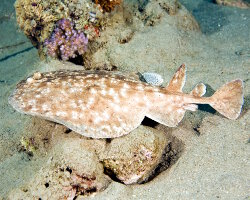
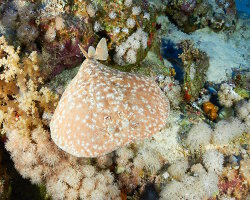
Discover also
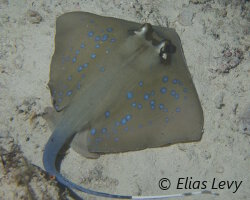
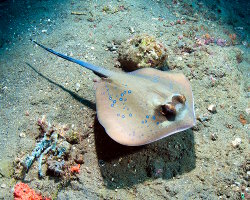


The marine species in the Mediterranean Sea
Our latestUpdates
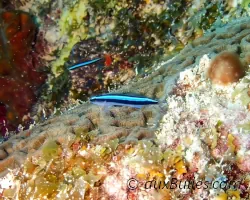
The neon gobyDiscover the neon goby (Elacatinus oceanops), a small western Atlantic reef fish known for its brilliant blue stripe and its role as a cleaner fish that removes parasites from other fish.Read more
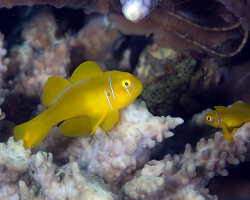
The poison gobyDiscover the poison goby (Gobiodon citrinus), a tiny reef fish with a bright yellow body and distinctive blue markings. It lives among branching Acropora corals in the tropical waters of the Indo-Pacific.Read more
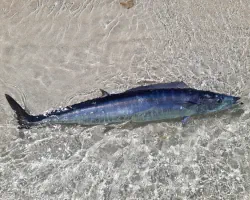
The wahooDiscover the wahoo (Acanthocybium solandri), a powerful pelagic predator found in tropical and subtropical oceans. Recognizable by its streamlined body and distinctive blue vertical stripes, it is a fast swimmer that feeds mainly on fish and squid.Read more
Photo of the Day

Fou à pieds rouges
(Sula sula)
(Sula sula)
 Copyright © 2007-2026 auxBulles.com - All rights reserved. Legal notices.
Photo credits - Our partners