Sealife guideThe black-faced blennyTripterygion delaisi
Last updated on 09/07/2024 at 01:43 PM
Taxonomy
- Common name: Black-faced blenny
- French name: Triptérigyon jaune
- Scientific name: Tripterygion delaisi (Cadenat & Blache, 1970)
- Family name: Tripterygiidae
- Order name: Perciformes
- Class name: Actinopterygii
Description
The black-faced blenny is a small fish that measures barely 4 inches in length. The black-faced blenny has an elongated, slender body topped with three dorsal fins.
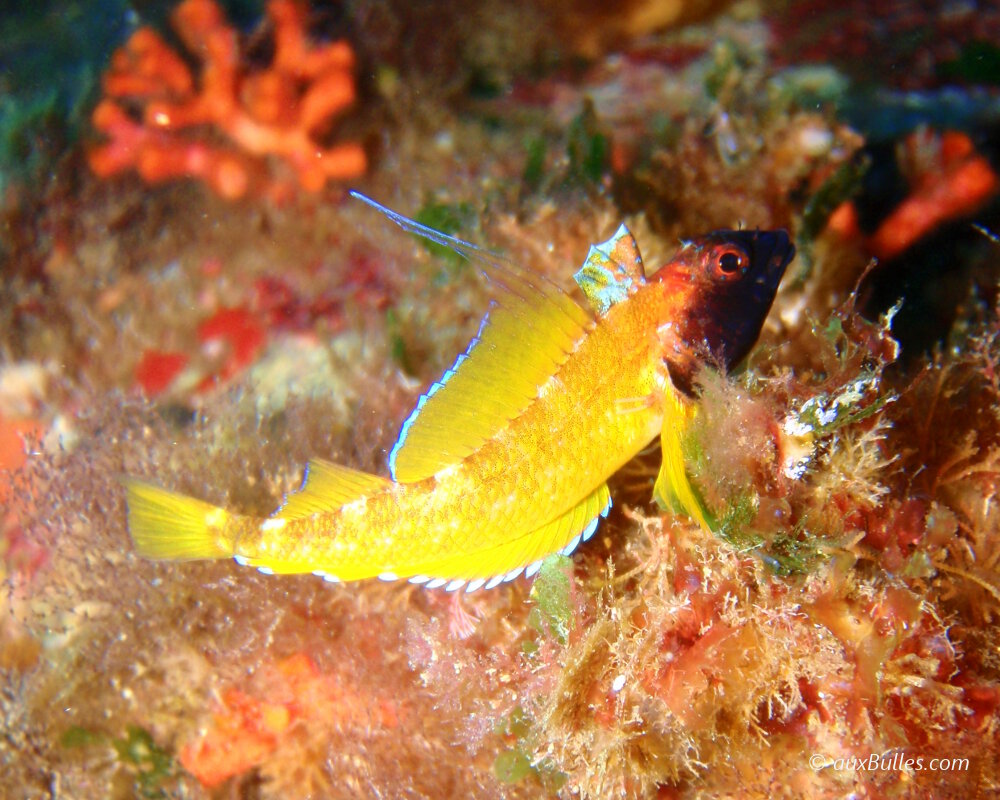
During the breeding season, the male black-faced blenny is distinguished by its black head, yellow body, and a thin blue stripe that adorns its dorsal fins
Geographic range
The black-faced blenny is found in the Mediterranean sea, the English Channel, the eastern Atlantic ocean and along the western coast of Africa as far south as Senegal, including Madeira and the
Canary islands.
Habitat
It is typically found from the surface down to a depth of about 130 feet but it is more commonly seen in shallow areas around 30 feet deep. The black-faced blenny lives along the coast on rocky bottoms, scree or at the entrances to rocky crevices.
Diet
The black-faced blenny primarily feeds on small
crustaceans.
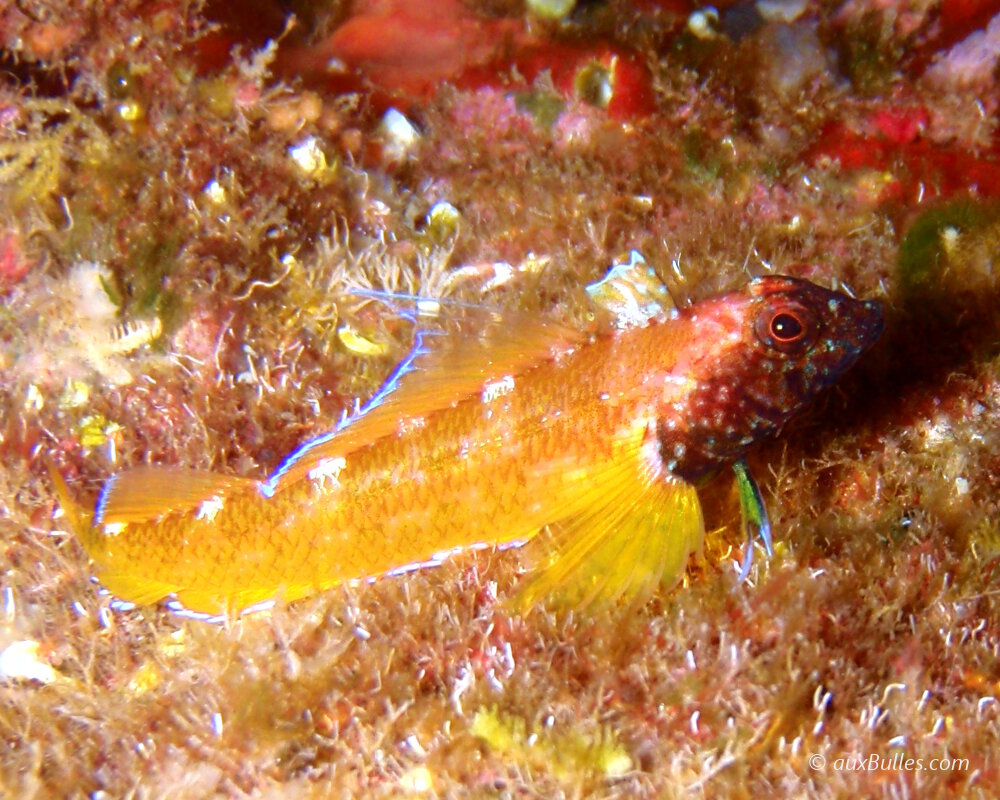
The black-faced blenny is particularly fond of shallow water
Reproduction
During the breeding season, the male dons its breeding colors which are characterized by a black head, a yellow body and a thin blue stripe that borders its dorsal fins.
Did you know ?
The black-faced blenny is listed as many other marine species within The
IUCN Red List of threatened species. The black-faced blenny appears in the
IUCN Red List since 2014 within the category Least Concern !
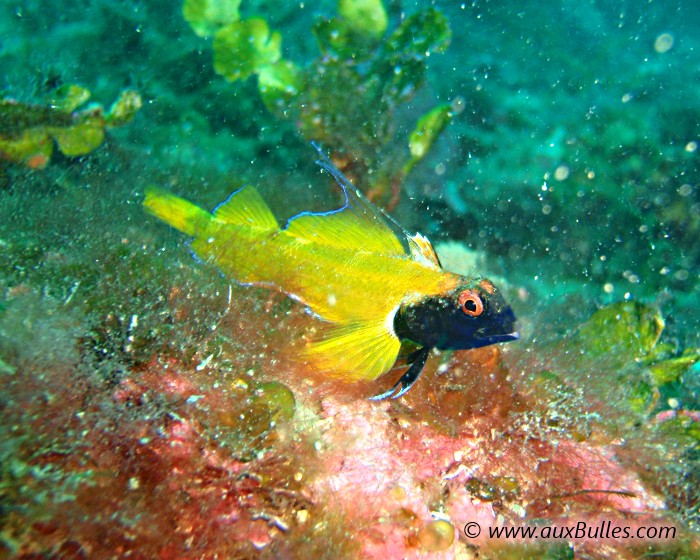
The black-faced blenny has an elongated, slender body topped with three dorsal fins.
Discover also
Black margate
(Anisotremus surinamensis)
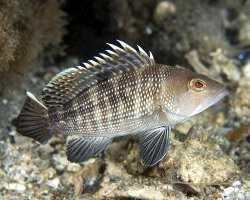
Black sea bass
(Centropristis striata)
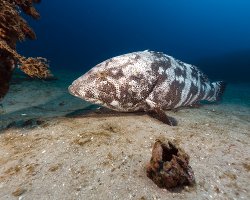
Malabar grouper
(Epinephelus malabaricus)
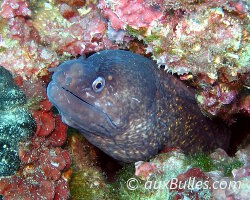
Mediterranean moray eel
(Muraena helena)
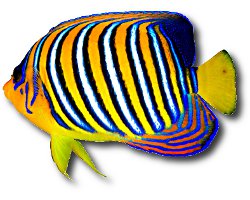
Royal angelfish
(Pygoplites diacanthus)
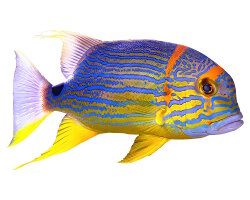
Sailfin snapper
(Symphorichthys spilurus)
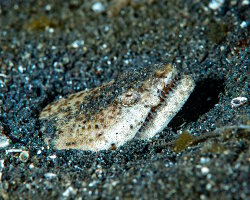
Stargazer snake eel
(Brachysomophis cirrocheilos)
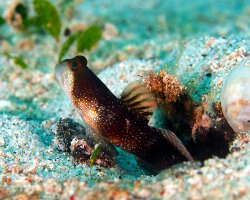
Y-bar shrimp goby
(Cryptocentrus fasciatus)
The marine species in the Mediterranean Sea
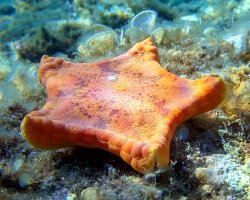
Biscuit sea star
(Peltaster placenta)
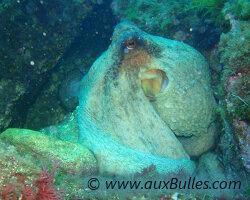
Common octopus
(Octopus vulgaris)
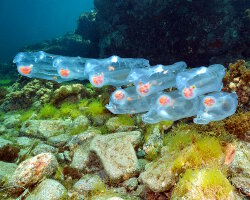
Giant salp
(Salpa maxima)
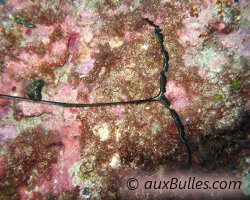
Green spoon worm
(Bonellia viridis)
Mediterranean moray eel
(Muraena helena)
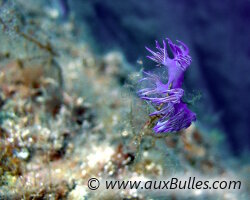
Pink sea slug
(Flabellina affinis)
Purse codium
(Codium bursa)
Salema
(Sarpa salpa)