

Islands destinationVulcano IslandAeolian Islands | Mediterranean Sea
Last updated on 10/06/2026 at 11:55 PM
Vulcano Island is one of the Aeolian Islands, north of Sicily in the Tyrrhenian Sea. Dominated by its Gran Cratere, it offers spectacular volcanic landscapes where dark rocks, fumaroles, and sulfur deposits meet the blue waters of the Mediterranean.
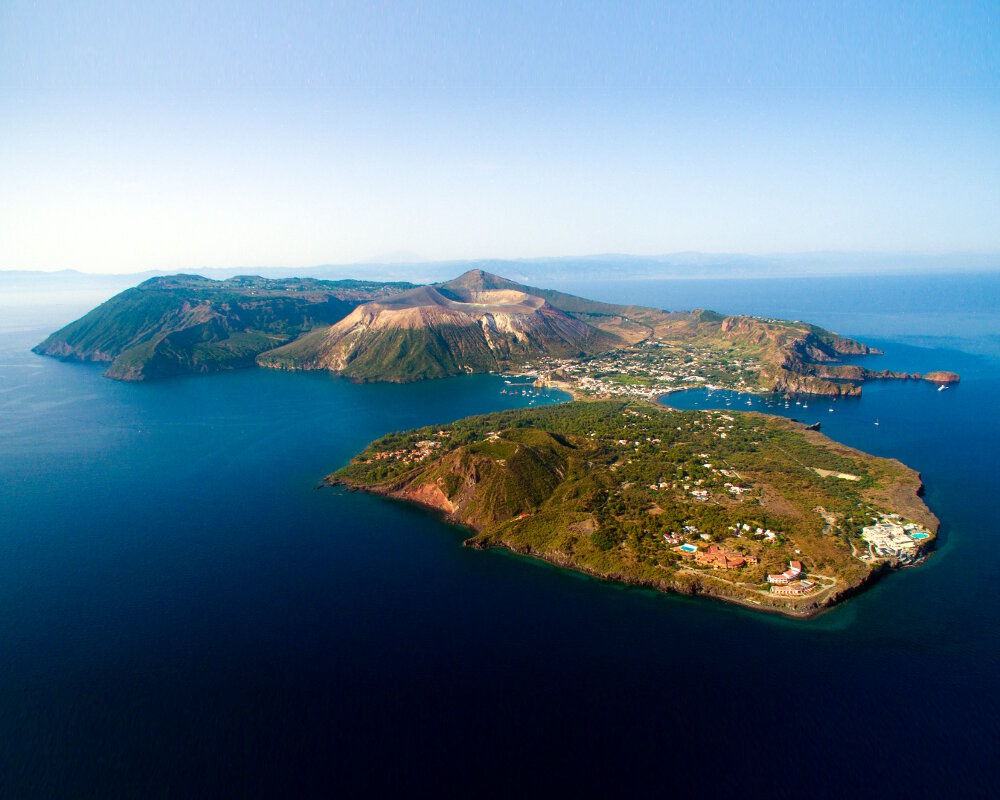
Vulcano Island (Mer Méditerranée) © Sverni | Dreamstime.com
Volcanic activity has shaped an island of contrasting landscapes, with craters, black-sand beaches, hot springs, and rocky coastlines. From Levante Bay to the Vulcanello peninsula, Vulcano offers an up-close look at the manifestations of a volcano that remains hydrothermally active.
Vulcano's gran cratere
A volcano at the heart of the island
The Gran Cratere of Vulcano dominates the island and is one of its main natural attractions. Rising to about 1,283 feet, it occupies a large part of the landscape and bears witness to the volcanic origins of the Aeolian Islands. The climb allows you to gradually discover an arid, mineral-rich landscape that differs greatly from the lush scenery of some neighboring islands.
The trail leading to the crater rim offers, in clear weather, sweeping views of Vulcano, the other Aeolian Islands, and Sicily's Tyrrhenian coast. The climb does require some effort, however, and it is best undertaken outside the hottest hours of the day, with suitable footwear and plenty of water.
Volcanic activity still visible today
Although Vulcano's last eruption dates back to 1888–1890, the volcano remains marked by hydrothermal activity. Fumaroles and steam emissions can be seen around the crater and in some coastal areas. The characteristic smell of sulfur is a constant reminder of the island's volcanic activity.
The area around the crater features a mineral landscape where the yellow and red tones of volcanic deposits contrast with the blue of the sea. This distinctive atmosphere sets Vulcano apart from the other islands in the archipelago and offers an up-close look at the manifestations of a volcano whose eruptive activity is now part of the past, while its hydrothermal system remains active.
Hot springs and volcanic mud
The thermal mud lagoon
In Levante Bay, Vulcano is known for its natural volcanic mud pool and waters influenced by hydrothermal activity. The site, known as Laghetto dei Fanghi, is fed by the volcanic phenomena that characterize this part of the island. The waters and mud are associated with a high concentration of sulfur, easily recognized by its characteristic smell.
The use of this mud as a thermal bathing site developed during the 20th century and is now one of Vulcano's signature experiences. Access and bathing conditions may change depending on volcanic activity and site protection measures, so it is best to check locally before visiting.
Fumaroles in Levante Bay
The Levante Bay also allows you to observe manifestations of hydrothermal activity along the shoreline. Fumaroles and areas of warm water are evidence of volcanic fluids circulating beneath the surface. This landscape is a reminder that Vulcano remains geologically active, even in the absence of a recent eruption.
This activity also extends beneath the sea, where hydrothermal emissions can be observed in certain areas. Geothermal phenomena are therefore an integral part of Vulcano's landscape and help explain the island's distinctive character, shaped by the combination of volcano, sea, and hot springs.
Vulcanello and the lava landscapes
The Vulcanello Peninsula
North of Vulcano, the Vulcanello peninsula is one of the island's main volcanic areas. It formed as a result of underwater and subaerial eruptions that gradually built up this part of the island. Its landscapes of solidified lava, volcanic rocks, and dark sand offer a striking contrast with the blue waters of the Mediterranean.
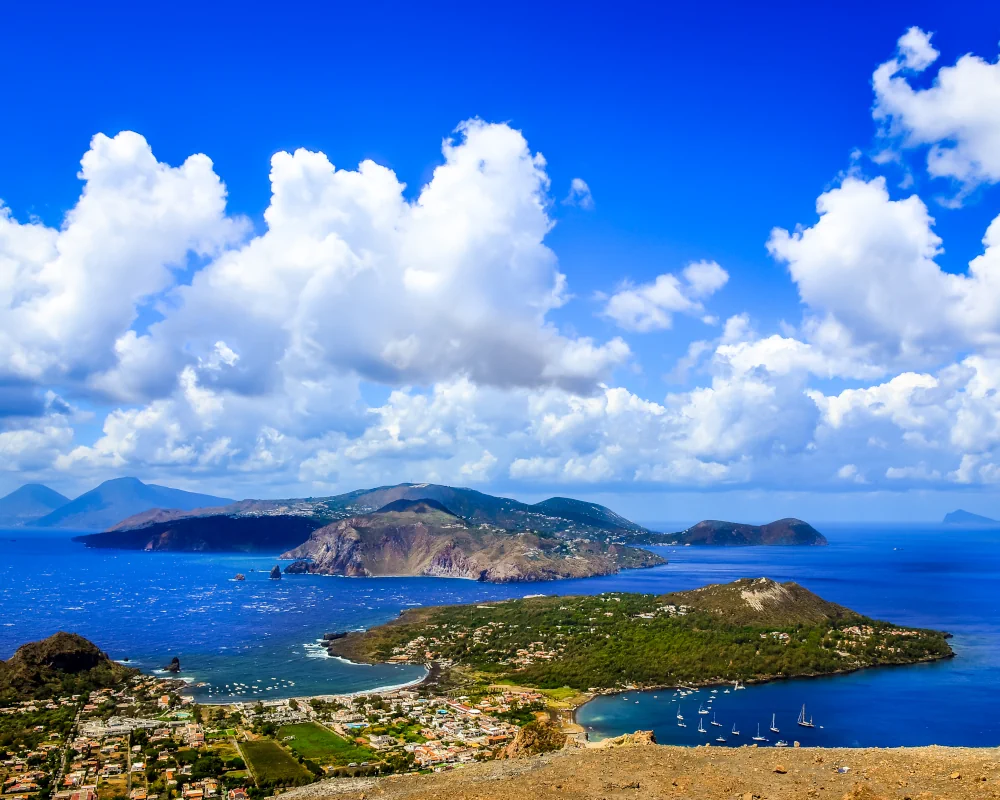
The Vulcanello peninsula in the foreground with Lipari Island in the background, viewed from Vulcano Island in the Aeolian Islands © Martin Molcan | Dreamstime.com
Trails allow you to explore this volcanic area and observe the shapes sculpted by erosion. The area known as the Valley of the Monsters is particularly unusual: the lava rocks have been shaped by wind and water and sometimes take forms reminiscent of animals or fantastic creatures.
Black-sand beaches
Vulcano's volcanic character is also evident along its coastline. Black Sands Beach, located in Ponente Bay, is one of the island's best-known beaches. Its dark sand and volcanic seabed contrast with the bay's clear waters and create a landscape characteristic of the Aeolian Islands.
Other parts of the coastline reveal different landscapes, such as Fumarole Beach and Ponente Bay. The coast can also be explored by boat, particularly to reach the Grotta del Cavallo and the Venus Pool, a natural pool surrounded by tuff and basalt and accessible from the sea.
How to get there ?
From Milazzo
To reach Vulcano from Sicily, the main departure point is the Port of Milazzo, located on the island's northeastern coast. Ferry services connect the port with the Aeolian Islands, including Vulcano, which is one of the islands closest to Sicily. The crossing is by ferry or hydrofoil, depending on the service and time of year.
Milazzo is easily accessible from Messina and Catania by road or train. You can also visit Vulcano as part of a boat excursion from Milazzo; local operators offer itineraries that allow you to discover several sites along the island's coast. Since schedules and service frequency vary depending on the season, it is best to check departures before your trip.
From the other Aeolian Islands
Vulcano is also connected to the other islands of the Aeolian Archipelago, making it easy to include in an itinerary through the islands. Lipari, located less than 0.6 miles away, is particularly close and provides a natural stop between Vulcano and other islands such as Salina, Panarea, and Stromboli.
Once you arrive on Vulcano, the island is relatively small, so it is easy to get around on foot in the areas near the port. To explore more of the island and reach Vulcanello or the more distant beaches, you can rent a scooter or bicycle, or use local transportation services.
Aeolian islands
Filicudi island
Lipari island
Salina island
The volcano island of Stromboli
The islands from mediterranean Sea
Crete island
Embiez island
Golden island
If island
Malta island
Medes islands
Petit Ribaud island
Porquerolles island
Explore new islands

Batz island

Cayman Brac island
Clipperton island
Cocos island
Cooper island
Hvar island
Key West island

Little Cayman island
Our latestUpdates
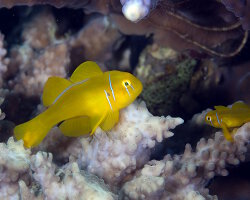
The poison gobyDiscover the poison goby (Gobiodon citrinus), a tiny reef fish with a bright yellow body and distinctive blue markings. It lives among branching Acropora corals in the tropical waters of the Indo-Pacific.Read more
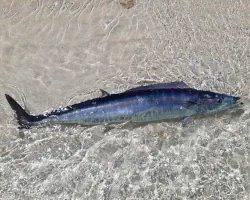
The wahooDiscover the wahoo (Acanthocybium solandri), a powerful pelagic predator found in tropical and subtropical oceans. Recognizable by its streamlined body and distinctive blue vertical stripes, it is a fast swimmer that feeds mainly on fish and squid.Read more
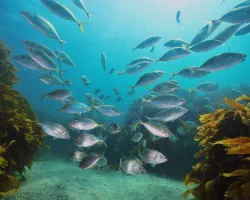
The white trevallyDiscover the white trevally (Pseudocaranx dentex), a silvery fish with a blue-green back that schools near reefs and rocky bottoms.Read more
Photo of the Day
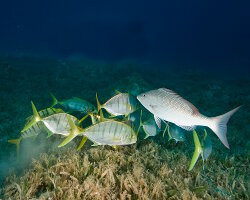
Carangue royale jaune
(Gnathanodon speciosus)
(Gnathanodon speciosus)
 Copyright © 2007-2026 auxBulles.com - All rights reserved. Legal notices.
Photo credits - Our partners