

Islands destinationSalina IslandAeolian Islands | Mediterranean Sea
Last updated on 10/08/2026 at 12:16 AM
Salina Island is the second-largest of the Aeolian Islands, off the northern coast of Sicily. Nicknamed the Green Island, it stands out for its lush vegetation, volcanic terrain, and contrasting landscapes of mountains, vineyards, villages, and rocky coastline.
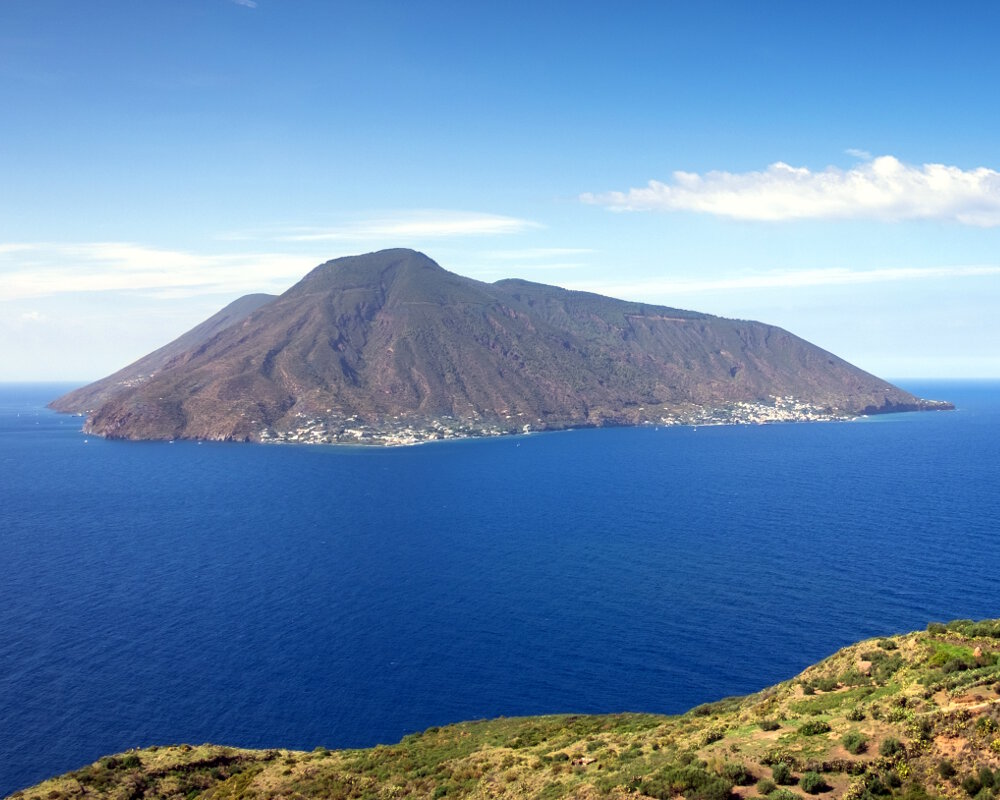
Salina Island (Mer Méditerranée) © Bastian Linder | Dreamstime.com
Formed by several now-extinct volcanoes, Salina is dominated by Mount Fossa delle Felci and Mount Porri. Its natural and agricultural landscapes, distinctive villages, and the famous Pollara Bay make it a must-see destination for discovering another side of the Aeolian Islands.
The mountains and nature reserve
Two ancient volcanoes
The landscape of Salina is dominated by two major volcanic peaks, Mount Fossa delle Felci and Mount Porri, which rise to nearly 3,280 feet. Both volcanoes are now extinct, but their conical profiles and the valley between them clearly reveal the island's volcanic origins.
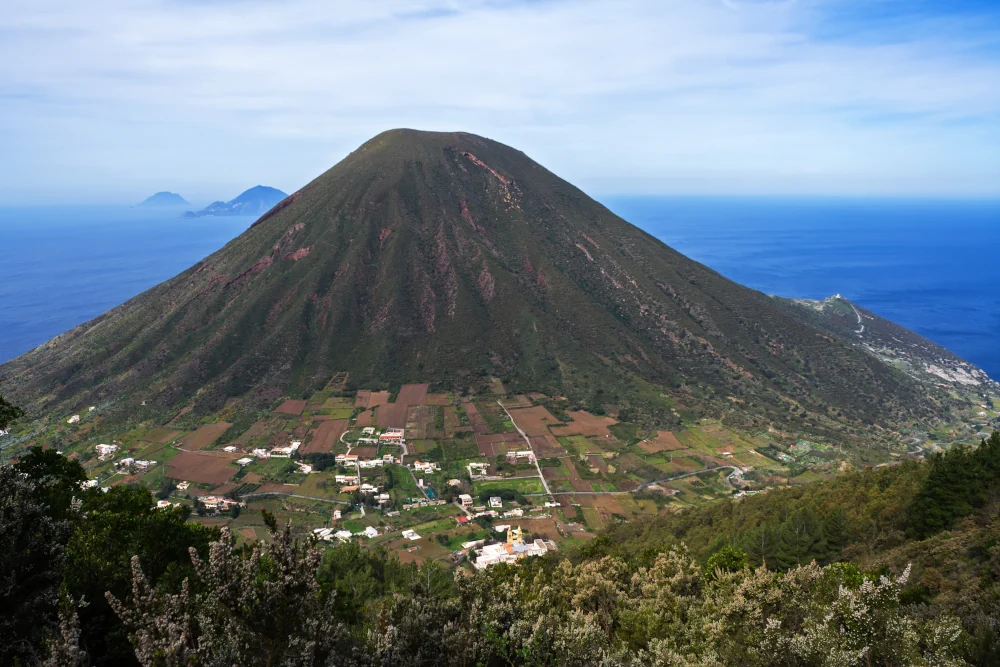
Mount Porri rises in the heart of Salina Island in the Aeolian Islands © Damnederangel | Dreamstime.com
The slopes of Fossa delle Felci are particularly lush, while Mount Porri retains a more rugged character. This contrast contributes to the diversity of Salina's landscapes, where forested slopes and agricultural areas alternate with cliffs and volcanic rocks along the coast.
A protected natural area
Much of the island is protected by the Mountains of Felci and Porri Nature Reserve, established in 1984 to preserve the Mediterranean vegetation and wildlife of these two mountain ranges. The reserve is home to ferns, chestnut trees, poplars, and various species characteristic of the Mediterranean maquis.
Several hiking trails cross this protected environment and lead to the island's higher elevations. The routes pass through very different landscapes depending on altitude and offer views of the other Aeolian Islands and the Tyrrhenian Sea. The reserve is also an important habitat for many birds, including several species of raptors and seabirds.
Pollara, an iconic volcanic landscape
An ancient caldera open to the sea
On the western coast of Salina, the village of Pollara occupies part of an ancient volcanic caldera that has partially collapsed and opens toward the sea. The terrain forms a vast, green natural amphitheater descending toward a rocky coastline dominated by high cliffs and volcanic formations.
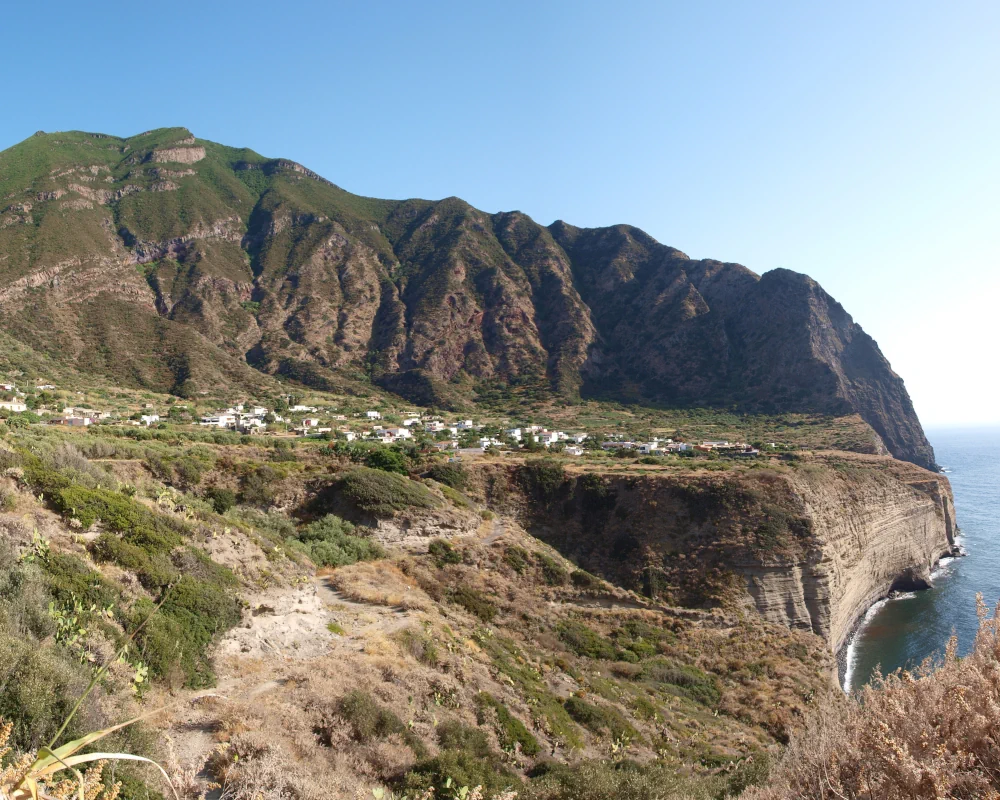
Panoramic view of the village of Pollara along the caldera cliffs on Salina Island in the Aeolian Islands © v | Dreamstime.com
From the heights of Pollara, the landscape combines the walls of the ancient volcano, small buildings clinging to the slopes, and the deep blue of the sea. The changing light throughout the day particularly highlights this rugged terrain, making Pollara one of the most photographed sites on Salina.
Following in the footsteps of the postman
Pollara is also known for serving as the setting for much of the film The Postman (Il Postino), directed by Michael Radford and released in 1994. The film, starring Massimo Troisi in the lead role, helped introduce Salina's landscapes to an international audience.
The locations associated with the filming can still be discovered around the village and along the coast. The bay, former fishermen's houses, and volcanic cliffs allow you to recognize some of the landscapes featured in the film while exploring one of the island's most unspoiled areas.
The villages of Salina
Santa Marina Salina
Located on the eastern coast, Santa Marina Salina is one of the island's main centers and its principal arrival point by sea. The village stretches at the foot of Mount Fossa delle Felci and features a waterfront lined with houses, shops, and restaurants, as well as narrow streets where you can discover traditional Aeolian architecture.
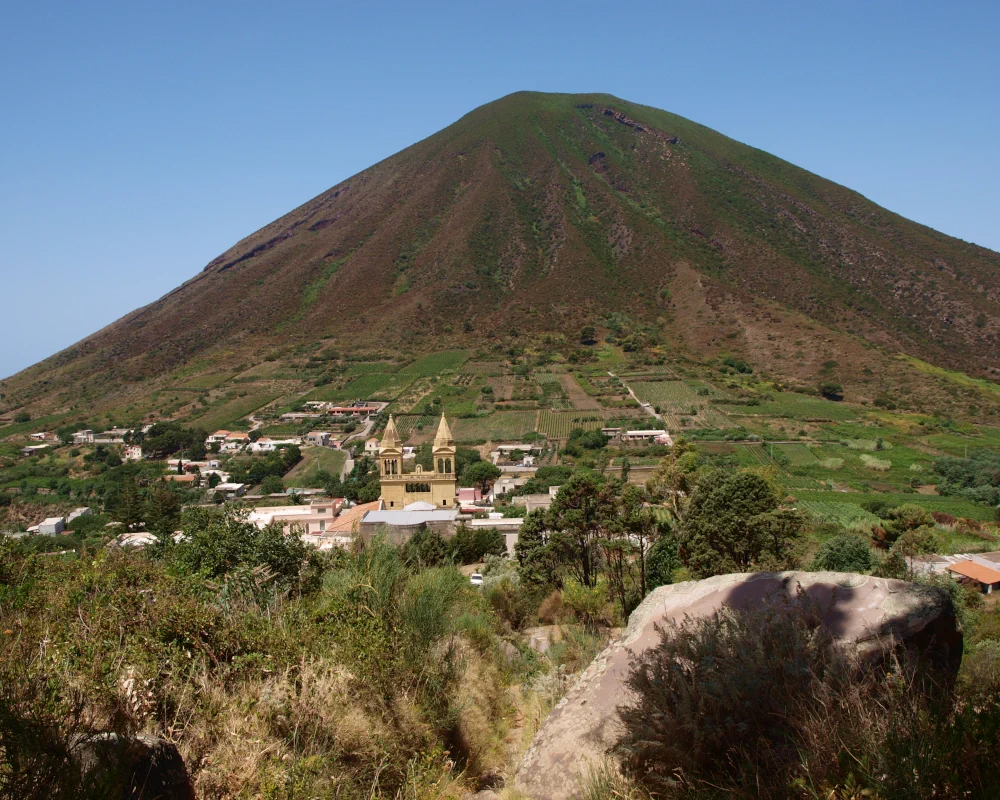
The Sanctuary of Madonna del Terzito in Valdichiesa, with Mount Fossa delle Felci in the background on Salina Island © v | Dreamstime.com
In the interior of the island, Leni offers a more rural atmosphere, in a valley surrounded by volcanic mountains and agricultural land. The village of Valdichiesa, within the municipality of Leni, is home to the Sanctuary of Madonna del Terzito, an important pilgrimage site on Salina.
Malfa and the northern coast
On the northern coast, Malfa lies between Mount Porri and Fossa delle Felci. The village is surrounded by vegetation and cultivated land and offers several viewpoints over the sea. Its rocky coastline includes Scario Beach, a small pebble cove protected by the Punta di Scario promontory.
Farther east, the hamlet of Lingua, part of Santa Marina Salina, lies around a small coastal saltwater lake that gave the area its name. Formerly used as a salt pan, this body of water is now appreciated for its landscape and natural interest, with the village and Salina's mountains in the background.
Malvasia and Salina's capers
An agricultural island
Salina is considered one of the most fertile islands in the Aeolian archipelago. Its volcanic slopes have long been cultivated with grapevines, caper bushes, olive trees, fig trees, and citrus trees. The cultivated areas blend closely with the natural vegetation and contribute to the island's distinctive landscape.
Agricultural production has deeply shaped Salina's history and culture. Terraces, dry-stone walls, and cultivated plots cover parts of the slopes and reflect the work required to farm the volcanic terrain. This traditional agriculture continues to contribute to the island's identity today.
Malvasia and capers
Malvasia delle Lipari, produced notably on Salina, is an iconic sweet wine of the Aeolian Islands. The grapes are grown on the island's slopes and can be naturally dried in the sun to produce a particularly prized passito style.
Salina capers are the island's other major agricultural specialty. Grown in volcanic soil and harvested by hand, capers and their fruit, known as cucunci, are used in many local specialties. Discovering Salina therefore also means experiencing its cuisine, which combines seafood, capers, almonds, tomatoes, eggplant, and Malvasia.
How to get there ?
From Sicily
To reach Salina from Sicily, the main departure point is the Port of Milazzo, on the island's northern coast. Ferries and hydrofoils serve Salina, with arrivals primarily at Santa Marina Salina, the island's main port. Depending on the service, some boats also call at Rinella, on the southern coast.
Milazzo is accessible from Messina and Catania by road or train. If you arrive by air, Catania Airport is generally the main gateway for reaching Milazzo and continuing by boat to the Aeolian Islands. Since ferry schedules depend heavily on the season, it is best to check departures before your trip.
From the other Aeolian Islands
Salina is also connected to the other islands of the Aeolian Archipelago. Ferry services provide connections to Lipari, Vulcano, Stromboli, and the other islands, depending on the routes and schedules available. Lipari, in particular, is an important connection point for traveling around the archipelago.
The island has two main ports, Santa Marina Salina and Rinella, allowing you to choose your arrival point based on your accommodations or planned itinerary. Once on the island, the different villages are connected by road, and bus services make it possible to get around without a car.
Aeolian islands
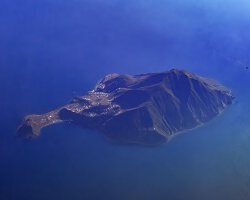
Filicudi island
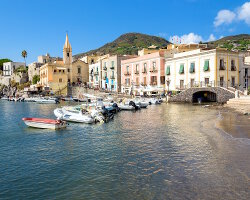
Lipari island
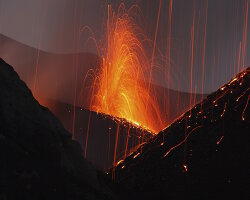
The volcano island of Stromboli
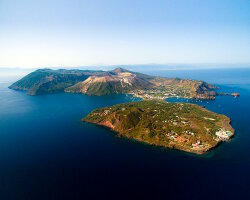
Vulcano island
The islands from mediterranean Sea
Bendor island
Frioul islands
If island
Ischia island
Malta island
Menorca island
Petit Gaou island
Sicily island
Explore new islands
Andros island
Cook islands
Eleuthera island

Grand Cayman island
Long Island
Marshall islands
Medes islands
Petit Ribaud island
Our latestUpdates
The poison gobyDiscover the poison goby (Gobiodon citrinus), a tiny reef fish with a bright yellow body and distinctive blue markings. It lives among branching Acropora corals in the tropical waters of the Indo-Pacific.Read more
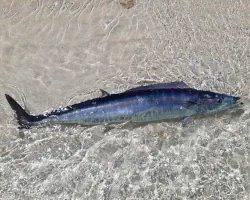
The wahooDiscover the wahoo (Acanthocybium solandri), a powerful pelagic predator found in tropical and subtropical oceans. Recognizable by its streamlined body and distinctive blue vertical stripes, it is a fast swimmer that feeds mainly on fish and squid.Read more
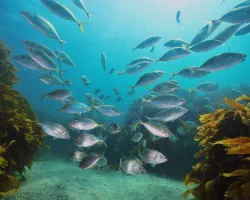
The white trevallyDiscover the white trevally (Pseudocaranx dentex), a silvery fish with a blue-green back that schools near reefs and rocky bottoms.Read more
Photo of the Day
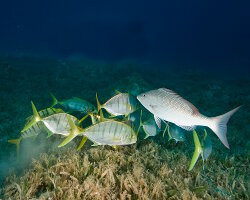
Carangue royale jaune
(Gnathanodon speciosus)
(Gnathanodon speciosus)
 Copyright © 2007-2026 auxBulles.com - All rights reserved. Legal notices.
Photo credits - Our partners