

Islands destinationSicily IslandItaly | Mediterranean Sea
Last updated on 10/06/2026 at 11:55 PM
Sicily is the largest island in the Mediterranean Sea. Separated from mainland Italy by the Strait of Messina, it offers a remarkable diversity of landscapes, from volcanoes and mountains to beaches, villages, and historic cities. Its heritage reflects the many civilizations that have succeeded one another on the island, from the Greeks and Romans to the Byzantines, Arabs, Normans, and Spaniards.
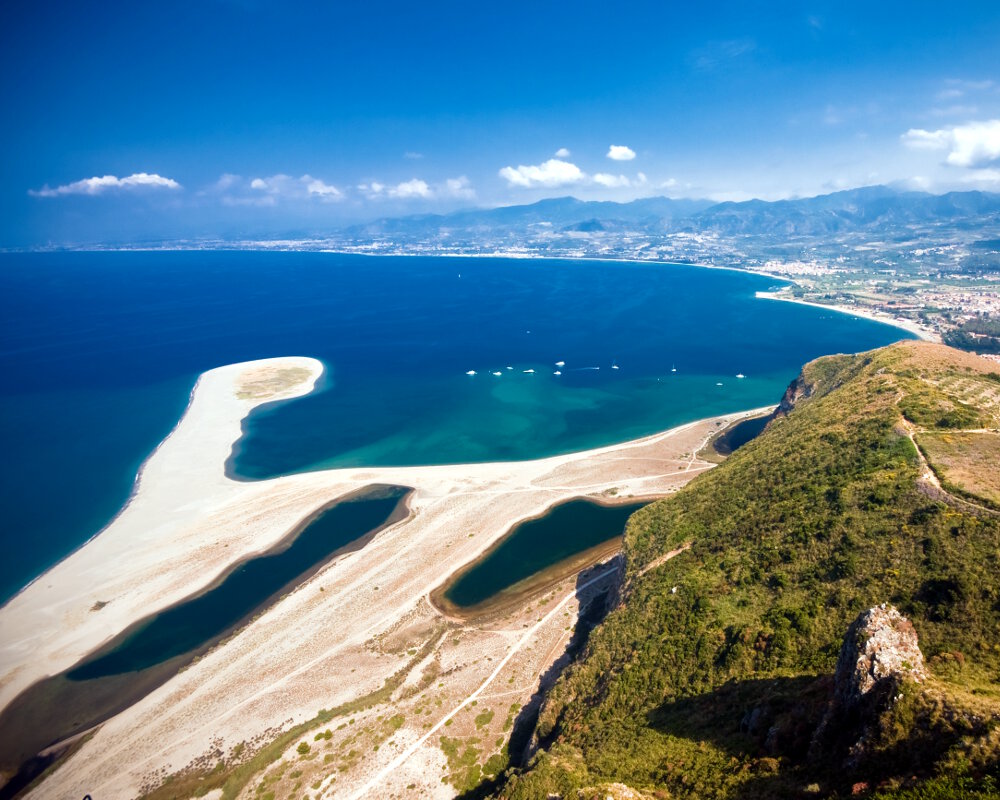
The beach at the tip of Capo Tindari in Sicily © Pavlinec | Dreamstime.com
From Palermo to Syracuse, and from Taormina to Agrigento, Sicily is home to major archaeological sites, Baroque cities, and spectacular volcanic landscapes. Its coastline also provides access to several remarkable archipelagos and islands, while Mount Etna dominates much of eastern Sicily.
Mount Etna and the Volcanic Landscapes
Mount Etna
Towering over eastern Sicily, Mount Etna is one of the island's great symbols, with its striking volcanic landscapes. Its slopes are covered with lava flows, forests, and landscapes that change with elevation. The volcano is also a UNESCO World Heritage Site, notably because of its geological importance and the diversity of ecosystems that have developed around it.
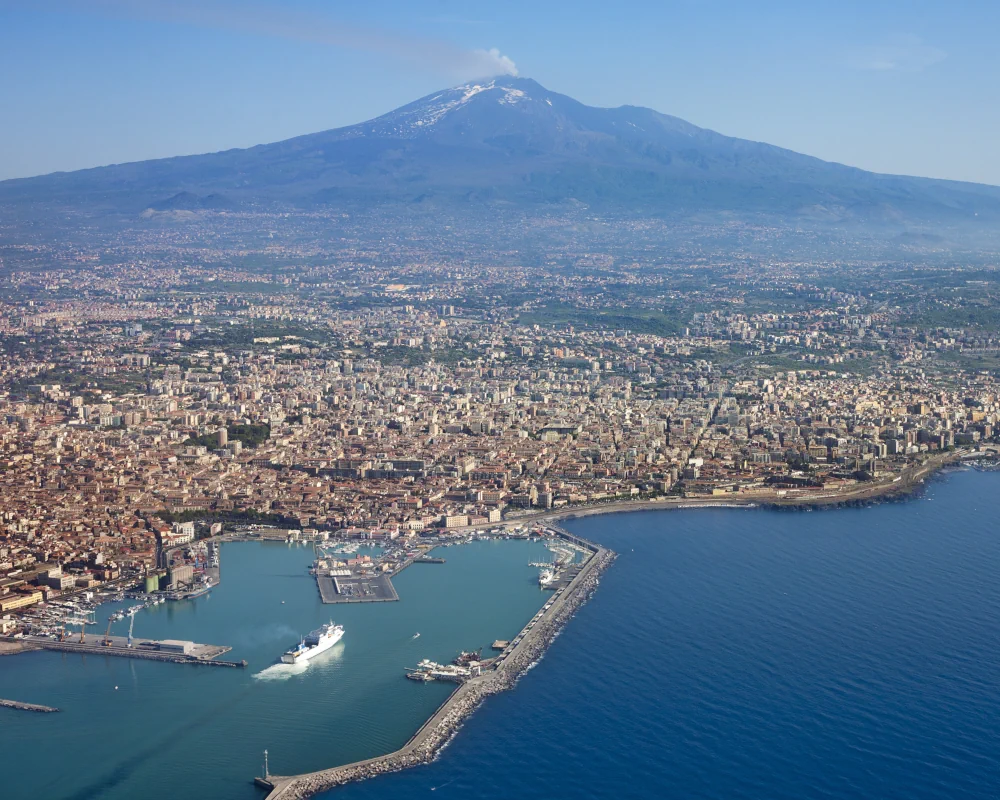
Aerial view of the city of Catania with Mount Etna in the distance, Sicily © Andras Csontos | Dreamstime.com
The presence of Mount Etna also influences the region's landscapes and activities. Villages on its lower slopes provide access to the volcano, while hiking trails cross a variety of natural environments. Farther south, the city of Catania also reflects the power of the volcano, particularly through the use of black lava stone in many monuments and buildings.
The Aeolian Islands
North of Sicily, the Aeolian Islands extend this exploration of Mediterranean volcanism. The archipelago consists of seven main islands: Lipari, Vulcano, Salina, Stromboli, Filicudi, Alicudi, and Panarea. Of volcanic origin, they feature very different landscapes and are also of international importance for the study of volcanic and geological phenomena.
Among them, Stromboli is particularly known for its active volcano, while Lipari is the largest island in the archipelago. The Aeolian Islands therefore provide an opportunity to complement a trip to Sicily with an island experience combining volcanic landscapes, villages, and marine environments.
Major cities and historic heritage
Palermo, the capital of Sicily
In the west, Palermo is home to a significant part of the island's historical and cultural heritage. The Sicilian capital features palaces, churches, markets, and monuments that reflect the meeting of different cultures. The Norman Palace, Palatine Chapel, and Church of San Giovanni degli Eremiti are among the city's most iconic sites.
The Arab-Norman heritage extends beyond Palermo, notably to Monreale and Cefalù, through a collection of monuments listed as UNESCO World Heritage Sites. This architecture illustrates the Islamic, Byzantine, and Western influences that came together in Sicily during the Middle Ages.
Taormina and Syracuse
On the eastern coast, Taormina enjoys a spectacular setting on a natural terrace overlooking the Ionian Sea. Its ancient Greek theater is one of Sicily's most famous monuments and offers remarkable views of the coastline and Mount Etna. Nearby, Isola Bella adds a more natural dimension to the discovery of this part of the island.
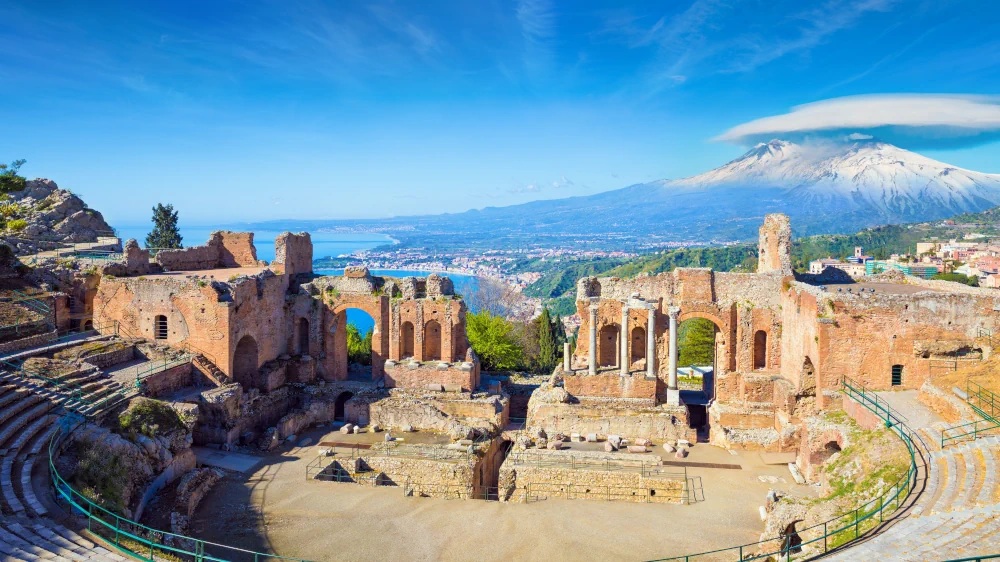
The Greek Theater of Taormina with Mount Etna in the background, Sicily © Ig0rzh | Dreamstime.com
Syracuse, meanwhile, has an exceptional ancient heritage. Its historic center on the island of Ortigia features squares, palaces, and monuments, while the Neapolis Archaeological Park preserves major remains of the ancient Greek city. Syracuse and the rock-cut necropolises of Pantalica are also listed as UNESCO World Heritage Sites.
The baroque of the Val di Noto
Cities rebuilt after 1693
In southeastern Sicily, the Val di Noto is particularly renowned for its Baroque architecture. Several cities, including Noto, Modica, and Ragusa, feature remarkable architectural heritage dominated by churches, palaces, and richly carved facades. Much of this ensemble emerged from the reconstruction undertaken after the powerful earthquake of 1693.
The reconstruction created remarkable urban centers designed in the late Baroque style, with large squares, monumental streets, and buildings featuring highly elaborate facades. Local stone, warm colors, and Mediterranean light give these cities a particularly distinctive character.
Noto, Modica, and Ragusa
In Noto, the cathedral and numerous palaces along Corso Vittorio Emanuele are particularly fine examples of this architecture. Modica is also known for its Baroque heritage and spectacular setting on the slopes of several valleys, while Ragusa is divided between the modern city and Ragusa Ibla, its historic district perched on a rocky spur.
The Val di Noto is therefore a must-see destination for discovering another side of Sicily, very different from the volcanic landscapes of Mount Etna or the remains of Magna Graecia. The Baroque towns of southeastern Sicily are collectively included in a UNESCO World Heritage Site.
The Coast, Beaches, and Islands of Sicily
A highly diverse coastline
With long coastlines facing several parts of the Mediterranean, Sicily offers a great diversity of coastal landscapes. Sandy beaches, limestone cliffs, small coves, and rocky promontories alternate around the island. Among the best-known sites are San Vito Lo Capo, Scala dei Turchi, and Isola Bella near Taormina.
The Scala dei Turchi, near Agrigento, stands out for its spectacular white rock cliff overlooking turquoise waters. In the west, the small seaside resort of San Vito Lo Capo is renowned for its beach and natural surroundings, while the eastern coast features more volcanic landscapes around Taormina and Mount Etna.
The Sicilian Archipelagos
Several archipelagos and islands also allow you to extend your exploration of Sicily by sea. To the north, the Aeolian Islands are the best known, while the Aegadian Islands — Favignana, Levanzo, and Marettimo — lie off the western coast. Farther south, Lampedusa offers coastal landscapes particularly renowned for the clarity of its waters.
Each of these islands has its own distinctive character and provides opportunities to alternate between discovering villages, hiking, swimming, and exploring the marine environment. For those who enjoy coastal landscapes and Mediterranean islands, they are an interesting addition to an itinerary focused on mainland Sicily.
How to get there ?
By air
Sicily is easily accessible by air from major Italian cities and numerous European destinations. The two main international airports are Palermo, in the northwest of the island, and Catania, on the eastern coast at the foot of Mount Etna. Trapani Airport, farther west, is another option for reaching this part of the island.
The choice of airport mainly depends on your itinerary. Catania is particularly convenient for exploring eastern Sicily, including Taormina, Mount Etna, and Syracuse, while Palermo is a good gateway to the capital, Cefalù, and the western and northern parts of the island.
By ferry from mainland Italy
Sicily is also connected to mainland Italy by several ferry routes. Ferries cross the Strait of Messina between Villa San Giovanni and Messina, allowing visitors arriving by car or train to reach the island directly. Longer-distance ferry services also connect several Sicilian ports with mainland Italy.
For a trip with a car, taking the ferry can be a convenient option, particularly if you want to explore several regions of the island. Sicily has an extensive road and rail network, making it possible to reach the main cities and different parts of the coastline. Since ferry schedules and routes vary depending on the season, it is best to check transportation options before departure.
Italian islands
Ischia island
The islands from mediterranean Sea
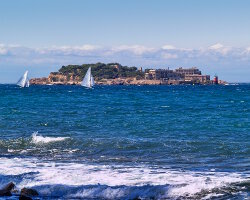
Bendor island
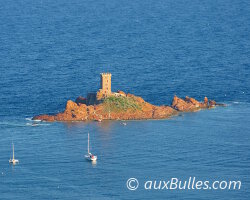
Golden island
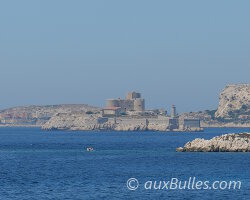
If island
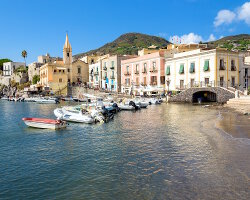
Lipari island
Malta island
Petit Gaou island
Petit Ribaud island
Port-Cros island
Explore new islands
Bimini islands
Cocos island
Grand Bahama island

Grand Cayman island
Lamu island
Marshall islands
Paros island
Santorini island
Our latestUpdates
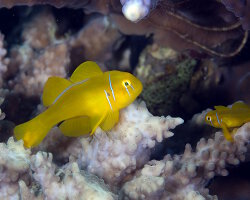
The poison gobyDiscover the poison goby (Gobiodon citrinus), a tiny reef fish with a bright yellow body and distinctive blue markings. It lives among branching Acropora corals in the tropical waters of the Indo-Pacific.Read more
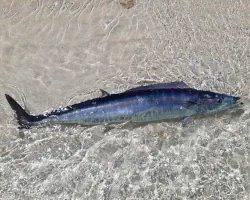
The wahooDiscover the wahoo (Acanthocybium solandri), a powerful pelagic predator found in tropical and subtropical oceans. Recognizable by its streamlined body and distinctive blue vertical stripes, it is a fast swimmer that feeds mainly on fish and squid.Read more
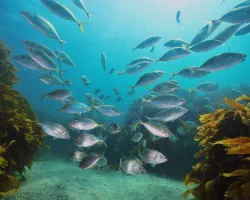
The white trevallyDiscover the white trevally (Pseudocaranx dentex), a silvery fish with a blue-green back that schools near reefs and rocky bottoms.Read more
Photo of the Day
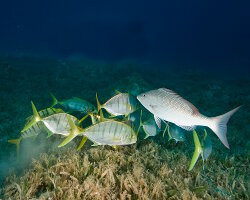
Carangue royale jaune
(Gnathanodon speciosus)
(Gnathanodon speciosus)
 Copyright © 2007-2026 auxBulles.com - All rights reserved. Legal notices.
Photo credits - Our partners