Sealife guideThe chain moray eelEchidna catenata
Last updated on 08/08/2026 at 01:42 AM
Taxonomy
English names
Chain moray eel
French namesMurène à gueule pavéeMurène à chainons
Spanish namesMorena cadena
Scientific nameEchidna catenata (Bloch, 1795)
Description
The chain moray eel is a small moray eel compared to most of its relatives ! It typically grows to about 28 inches in length. The chain moray eel has an elongated, snake-like body that is laterally compressed.
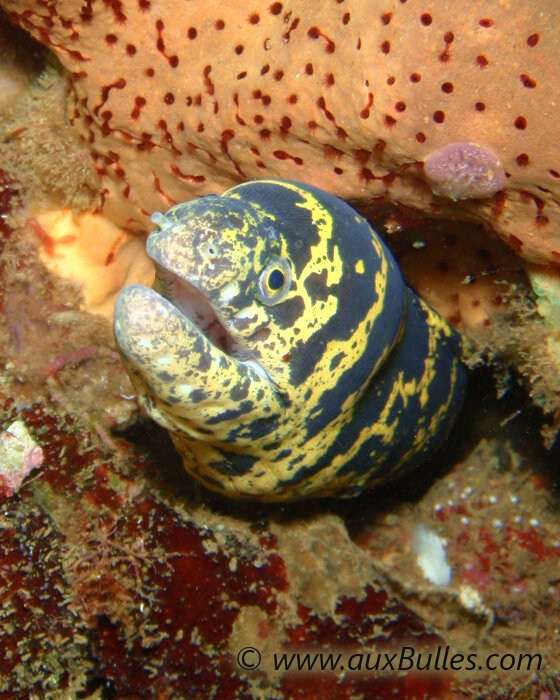
The chain moray eel is distinguished by its yellow marbled head
The chain moray eel is distinguished by its yellow marbled head ! These yellow marbled markings extend along its dark-colored body.
Geographic range
The chain moray eel inhabits the tropical and subtropical waters of the western Atlantic Ocean, from
Florida, the
Bahamas and the Gulf of Mexico to the Caribbean, then along the coasts of Central and South America as far south as Brazil. It is also widely distributed around the many islands of the West Indies, including
Guadeloupe, where it is one of the commonly encountered moray eel species.
Habitat
The chain moray eel is found in shallow tropical waters, generally from the surface down to depths of around 33 feet. It shelters in crevices within coral reefs and rocky structures. With its body hidden deep inside its refuge, you will often only see its head protruding from the opening as it watches its surroundings.
Diet
The chain moray eel feeds mainly on small fish, but also on invertebrates such as squid, shrimp and crabs.
Reproduction
Because of its nocturnal lifestyle, the reproduction of the chain moray eel is still poorly understood. The female lays eggs that hatch into small, flattened, transparent larvae.
Did you know ?
There are more than 200 species of moray eels worldwide, divided among 15 genera.
Guadeloupe is home to five different species: the
green moray, the viper moray, the black moray, the
goldentail moray, and the chain moray eel with the paved mouth pattern.
The chain moray eel is listed as many other marine species within The
IUCN Red List of threatened species. The chain moray eel appears in the
IUCN Red List since 2015 within the category Least Concern !
Tips for observing
Approach the chain moray eel slowly without disturbing it, and avoid placing your hand near its head. This will help you avoid a bite, which can quickly become infected if not thoroughly disinfected.
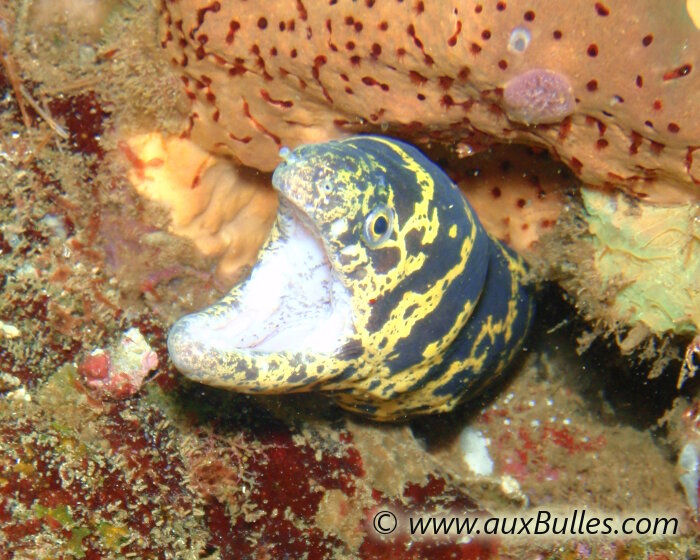
Approach the chain moray eel slowly without disturbing it and avoid placing your hand near its head
Within the same genus
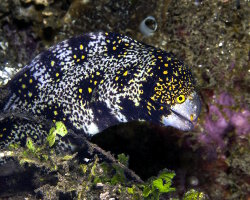
Snowflake moray
(Echidna nebulosa)
Within the same family
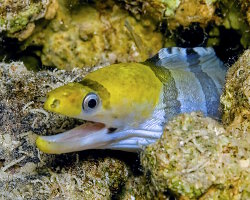
Banded moray
(Gymnothorax rueppelliae)
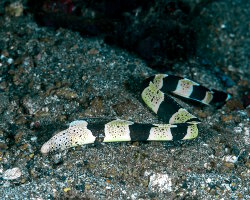
Banded mud moray
(Gymnothorax chlamydatus)
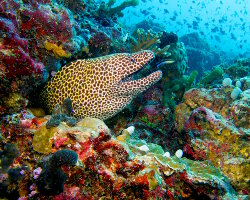
Laced moray eel
(Gymnothorax favagineus)
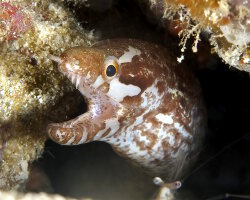
Lipspot moray
(Gymnothorax chilospilus)
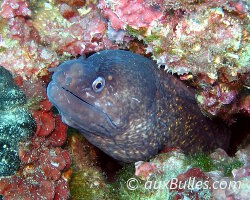
Mediterranean moray eel
(Muraena helena)
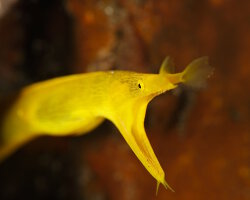
Ribbon eel
(Rhinomuraena quaesita)
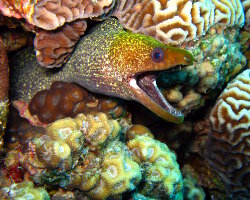
Undulated moray
(Gymnothorax undulatus)
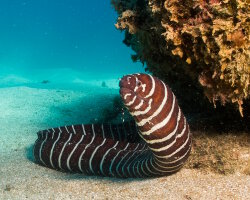
Zebra moray
(Gymnomuraena zebra)
Discover also
Damselfish
(Chromis chromis)
Golden trevally
(Gnathanodon speciosus)
Horned bannerfish
(Heniochus varius)
Humpnose bigeye bream
(Monotaxis grandoculis)
Seychelles anemonefish
(Amphiprion fuscocaudatus)
Spiny seahorse
(Hippocampus histrix)

Thornback cowfish
(Lactoria fornasini)
Yellow chromis
(Chromis analis)
The marine species in the Caribbean
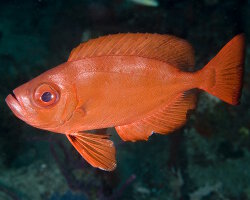
Atlantic bigeye
(Priacanthus arenatus)
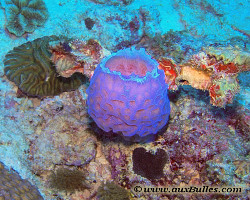
Azure vase sponge
(Callyspongia plicifera)
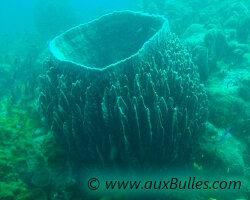
Caribbean giant barrel sponge
(Xestospongia muta)
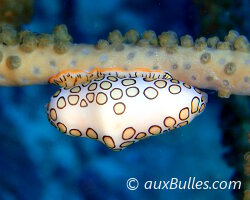
Flamingo tongue
(Cyphoma gibbosum)
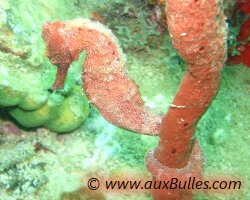
Longsnout seahorse
(Hippocampus reidi)
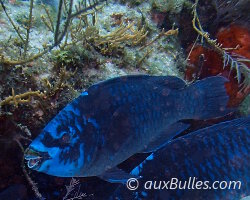
Midnight parrotfish
(Scarus coelestinus)
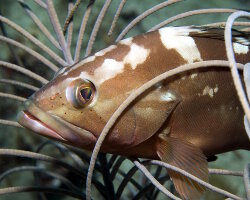
Red grouper
(Epinephelus morio)
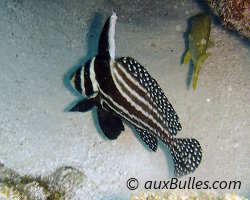
Spotted drum
(Equetus punctatus)
Dive centers

'Les Ilets' dive center
Noa dive center