Sealife guideThe sand diverSynodus intermedius
Last updated on 09/16/2026 at 09:58 PM
The sand diver (Synodus intermedius) is a predator that lives on the seafloor of the western Atlantic. With its elongated body, flattened head, and eyes positioned on top of its head, it is perfectly adapted to life on sandy bottoms. It often remains motionless on the seafloor, sometimes half buried in the sand, before lunging at small fish and other prey that come within reach.
Taxonomy
- Common name: Sand diver, lizard fish
- French name: Poisson lézard, anoli de sable
- Spanish name: Lagarto mato
- Scientific name: Synodus intermedius (Spix & Agassiz, 1829)
- Family name: Synodontidae
- Order name: Aulopiformes
- Class name: Actinopterygii
Description
The sand diver has an elongated, cylindrical body that averages about 16 inches in length, with a maximum length of 18 inches. Its coloration ranges from brown to gray or olive green, and its body has eight darker vertical bands on each side, along with irregular longitudinal yellow lines.
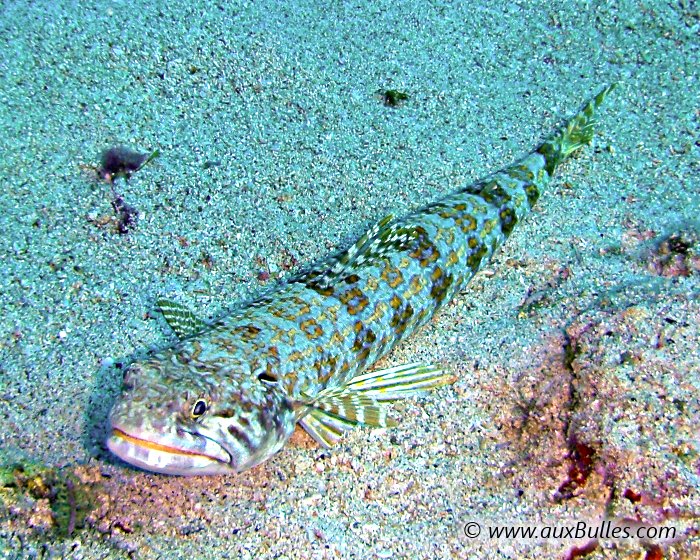
The sand diver is a bottom-dwelling fish that lives on sandy seafloors and has a head that resembles the reptile of the same name
Its flattened head has a short snout, a wide mouth lined with several rows of slender teeth, and eyes positioned on top of the head. A distinctive dark spot is also visible above each gill cover. The head of the sand diver resembles that of the reptiles of the same name !
Geographic range
The sand diver inhabits the tropical and subtropical waters of the western Atlantic Ocean, from Bermuda and North Carolina to Brazil, including the coast of
Florida. It is found in the waters of the Gulf of Mexico, the
Bahamas, and the Caribbean Sea, where it is particularly common throughout the Caribbean islands.
Habitat
The sand diver mainly rests on sandy seafloors, particularly around rocks and in sandy areas between reef formations. It is mostly found in coastal waters, from a few feet deep to more than 1,000 feet. It can partially bury itself in the sand, leaving only its eyes exposed, allowing it to remain hidden while keeping watch over its surroundings.
Diet
The sand diver is a predator that mainly feeds on small fish, but it also catches small shrimp and occasionally cephalopods such as squid. It generally remains motionless on the seafloor, sometimes partially buried in the sand, and waits for prey to venture too close before quickly lunging forward to seize it.
Reproduction
Reproduction in the sand diver remains relatively poorly understood. The male and female release their reproductive cells into the seawater, where fertilization takes place.
Did you know ?
Remarkably well camouflaged in its surroundings, the sand diver remains motionless on the seafloor, blending in with its surroundings while patiently waiting for prey to come too close.
The sand diver is listed as many other marine species within The
IUCN Red List of threatened species. The sand diver appears in the
IUCN Red List since 2015 within the category Least Concern !
Tips for observing
Sandy seafloors are home to a wide variety of marine life, even though they may appear devoid of life at first glance. If you take a few moments to look carefully, you will most likely discover a sand diver lying motionless on the seafloor !
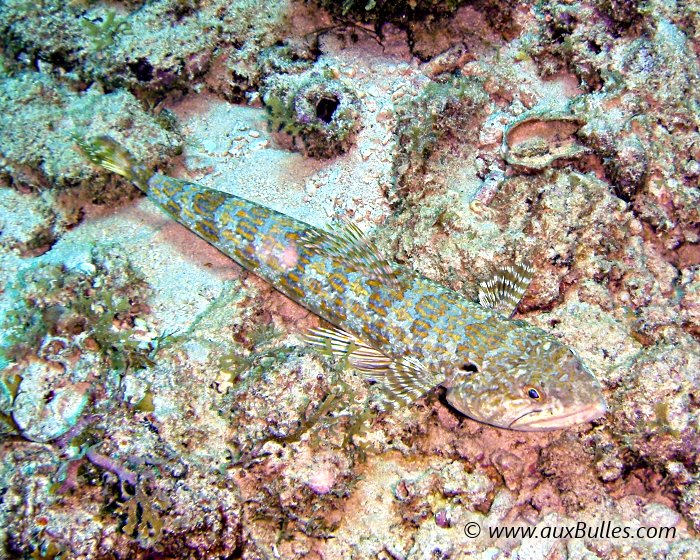
The sand diver lies motionless on the seafloor, blending in with its surroundings
If you did not spot it and happen to disturb it, the sand diver will suddenly dart away from the seafloor before settling back onto the sand a few yards away !
Within the same genus
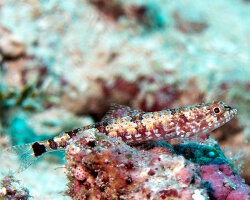
Blackblotch lizardfish
(Synodus jaculum)
Discover also
African Pompano
(Alectis ciliaris)
Common stonefish
(Synanceia verrucosa)
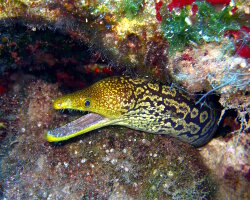
Fangtooth moray
(Enchelycore anatina)
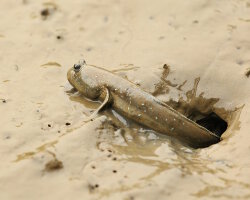
Great blue spotted mudskipper
(Boleophthalmus pectinirostris)
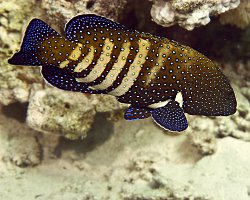
Peacock grouper
(Cephalopholis argus)
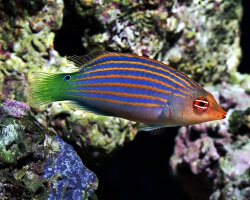
Six line wrasse
(Pseudocheilinus hexataenia)
Spotted scorpionfish
(Scorpaena plumieri)
Threadfin anthias
(Pseudanthias huchtii)
The marine species in the Western Atlantic
Atlantic horseshoe crab
(Limulus polyphemus)
Bar jack
(Caranx ruber)
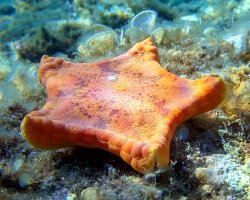
Biscuit sea star
(Peltaster placenta)
Bonnethead shark
(Sphyrna tiburo)
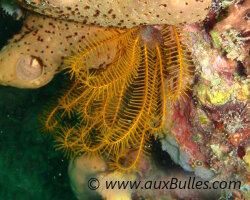
Golden crinoid
(Davidaster rubiginosus)
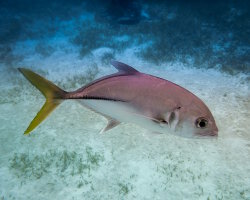
Horse-eye jack
(Caranx latus)

Royal sea star
(Astropecten articulatus)