

Sealife guideThe longspine squirrelfishHolocentrus rufus
Last updated on 10/16/2026 at 12:25 AM
The longspine squirrelfish (Holocentrus rufus), also known as the slender-tailed squirrelfish, is a reef fish recognizable by its red body, large eyes, and spiny fins. It lives in the tropical waters of the western Atlantic, particularly the Caribbean Sea, where it finds shelter in reef crevices.
Mainly active at night, it leaves its shelter to search for small animals to feed on. Its eyes, adapted to low-light conditions, help it locate prey as darkness falls over the reef.
Taxonomy
English names
Longspine squirrelfish
French namesPoisson soldat à longues épinesMarignon soldatCardinal queue-fine
Spanish namesCandil rufo
Scientific nameHolocentrus rufus (Walbaum, 1792)
FamilyHolocentridae
OrderHolocentriformes
ClassActinopterygii
Description
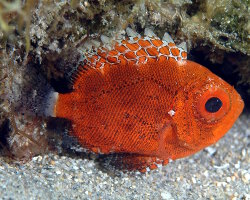
The longspine squirrelfish has an elongated, relatively deep body that is compressed from side to side. Its pointed head features large eyes and a well-developed mouth. Its body and head are generally red, while the base of the tail and the caudal fin have whitish to yellowish hues. Its spiny dorsal fin is particularly distinctive, with white triangular markings near the tips of the spines.

The longspine squirrelfish (Holocentrus rufus)
The longspine squirrelfish generally averages around 10 inches in length, but the largest individuals can reach 14 to 17 inches.
Geographic range
The longspine squirrelfish inhabits tropical waters of the western Atlantic, from Bermuda and Florida to northern South America and Brazil. It is found in the Gulf of Mexico and the Caribbean Sea, particularly around the Bahamas, Cuba, Jamaica, Hispaniola, Puerto Rico, and the Lesser Antilles.
Habitat
The longspine squirrelfish mainly inhabits coral and rocky reefs at depths of up to about 100 feet, where it shelters in cracks, crevices, cavities, and cave entrances. It generally remains hidden during the day and emerges mainly at dusk to search for food.
During its nocturnal movements, it may leave the rocky parts of the reef and venture onto nearby sandy bottoms and seagrass beds.
Diet
The longspine squirrelfish feeds on small marine animals, mainly small crustaceans such as crabs and shrimp, as well as small fish and gastropods. It searches for prey mostly at night, leaving its reef shelters to explore nearby seafloors.

The longspine squirrelfish (Holocentrus rufus)
Reproduction
The longspine squirrelfish is oviparous: the female lays eggs that are fertilized in the water. The eggs and larvae develop in open water before the young fish gradually move into the reef environment.
Did you know ?
The longspine squirrelfish is listed as many other marine species within The IUCN Red List of threatened species. The longspine squirrelfish appears in the IUCN Red List since 2015 within the category Least Concern !

The longspine squirrelfish (Holocentrus rufus)
Within the same genus
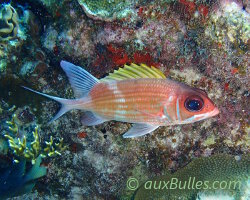
Within the same family
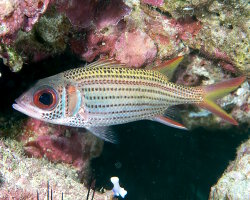


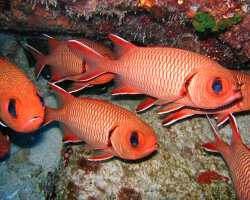


Discover also

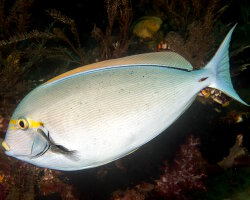
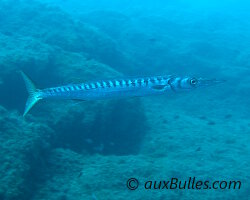
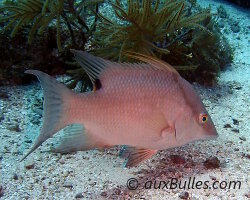
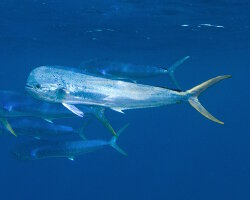
The marine species in the Northwestern Atlantic



Our latestUpdates
The neon gobyDiscover the neon goby (Elacatinus oceanops), a small western Atlantic reef fish known for its brilliant blue stripe and its role as a cleaner fish that removes parasites from other fish.Read more
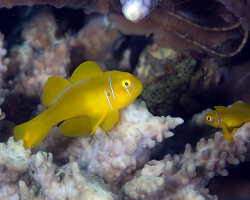
The poison gobyDiscover the poison goby (Gobiodon citrinus), a tiny reef fish with a bright yellow body and distinctive blue markings. It lives among branching Acropora corals in the tropical waters of the Indo-Pacific.Read more
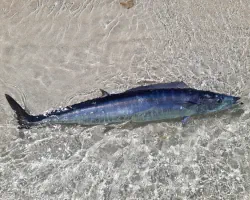
The wahooDiscover the wahoo (Acanthocybium solandri), a powerful pelagic predator found in tropical and subtropical oceans. Recognizable by its streamlined body and distinctive blue vertical stripes, it is a fast swimmer that feeds mainly on fish and squid.Read more
Photo of the Day

Fou à pieds rouges
(Sula sula)
(Sula sula)
 Copyright © 2007-2026 auxBulles.com - All rights reserved. Legal notices.
Photo credits - Our partners