Islands destinationThe Fiji islands: a journey into the heart of the PacificPacific ocean
Last updated on 08/24/2026 at 10:41 PM
Located in the heart of the South Pacific, the
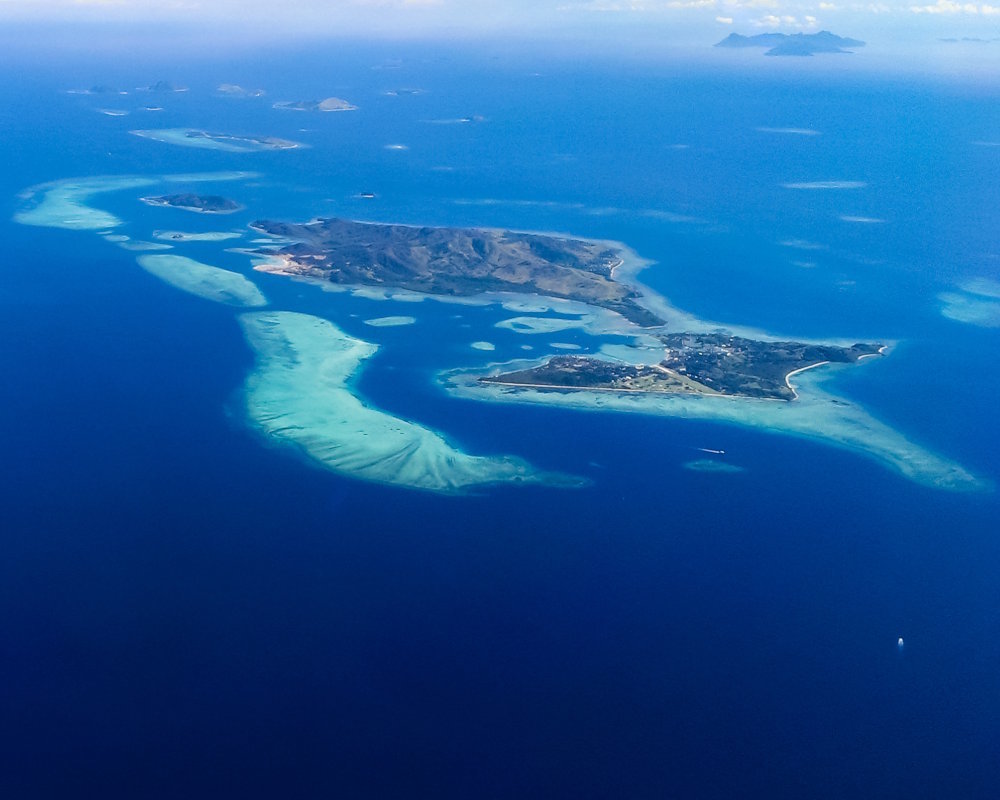
Fiji islands form a vast archipelago of 333 islands, of which the two largest are
Viti Levu and
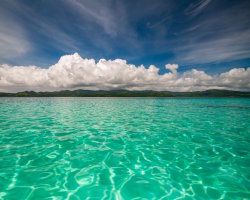
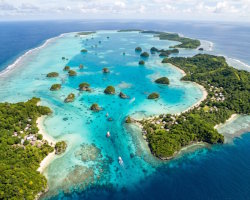
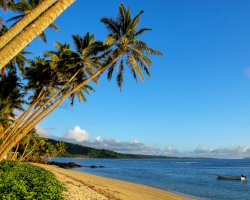
Vanua Levu, while only about 100 are inhabited. With white-sand beaches, turquoise lagoons, tropical forests, volcanic mountains, and coral reefs, the archipelago offers an astonishing diversity of landscapes both above and below the water.
Fiji is part of Melanesia and occupies a central position in the South Pacific, between the equator and the Tropic of Capricorn. The largest island,
Viti Levu, is home to a large part of the population and includes Nadi, the country's main international air gateway, as well as Suva, the capital located on the southeast coast.
Beyond
Viti Levu and
Vanua Levu, several other islands and archipelagos also deserve special attention. The
Yasawa islands and
Mamanuca islands, west of
Viti Levu, are renowned for their idyllic beaches, lagoons, and coral reefs. Farther south,
Kadavu is bordered by the Great Astrolabe Reef, while
Taveuni, known as the Garden island, captivates visitors with its tropical forests and waterfalls. To the east, the
Lau islands and
Lomaiviti islands offer more pristine landscapes and an immersion in a traditional island environment, far from the main tourist hubs.
Geographic location
Viti Levu, the main island of Fiji
With more than 3,800 square miles,
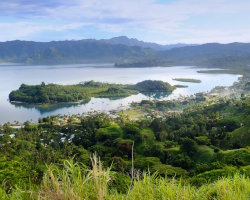
Viti Levu is by far the largest island in the archipelago. It is generally the starting point for a first trip to Fiji, as Nadi International Airport is located on its western coast. The island is not limited to tourist facilities, however: its mountainous interior, lush valleys, and numerous villages offer a glimpse of another side of the country.
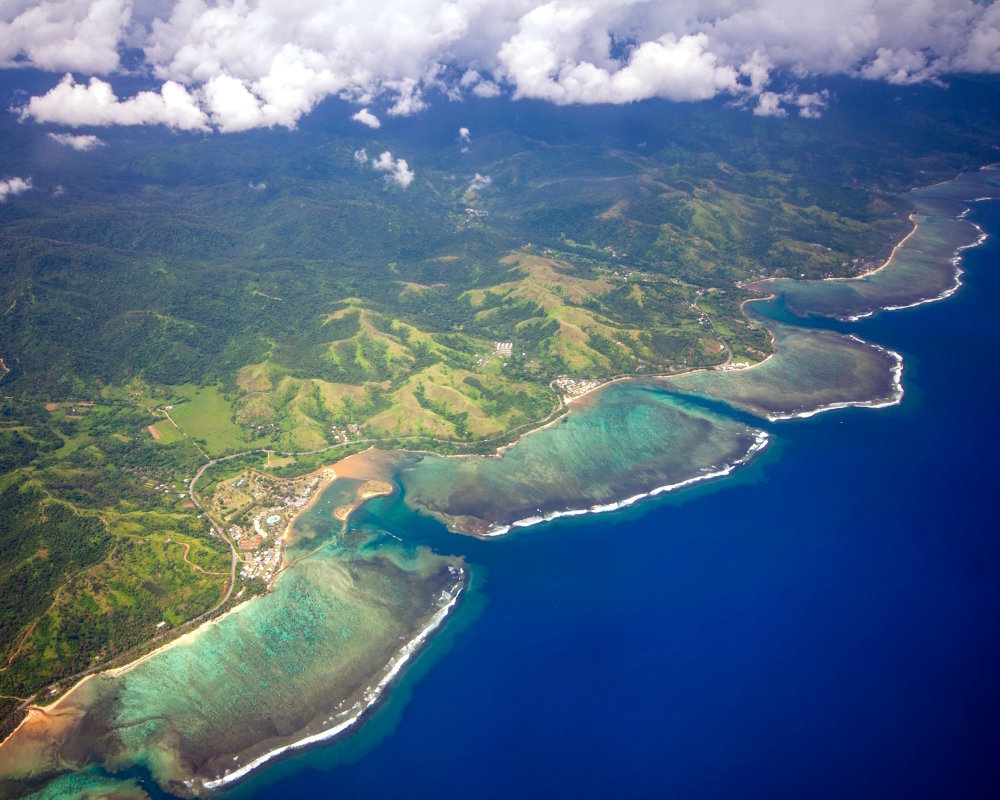
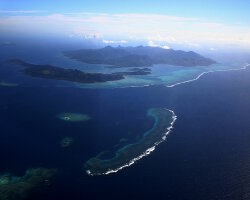
Aerial view of the magnificent coral reefs along the Coral Coast, between Naviti and Votua, on Viti Levu island, Fiji
© Christianherzog | Dreamstime.comThe western coast, which is drier, generally enjoys sunnier weather and is home to several resorts. In the east, the mountains intercept moisture-laden winds and create a wetter climate, with abundant tropical vegetation. The rivers and mountainous landscapes also offer opportunities for various activities, including rafting, tubing, and excursions to waterfalls.
Vanua Levu and the tropical islands
Vanua Levu, Fiji's second-largest island, often offers a more peaceful atmosphere than
Viti Levu. The Savusavu area is particularly appreciated for its tropical scenery, hot springs, and underwater environments. The waters surrounding the island are among Fiji's renowned areas for diving and snorkeling, particularly around the
Namena Marine Reserve.
Nearby is also
Taveuni, the country's third-largest island, sometimes known as the Garden Island because of its lush vegetation. Farther east and south, other island groups offer very different experiences. The
Lau islands are particularly remote and have preserved a traditional way of life, while
Kadavu, south of the main archipelago, is surrounded by the spectacular
Great Astrolabe Reef and attracts diving and nature enthusiasts.
The Mamanuca and Yasawa islands, between beaches and reefs
Located offshore from Nadi, the
Mamanuca islands are among the most accessible destinations in the archipelago. This group of around 20 volcanic islands and islets is known for its beaches, shallow lagoons, and coral reefs. From Port Denarau, several islands can be reached quickly by boat, making it possible to arrange either a day trip or a stay of several nights.
Farther north, the
Yasawa islands offer wilder scenery and a greater sense of isolation. The archipelago consists of around 20 main islands with volcanic landscapes, bordered by beaches and reefs. Visitors can combine swimming, snorkeling, hiking, and visits to local villages. The Sawa-i-Lau Caves, with their saltwater pools and limestone chambers, are among the region's most iconic attractions.
Exceptional underwater environments
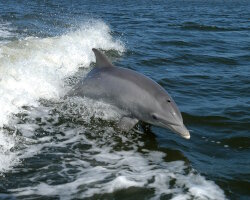
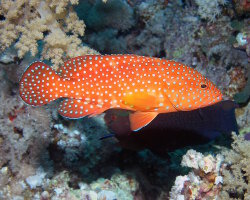
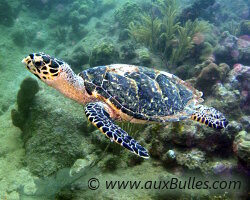
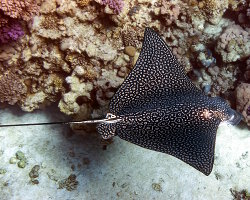
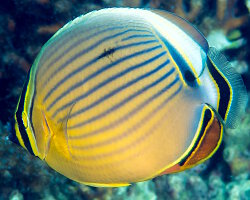
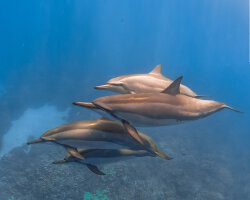
The Fiji islands are also a major destination for scuba diving and snorkeling enthusiasts. The archipelago lies near the Coral Triangle region and is home to a remarkable diversity of reefs, tropical fish, and other marine organisms. Two major reef systems, the Great Sea Reef and the Great Astrolabe Reef, contribute significantly to this underwater richness.
There are numerous possibilities, from shallow lagoons accessible to beginners to more remote dive sites suited to experienced divers.
Vanua Levu and the
Namena Marine Reserve,
Kadavu and the
Great Astrolabe Reef, as well as the
Mamanuca and
Yasawa islands, offer opportunities to discover very different marine environments.
Yaqona, a Fijian tradition
Discovering the Fiji islands also means learning about Fijian traditions. Yaqona, more widely known as kava throughout the Pacific, is a traditional drink prepared from the dried roots of yaqona (Piper methysticum). The powder is mixed with water and then strained before being served in a traditional bowl called a tanoa.
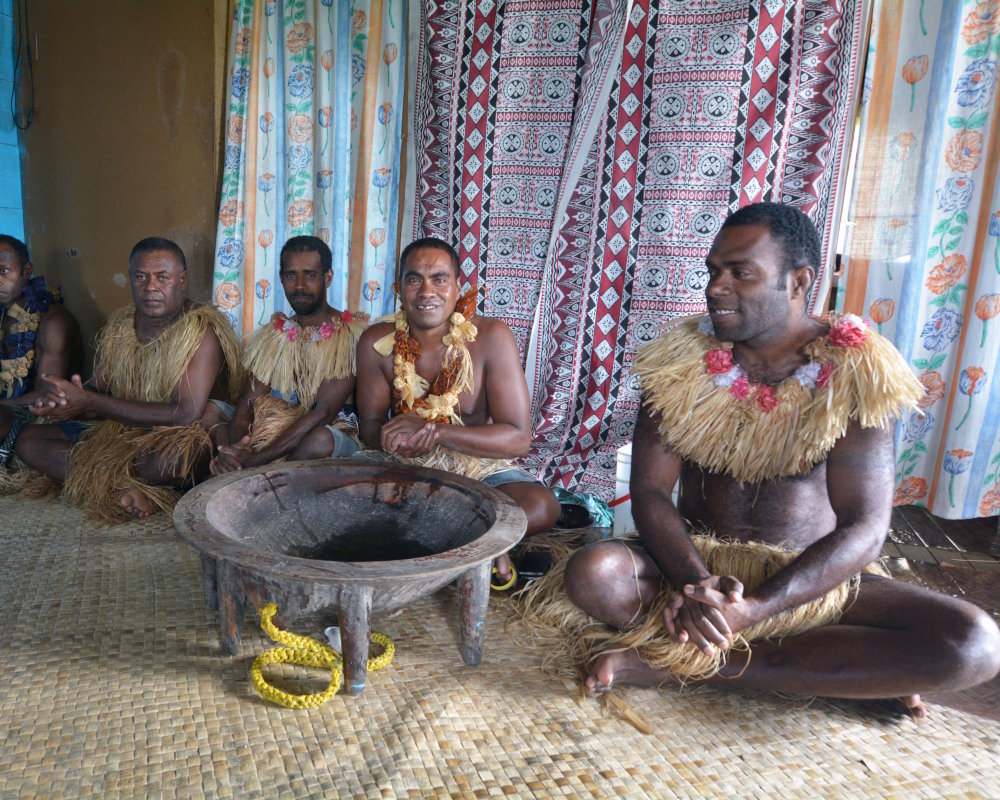
Traditional kava ceremony in Fiji, with yaqona served in a tanoa, the large bowl used to prepare and serve this drink
© Rafael Ben Ari | Dreamstime.comYaqona plays an important role in Fijian social and ceremonial life. When visiting a village, visitors may take part in a sevusevu ceremony, during which kava is presented to the village chief to formally request permission to enter the community's land. This ceremony provides a special opportunity to discover Fijian traditions, provided that local customs are respected.
Things not to miss
Viti Levu and the Nadi area make an excellent starting point for discovering Fiji. You can explore the island's landscapes, visit villages, discover the western coast, and easily reach the neighboring island groups. An excursion into the mountainous interior of
Viti Levu also allows you to leave the resort areas behind and discover the tropical landscapes that cover the center of the island.
The
Mamanuca and Yasawa islands are must-see destinations for their beaches, lagoons, and reefs. The
Mamanuca islands are particularly well suited to short stays and day trips from Nadi, while the
Yasawa islands offer more opportunities for travelers who want to spend several days in a wilder island environment.
Vanua Levu, Taveuni, and Kadavu also deserve a place on an itinerary for travelers who want to discover another side of Fiji. These islands offer opportunities to combine hiking, nature, diving, and the exploration of less-visited landscapes. The
Kadavu region is particularly appealing to divers thanks to the Great Astrolabe Reef.
How to get there ?
Most international travelers arrive in Fiji through
Nadi International Airport (
NAN), located on the
western coast of Viti Levu. It is the country's main international gateway and handles the majority of international flights. A second international airport, Nausori (SUV), is located near Suva, but it receives far fewer direct international flights.
From Australia and New Zealand, Fiji can be reached by relatively short nonstop flights. Tourism Fiji indicates flight times of approximately 3 to 5 hours from major cities in eastern Australia and 3 to 4 hours from New Zealand. Connections are also available with several other countries around the Pacific and Pacific Rim.
Once you arrive in
Viti Levu, travel between the islands can be by plane or boat. The
Mamanuca and
Yasawa islands are particularly easy to reach from Port Denarau, while the more remote islands have air or sea connections suited to their location. To explore several regions of Fiji, it is therefore often worthwhile to combine domestic flights, boat transfers, and organized excursions.
An archipelago to discover beyond the beaches
Fiji is much more than its white-sand beaches and turquoise lagoons. The archipelago combines volcanic landscapes, tropical forests, rivers, coral reefs, and a multitude of islands, each with its own character. This diversity makes it possible to plan either a beach vacation or a trip focused on nature, culture, and the underwater world.
With 333 islands, the country above all offers the opportunity to create a trip tailored to your interests. A first visit can easily combine
Viti Levu with the
Mamanuca or
Yasawa islands, while a longer journey can venture farther to
Vanua Levu,
Taveuni,
Kadavu, or the more remote island groups in the east.
The marine species in the Fidji islands
The Fiji islands
Melanesia
The islands from pacific ocean
Explore new islands