

Sealife guideThe false clownfishAmphiprion ocellaris
Last updated on 08/14/2026 at 10:56 PM
The false clownfish (Amphiprion ocellaris) is one of the most recognizable reef fish. Its famous association with sea anemones provides shelter in the heart of coral reefs, while its bright colors make it easy to identify. This small tropical species lives mainly in the shallow waters of the Indo-Pacific.
Taxonomy
English names
False clownfishCommon clownfishFalse percula clownfish
French namesPoisson clown à trois bandes
Spanish namesPez payaso de tres bandasPez payaso falsoPez payaso común
Scientific nameAmphiprion ocellaris (Cuvier, 1830)
FamilyPomacentridae
OrderPerciformes
ClassActinopterygii
Description
The false clownfish has a relatively short, laterally compressed body, usually bright orange, crossed by three broad white bands edged in black. The first band is located on the head, the second in the middle of the body, and the third at the base of the caudal fin. Its caudal fin is rounded.
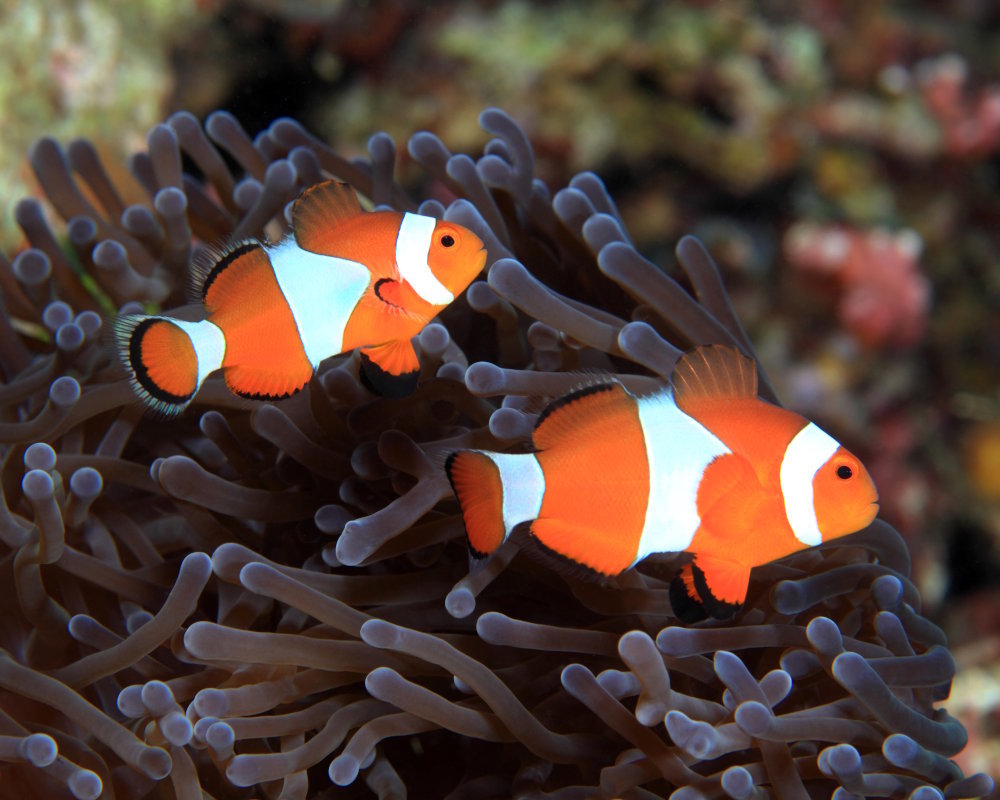
Two false clownfish (Amphiprion ocellaris) living in association with their host anemone © Aquanaut4 | Dreamstime.com
Its white bands are generally surrounded by thinner black margins, which helps distinguish it from the orange clownfish (Amphiprion percula), which closely resembles it.
The false clownfish generally grows to a few inches in length as an adult, but the largest specimens can reach up to 4.3 inches in length.
Geographic range
The false clownfish inhabits the tropical waters of the western Indo-Pacific, from the eastern Indian ocean to the western Pacific. Its range includes the Andaman and Nicobar islands, Thailand, Malaysia, northwestern Australia, Singapore, Indonesia, and the Philippines, and extends northward to Taiwan and the Ryukyu islands. The species is notably found in Indonesia, including the Komodo region.
Habitat
The false clownfish mainly inhabits shallow coral reefs and calm lagoons, generally from a few feet to around 50 feet deep.
It lives among the stinging tentacles of large sea anemones, which provide shelter from predators. Its known host anemones include the magnificent sea anemone (Heteractis magnifica), the giant carpet anemone (Stichodactyla gigantea), and Mertens' carpet anemone (Stichodactyla mertensii). This close association is one of the most remarkable characteristics of its way of life.
Diet
The false clownfish is an omnivore. It feeds on small organisms found in the water, particularly zooplankton, but also consumes algae. It can therefore search for part of its food around its anemone while remaining close to this shelter.
Reproduction
The false clownfish has a particularly fascinating reproductive system. Individuals are born male, and some can later become female during their lifetime: this phenomenon is called protandrous hermaphroditism. Within a group, the largest female generally dominates a breeding male, while the other individuals are smaller and non-reproductive. If the female disappears, the breeding male can change sex and take her place.
Reproduction takes place near the anemone. The female lays her eggs on a surface located close to it, where they remain attached to the substrate. The male then plays an essential role in protecting them by monitoring and fanning them with his fins until they hatch.
Did you know ?
Beware of similar species
The false clownfish (Amphiprion ocellaris) closely resembles the orange clownfish (Amphiprion percula). Despite their very similar three white bands, they are indeed two different species.
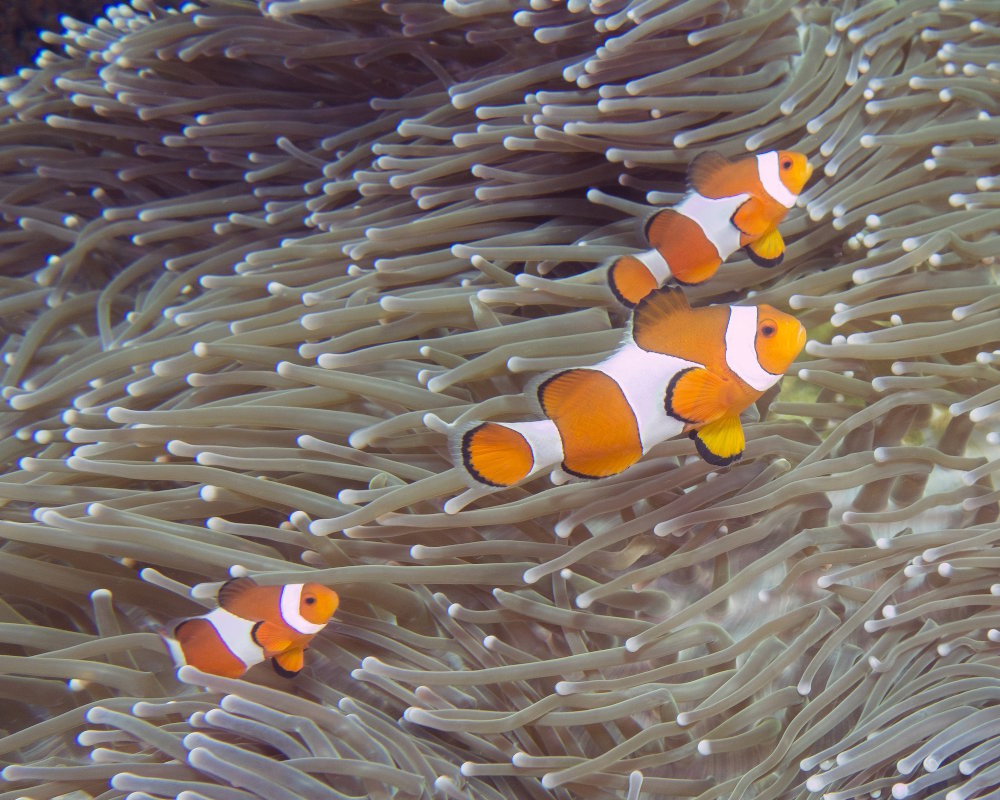
A family of false clownfish (Amphiprion ocellaris) on a magnificent sea anemone (Heteractis magnifica) off the coast of Komodo National Park, Indonesia © David Sanford | Dreamstime.com
Nemo, the famous clownfish from the Disney-Pixar movie Finding Nemo, is depicted as a false clownfish (Amphiprion ocellaris), a species closely related to the orange clownfish (Amphiprion percula).
A close association with its host anemone
The relationship between the false clownfish and its sea anemone is one of the most famous associations in the underwater world. The anemone provides the fish with shelter through its stinging tentacles, while the fish remains nearby and can contribute to keeping the anemone clean. This association allows the small fish to live in an environment where many predators would otherwise have easy access to it.
Within the same genus
Eastern clown anemonefishAmphiprion percula
Maldive anemonefishAmphiprion nigripes
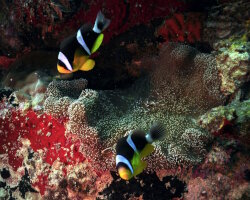
Seychelles anemonefishAmphiprion fuscocaudatus
Within the same family
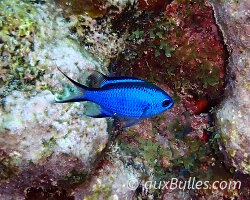
Blue chromisAzurina cyanea
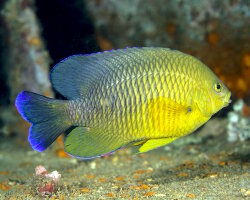
Dusky damselfishStegastes fuscus
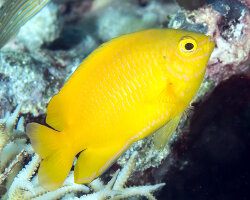
Lemon damselfishPomacentrus moluccensis
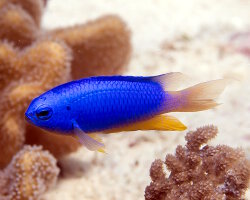
Neon damselfishPomacentrus coelestis
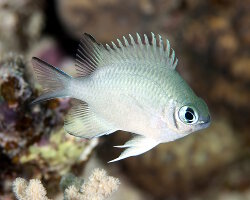
Pale damselfishAmblyglyphidodon indicus
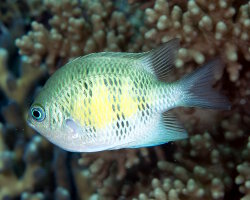
Staghorn damselfishAmblyglyphidodon curacao
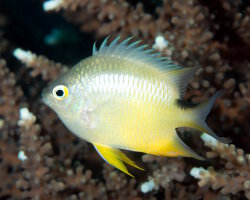
Ternate damselfishAmblyglyphidodon ternatensis
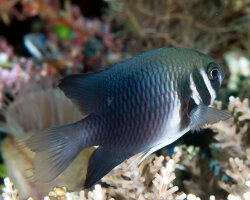
Western barhead damselfishNeoglyphidodon thoracotaeniatus
Discover also
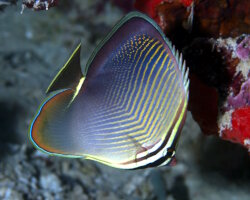
Eastern triangle butterflyfishChaetodon baronessa
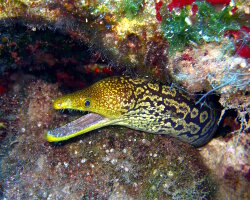
Fangtooth morayEnchelycore anatina
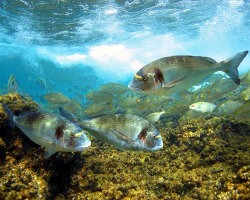
Gilthead seabreamSparus aurata
Halfspotted grouperCephalopholis hemistiktos
Harlequin bassSerranus tigrinus
Rusty angelfishCentropyge ferrugata
Sixbar angelfishPomacanthus sexstriatus
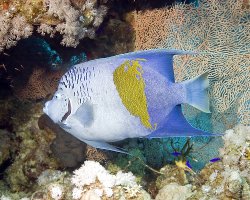
Yellow blotch angelfishPomacanthus maculosus
Our latestUpdates
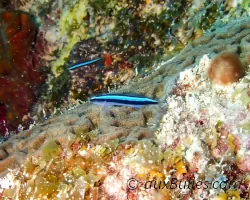
The neon gobyDiscover the neon goby (Elacatinus oceanops), a small western Atlantic reef fish known for its brilliant blue stripe and its role as a cleaner fish that removes parasites from other fish.Read more
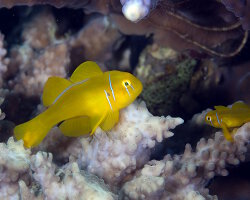
The poison gobyDiscover the poison goby (Gobiodon citrinus), a tiny reef fish with a bright yellow body and distinctive blue markings. It lives among branching Acropora corals in the tropical waters of the Indo-Pacific.Read more
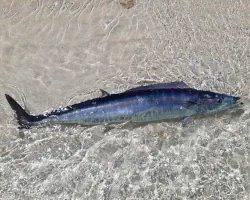
The wahooDiscover the wahoo (Acanthocybium solandri), a powerful pelagic predator found in tropical and subtropical oceans. Recognizable by its streamlined body and distinctive blue vertical stripes, it is a fast swimmer that feeds mainly on fish and squid.Read more
Photo of the Day

Fou à pieds rouges
(Sula sula)
(Sula sula)
 Copyright © 2007-2026 auxBulles.com - All rights reserved. Legal notices.
Photo credits - Our partners