

Sealife guideThe Port Jackson sharkHeterodontus portusjacksoni
Last updated on 08/06/2026 at 10:16 PM
Taxonomy
English names
Port Jackson shark
French namesRequin dormeur taureauRequin de Port Jackson
Scientific nameHeterodontus portusjacksoni (Meyer, 1793)
FamilyHeterodontidae
OrderHeterodontiformes
ClassElasmobranchii
Description
The Port Jackson shark has spines on each of its two dorsal fins. The anal fin is present in the Port Jackson shark.
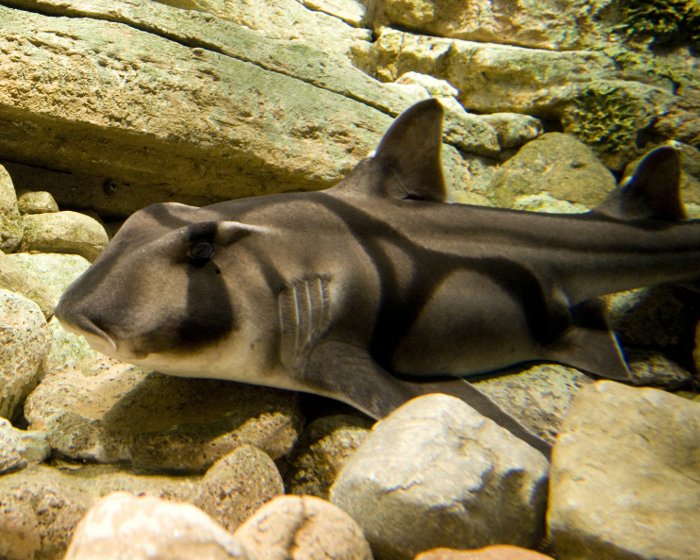
The Port Jackson shark is brown in color with a distinctive dark harness-like pattern covering its back!
The Port Jackson shark is brown in color and its back is covered with distinctive markings featuring a visible pattern of dark, narrow stripes resembling a harness. Its head is broad with a prominent brow.
The Port Jackson shark has an average length of around 4.3 feet but can reach a maximum size of 5.4 feet in length.
Geographic range
The Port Jackson shark is found in the waters of the western Pacific ocean along the coasts of Australia.
Habitat
The Port Jackson shark lives on the continental shelf, in shallow coastal waters down to the intertidal zone, but it can also be found at depths of around 656 feet. It mainly inhabits sandy or rocky seabeds and sometimes takes shelter in rocky crevices. It spends most of the day resting motionless on the bottom and becomes active at night to search for prey.
Diet
The Port Jackson shark feeds on bottom-dwelling marine invertebrates, mainly sea urchins, as well as small crustaceans, sea stars, marine worms, gastropods, and bivalves. It also occasionally captures small fish.
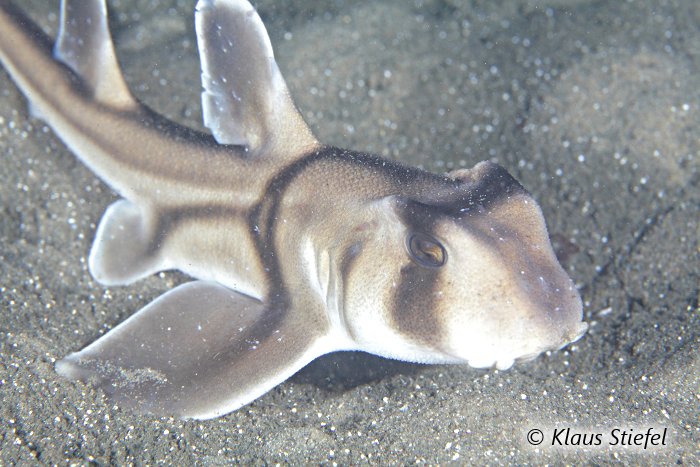
The Port Jackson shark has a broad head with a prominent brow.
Reproduction
The Port Jackson shark is oviparous. The female lays its eggs, around fifteen per year, which she deposits on the seabed. Carried by currents, they eventually become trapped in a rocky crevice. The embryos then develop inside the egg case for 9 to 12 months, nourished by the yolk sac, a true food reserve, before the young sharks hatch.
Young Port Jackson sharks reach sexual maturity when they are approximately 3.3 feet in length.
Did you know ?
The Port Jackson shark is a shark species endemic to the coastal waters of Australia, particularly around the natural harbor of Sydney, Port Jackson.
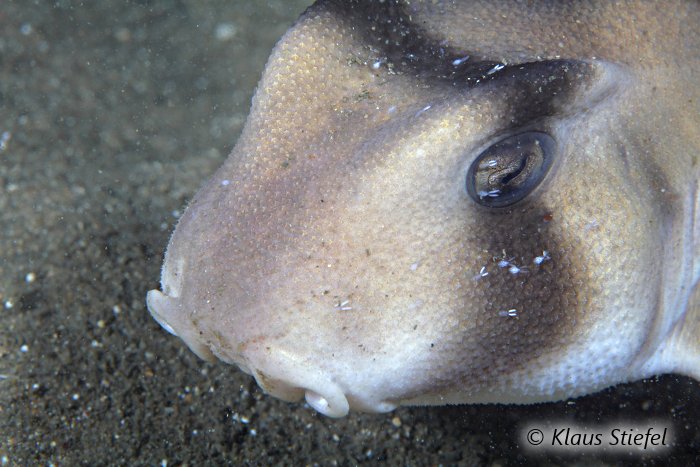
The Port Jackson shark has an exceptionally well-developed sense of smell!
The Port Jackson shark has an exceptionally well-developed sense of smell, allowing it to hunt at night in complete darkness for prey hiding in the sand!
Within the same genus
Crested hornshark
(Heterodontus galeatus)
(Heterodontus galeatus)
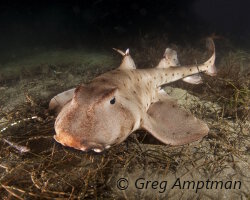
Horn shark
(Heterodontus francisci)
(Heterodontus francisci)
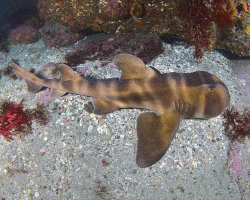
Japanese bullhead shark
(Heterodontus japonicus)
(Heterodontus japonicus)
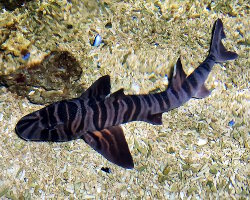
Zebra bullhead shark
(Heterodontus zebra)
(Heterodontus zebra)
Discover also
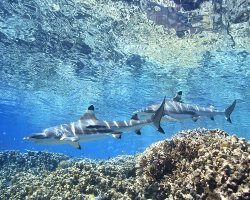
Blacktip reef shark
(Carcharhinus melanopterus)
(Carcharhinus melanopterus)
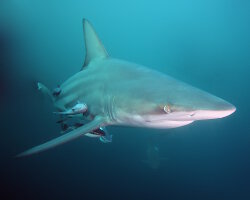
Blacktip shark
(Carcharhinus limbatus)
(Carcharhinus limbatus)
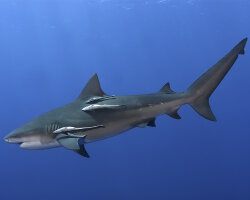
Bull shark
(Carcharhinus leucas)
(Carcharhinus leucas)
Dusky shark
(Carcharhinus obscurus)
(Carcharhinus obscurus)
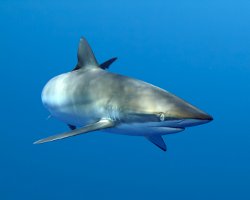
Silky Shark
(Carcharhinus falciformis)
(Carcharhinus falciformis)
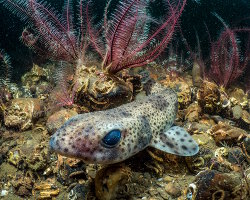
Small-spotted catshark
(Scyliorhinus canicula)
(Scyliorhinus canicula)
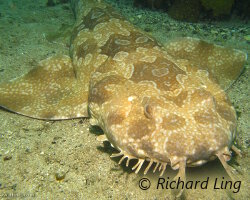
Spotted wobbegong
(Orectolobus maculatus)
(Orectolobus maculatus)
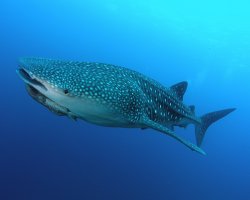
Whale shark
(Rhincodon typus)
(Rhincodon typus)
Our latestUpdates
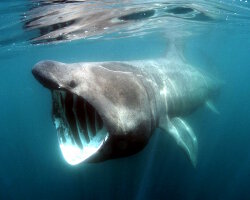
The basking sharkDiscover the basking shark (Cetorhinus maximus), the world's second-largest fish. This huge shark feeds on plankton by filtering large amounts of water.Read more
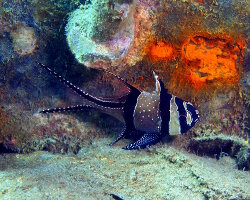
The Banggai cardinalfishDiscover the Banggai cardinalfish (Pterapogon kauderni), a small marine fish endemic to the Banggai Islands, known for its black-and-white stripes and unique reproductive behavior.Read more
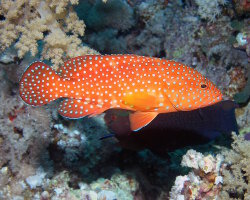
The coral hindDiscover the coral hind (Cephalopholis miniata), a colorful Indo-Pacific grouper known for its reddish-orange body covered with small blue spots.Read more
Photo of the Day
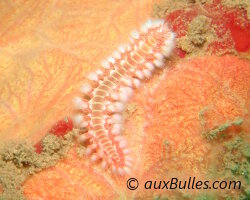
Ver de feu
(Hermodice carunculata)
(Hermodice carunculata)
 Copyright © 2007-2026 auxBulles.com - All rights reserved. Legal notices.
Photo credits - Our partners