

Sealife guideThe yellow encrusting sea anemoneParazoanthus axinellae
Last updated on 11/23/2026 at 11:08 PM
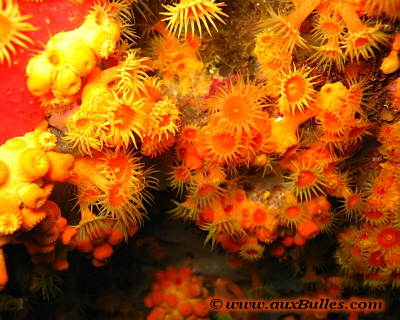
The yellow encrusting sea anemone (Parazoanthus axinellae)
The yellow encrusting sea anemone (Parazoanthus axinellae) is a colonial zoanthid that forms carpets of tiny bright yellow to orange polyps on rocky walls. Common throughout the Mediterranean, it favors dimly lit areas swept by currents, where its colonies sometimes resemble underwater flower beds.
Taxonomy
English names
Yellow encrusting sea anemone
French namesAnémone encroûtante jaune
Spanish namesActinia encrostante amarilla
Scientific nameParazoanthus axinellae (Schmidt, 1862)
FamilyParazoanthidae
OrderZoanthidea
ClassAnthozoa
Description
The yellow encrusting sea anemone consists of numerous individuals called polyps, joined together in colonies. Each polyp is shaped like a small upright, retractable tube, generally 0.4 to 0.8 inches tall and approximately 0.2 inches in diameter. Its upper part is surrounded by two rings of slender, elongated tentacles arranged in two cycles. Their number varies, usually 24 or 36, and is always a multiple of six. The mouth lies at the center of the tentacles and allows the animal to ingest prey.
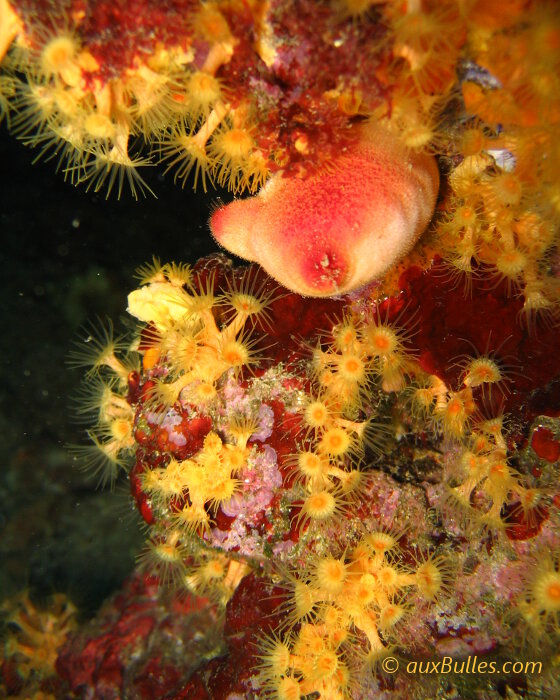
The yellow encrusting sea anemone forms large, dense colonies resembling underwater flower beds, with colors ranging from bright yellow to orange
The polyps are connected at their bases and form dense colonies ranging in color from bright yellow to orange. These carpets of tiny polyps resemble true underwater flower beds.
Geographic range
The yellow encrusting sea anemone is found in the northeastern Atlantic, from the British coast to the Canary Islands, as well as in the Mediterranean Sea, the English Channel, and the North Sea.
Habitat
The yellow encrusting sea anemone covers rocky surfaces, particularly reef slopes, overhangs, and cave entrances, where it finds low-light conditions. It especially favors areas swept by currents, which bring it the small prey it feeds on. It can also attach itself to sponges, particularly those of the genus Axinella, as well as to other marine organisms.
It is found from shallow waters down to around 328 feet and can sometimes be observed at depths of up to 656 feet.
Diet
The yellow encrusting sea anemone feeds mainly on tiny zooplankton carried by ocean currents. When these small prey come into contact with its tentacles, specialized stinging cells called cnidocytes release toxins that immobilize them. The prey are then transported to the mouth, where they are ingested and digested.
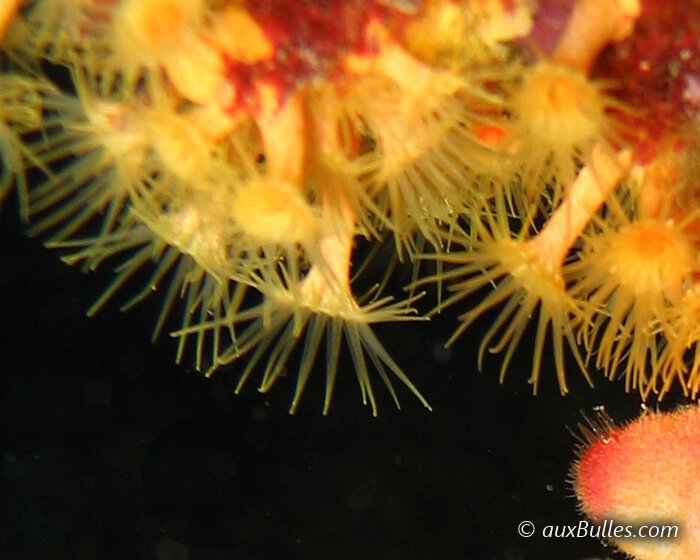
The yellow encrusting sea anemone forms colonies made up of numerous polyps
Reproduction
The yellow encrusting sea anemone reproduces in two ways : sexually and asexually.
Asexual reproduction
Asexual reproduction occurs through a process called pedal laceration. Fragments of the colony's base gradually break away and can develop into new polyps. This mechanism allows the colony to expand and colonize new surfaces.
Sexual reproduction
Sexual reproduction involves separate male and female individuals, which release their gametes into the water. After fertilization, the egg develops into a larva called a planula, which spends a short time drifting freely before settling on a suitable surface to form a new colony.
Did you know ?
The size of yellow encrusting sea anemone colonies varies considerably depending on their geographic location, ranging from vast flower beds covering hundreds of square feet to small clusters of around a dozen individuals.
Tips for observing
To observe the yellow encrusting sea anemone, explore rocky walls, overhangs, and cave entrances, especially in dimly lit areas swept by currents. Its colonies sometimes form vast bright yellow carpets that stand out against the surrounding rock.
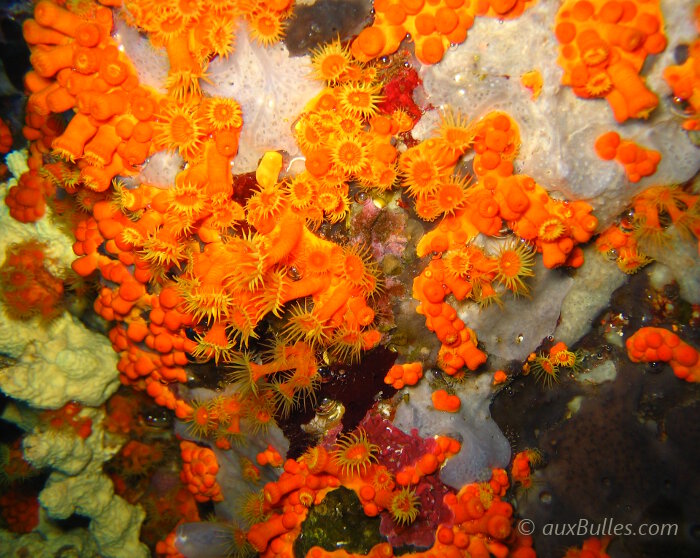
The yellow encrusting sea anemone covers rocky surfaces, particularly sheltered, dimly lit areas such as overhangs and crevices
Discover also
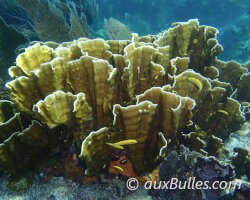
Bladed fire coralMillepora complanata
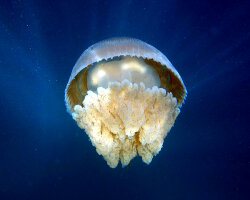
Blue blubber jellyfishCatostylus mosaicus
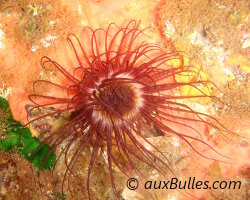
Cylinder anemoneCerianthus membranaceus
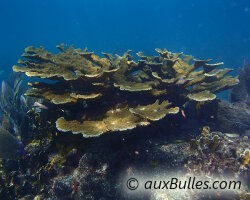
Elkhorn coralAcropora palmata
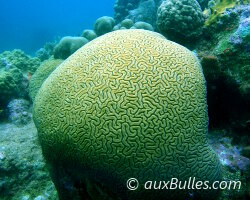
Labyrinthine brain coralDiploria labyrinthiformis
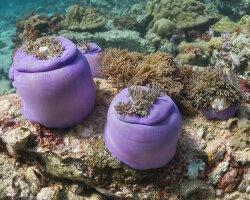
Magnificent sea anemoneRadianthus magnifica
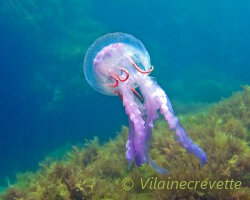
Purple-striped jellyPelagia noctiluca
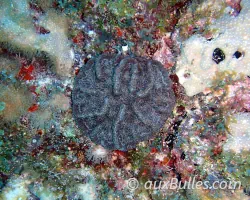
Ridged cactus coralMycetophyllia lamarckiana
The marine species in the Mediterranean Sea


Our latestUpdates

Miami, in the footsteps of Vice City and GTA VIDiscover Miami, the real-life inspiration behind GTA Vice City and GTA VI. Explore South Beach, Ocean Drive, Brickell, Wynwood, the Florida Keys, and the Everglades, from iconic landmarks and vibrant neighborhoods to tropical landscapes.Read more
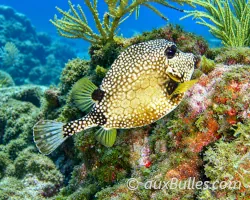
The smooth trunkfishDiscover the smooth trunkfish (Rhinesomus triqueter), a reef-dwelling fish from the tropical western Atlantic. Its angular body, protected by a bony carapace, features a dark coloration with white spots and distinctive honeycomb patterns.Read more
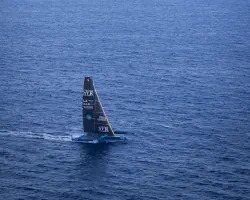
A tense finish in the CaribbeanA look back at the 2026 Route du Rhum finish: Tom Laperche wins the Ultim class as the leading boats arrive and close battles continue across the other fleets.Read more
Photo of the Day
Requin marteau tiburo
(Sphyrna tiburo)
(Sphyrna tiburo)
 Copyright © 2007-2026 auxBulles.com - All rights reserved. Legal notices.
Photo credits - Our partners