

Islands destinationTinian IslandMariana Islands | Pacific Ocean
Last updated on 10/01/2026 at 12:40 AM
Located in the Northern Mariana Islands, Tinian is a small tropical island just a few miles southwest of Saipan. Its beaches lined with turquoise waters, coral reefs, and limestone cliff landscapes make it a popular destination for water activities and exploring nature.
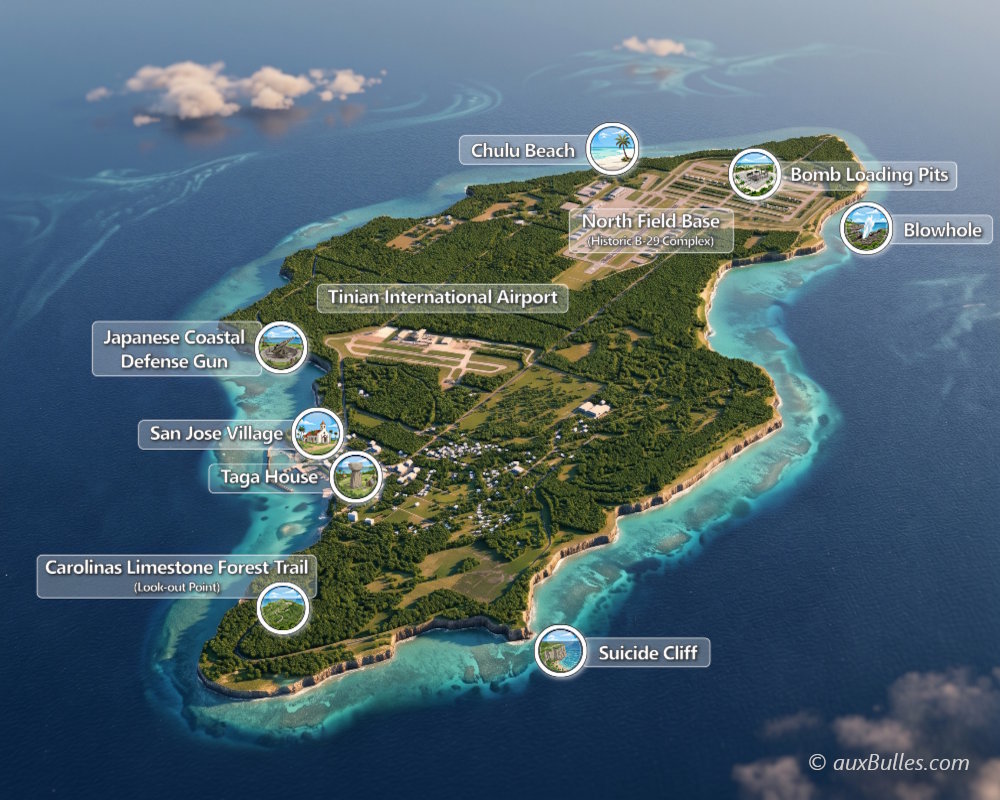
Map of Tinian Island showing the main points of interest
Tinian also has an exceptional historical heritage that reflects several centuries of human settlement. The remains of Chamorro culture stand alongside the ruins of the Japanese period and World War II military installations, particularly those at North Field, from where aircraft carrying the atomic bombs dropped on Hiroshima and Nagasaki departed in 1945.
A small island south of Saipan
An island near Saipan
Tinian lies about 5 miles southwest of Saipan, separated from it by the Saipan Channel. Covering about 39 sq mi, the island is much less developed than its neighbor and retains a peaceful atmosphere, with large natural areas and lightly traveled roads. Its highest point is Mount Lasso, which rises to about 561 feet above sea level.
Landscapes between cliffs and beaches
The island's terrain consists mainly of limestone, with coastal cliffs, caves, and plains covered in tropical vegetation. The coastline alternates between rocky shores and sandy beaches, while the waters around Tinian are home to coral reefs and diverse marine life. These conditions are particularly well suited to scuba diving, snorkeling, and fishing.
A remarkable Chamorro heritage
The House of Taga
Among the most remarkable remnants of ancient Chamorro culture is the House of Taga, or As Taga, located near the village of San José. This archaeological site was once part of a large village dating to the latte period, when these monumental stone structures were a defining feature of traditional Chamorro architecture. They consisted of pillars known as haligi, topped with rounded stones called tasa. The largest surviving latte consists of a vertical stone pillar topped by its hemispherical capstone. It stands about 15.7 feet tall and is one of the most impressive surviving examples of this heritage in the Mariana Islands.
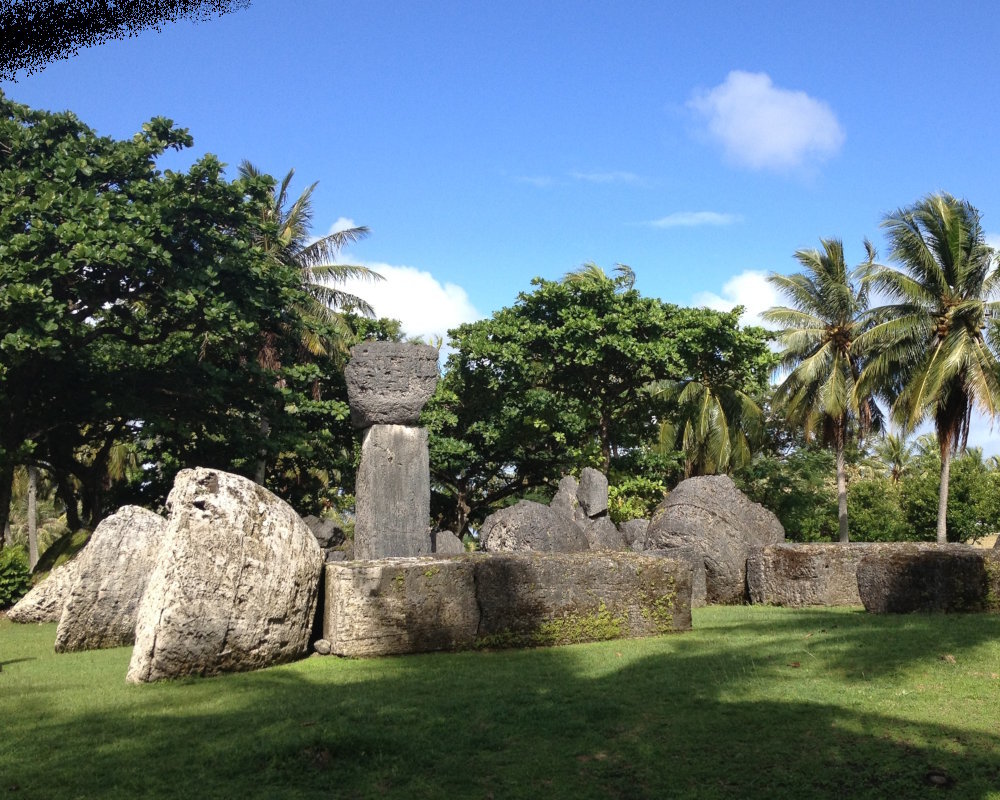
Ancient Chamorro ruins with latte stones, one of which is still standing, at the House of Taga on Tinian Island in the Northern Mariana Islands © RaksyBH | Dreamstime.com
Taga Well and ancient traditions
Nearby is Taga Well, an ancient well dug into the coastal plains. According to local tradition, it was built by Chief Taga to provide fresh water for his family. This type of well made it possible to reach a layer of fresh water located above seawater within the island's limestone terrain. The site illustrates the techniques and adaptations developed by Tinian's early inhabitants to live in this island environment.
Tinian at the heart of the Pacific War
North Field
Tinian's recent history is closely linked to World War II. After American forces captured the island in July 1944, a huge airfield was built on the former Japanese airfield at Ushi Point. Named North Field, it became one of the main U.S. air bases in the Pacific and had four long runways capable of handling B-29 bombers.
The Atomic Bomb Pits
The Atomic Bomb Pits are now among Tinian's best-known historic sites. These pits were specially built to allow exceptionally large bombs to be loaded onto B-29 bombers. In August 1945, the two atomic bombs known as Little Boy and Fat Man were loaded aboard the bombers Enola Gay and Bockscar at Pit One before their respective missions to Hiroshima and Nagasaki. The two pits are preserved today and protected by glass structures.
Military remains still visible
Remnants of the Japanese presence
Before the Battle of Tinian, the island had been developed by Japan and equipped with several military installations. Shinto shrines, guns installed inside caves, bunkers, and other remnants can still be seen in different parts of the island. These remains help illustrate Tinian's strategic importance before and during the Pacific War.
The southern cliffs
At the southern end of Tinian, the cliffs known as Suicide Cliff are also associated with the final fighting of the Battle of Tinian in July and August 1944. Japanese military personnel and civilians jumped from the cliffs as American forces advanced. Memorials now commemorate those who died during these events.
A coastline ideal for water activities
Reefs rich in marine life
The waters around Tinian are known for their coral reefs and marine diversity. Clear water and numerous underwater habitats provide favorable conditions for scuba diving and snorkeling. In some areas, visitors can also observe fish and other organisms associated with tropical reefs.
Unspoiled beaches
Tinian has several quiet beaches bordered by clear waters, particularly along the southwestern coast. Taga Beach and Jones Beach are among the sites highlighted for their scenery and peaceful atmosphere. The island therefore offers a striking contrast between its highly visible military history and its still largely undeveloped coastal areas.
How to get there ?
From Saipan
Tinian is primarily accessible from Saipan, located just a few miles to the northeast. Regional airline STAR Marianas Air operates regular flights between the two islands. The flight takes only about 15 minutes, with several flights scheduled each day. Since schedules may change, it is best to check them before departure.
Frequent air service
From Saipan, flights to Tinian depart from the inter-island terminal at Saipan International Airport and arrive at Tinian International Airport. STAR Marianas Air offers daily service in both directions and also accepts passengers without advance reservations, subject to available seats. For traveling from Saipan to Tinian, flying is the most convenient way to travel between the two islands.
Mariana islands
Guam island
Mariana islands
Northern Mariana islands
Rota Island
Saipan island
The islands from pacific Ocean

Caroline islands
Cook islands
Easter island
Galapagos islands
Lomaiviti islands
Taveuni island
Vanua Levu island
Viti Levu island
Explore new islands

Batz island
Burano island
Eleuthera island
Hvar island
Key Largo island
Koufonissi island
New-Zealand
Paros island
Our latestUpdates
The neon gobyDiscover the neon goby (Elacatinus oceanops), a small western Atlantic reef fish known for its brilliant blue stripe and its role as a cleaner fish that removes parasites from other fish.Read more
The poison gobyDiscover the poison goby (Gobiodon citrinus), a tiny reef fish with a bright yellow body and distinctive blue markings. It lives among branching Acropora corals in the tropical waters of the Indo-Pacific.Read more
The wahooDiscover the wahoo (Acanthocybium solandri), a powerful pelagic predator found in tropical and subtropical oceans. Recognizable by its streamlined body and distinctive blue vertical stripes, it is a fast swimmer that feeds mainly on fish and squid.Read more
Photo of the Day

Fou à pieds rouges
(Sula sula)
(Sula sula)
 Copyright © 2007-2026 auxBulles.com - All rights reserved. Legal notices.
Photo credits - Our partners