Diving DestinationsSwim with Whale Sharks at Ningaloo ReefAustralia
Last updated on 02/04/2026 at 11:44 PM
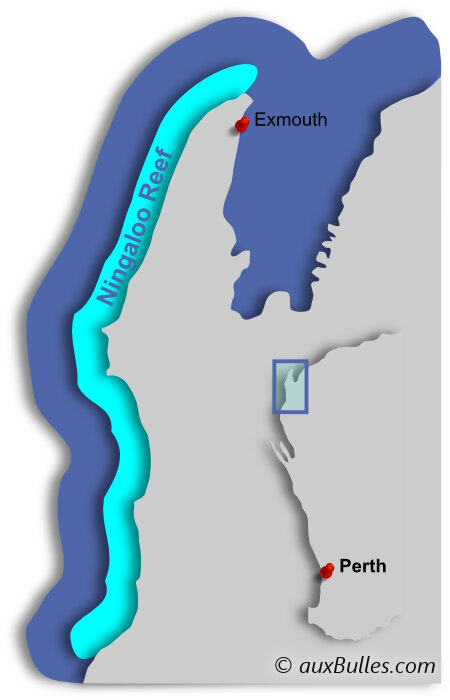
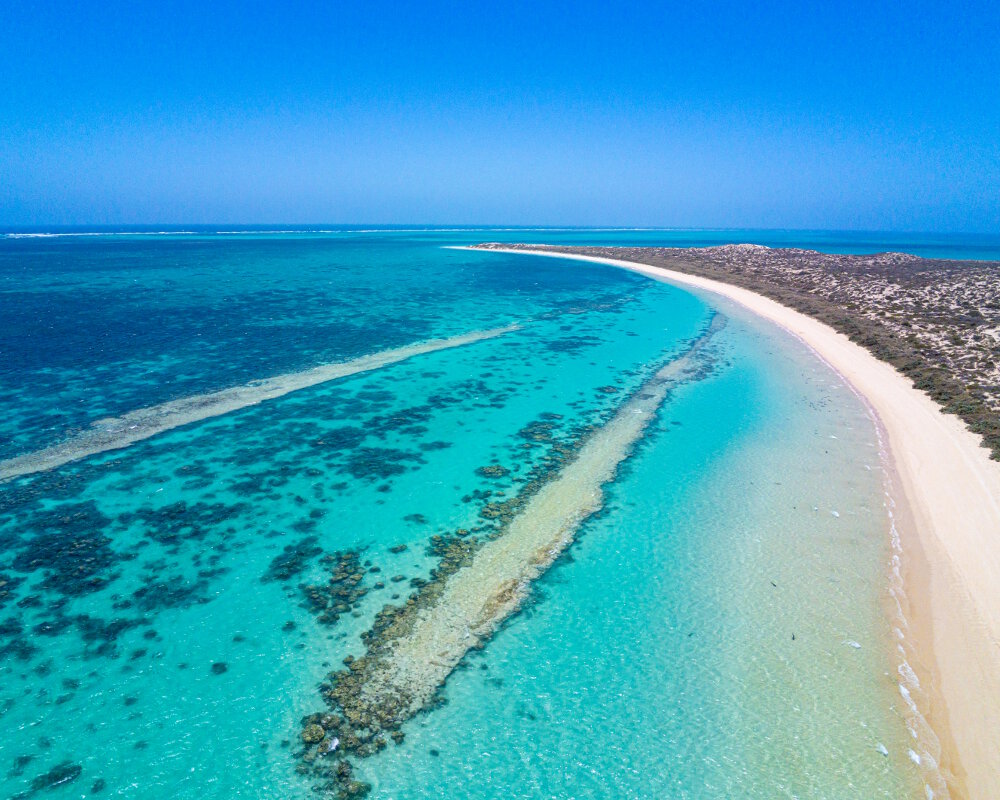
Ningaloo Reef is located on Australia's west coast, north of Perth
While they stay near the Exmouth coast from February to October, the prime time to observe
whale sharks in their natural habitat is from April to July.
The Ningaloo coast, located in Western Australia, north of Perth, was recognized as a UNESCO World Heritage site in 2011. It is renowned for its beauty and diversity. In addition to the
whale shark, the 260 kilometers of reefs along the northern western coast are home to a rich variety of marine species, including the famous blue whale, as well as the
humpback whale and the
manta ray. But the list doesn't stop there — three distinct species of
sea turtles are present, along with hundreds of tropical fish and all types of corals.
It is the perfect place to observe
humpback whales between June and November, and witness the hatching of rare species of
sea turtles through eco-interactive guided tours in January and February.
A magical encounter
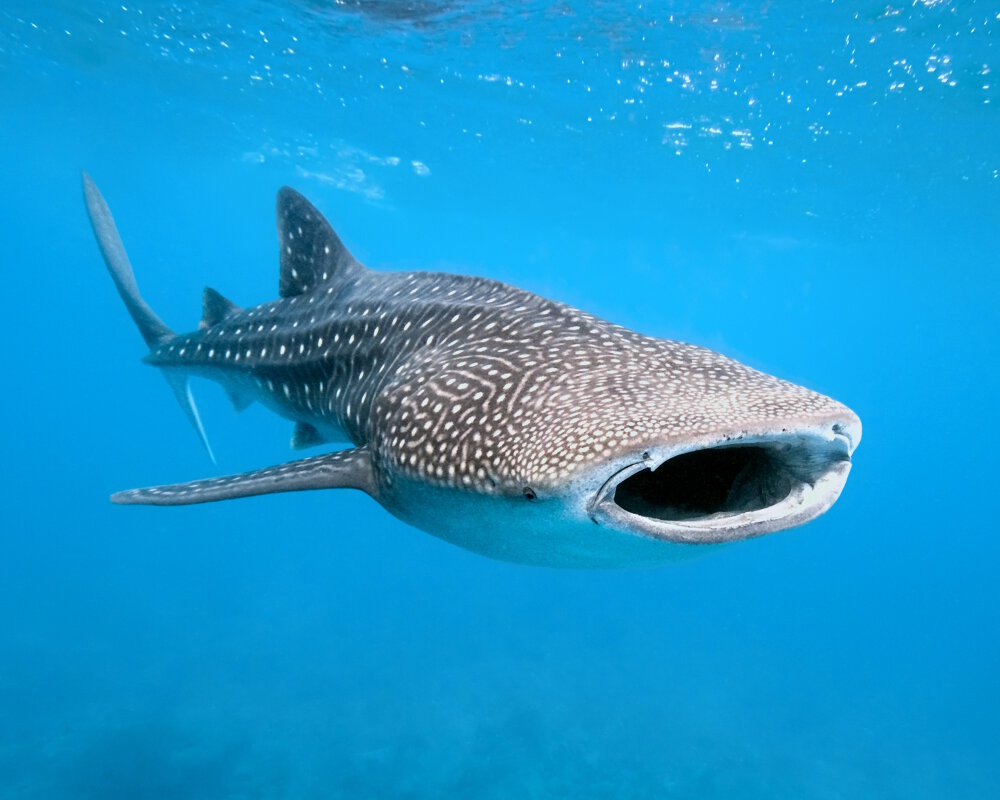
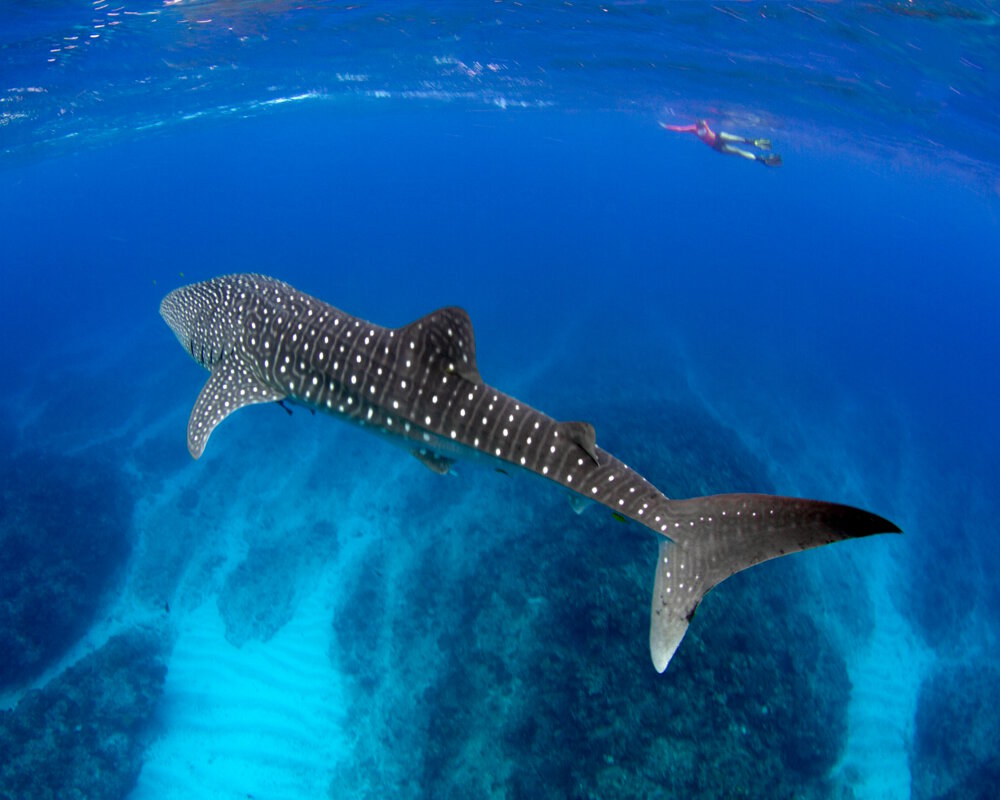
« Diving with the whale sharks off the west coast of Australia is a bit like waiting for a bus. In the depths of the Indian Ocean, with a mask and snorkel, it's impressive to see a blue-gray giant with white spots appear and swim alongside it. At first, you only notice an enormous mouth, like a giant mailbox, integrated into a wide drifting head, until a six-meter-long mass fills your field of vision. Passengers, remoras, and small pilot fish are already on board, and you have to try to keep up with the slow movement of the fish. ».
« The first time isn't easy, because if you miss the train, you endlessly chase a tail that disappears. But if you manage to stay along its flank and hold on, for a minute or two you can glide with your new friend and take a closer look at the whale shark's characteristic spotted and striped pattern. ».
« It's worth noting that it's the largest fish in the world! », exclaims the diver, adding that « Calmness and serenity are the dominant feelings after such a dive ». And finally, despite popular belief, « it's not a terrifying experience — the whale shark moves with great grace ».
Whale Shark Conservation
The Ningaloo coast, a World Heritage site, gave rise to a scientific project for the observation and conservation of
whale sharks. Created in 1999 by marine biologist Brad Norman, the
Ecocean program aims to use photography as a means of conservation. It encourages the hundreds of visitors coming to Ningaloo and other dive sites each year to photograph the
whale sharks. The photos are then cataloged in a central database to build a substantial archive of these truly impressive fish.
Over 47,000 photographs have thus been taken in a spirit of global collaboration by “
citizen scientists”, as Brad calls them. Thanks to this ingenious system, the Ecocean archives now contain data on
whale sharks from 54 different countries.
The photos are made available to the public on the
whaleshark.org website, which I highly recommend visiting. And don't forget to upload your own photos if you ever get the chance to swim with a whale shark !
Norman's research since 1994 has shown that the stripes and spots of
whale sharks are unique to each individual and can therefore be used to identify them, much like fingerprints. NASA analyses of the photographs have distinguished at least 180 different individuals along the Ningaloo coast. So far, we have limited information on the feeding and migratory habits of these creatures, which were only recognized by the scientific community in 1828.
For Brad Norman, this participatory project is a success. In his own words: «
It's an opportunity to show that eco-tourism focused on whale sharks can contribute to their conservation. If you can spark people's interest in whale sharks, you can raise awareness about protecting the environment in which they live ».
Diving to encounter
whale sharks is therefore combining business with pleasure. For those still undecided, Norman perfectly summarizes the experience: «
Swimming with the largest fish in the ocean is a once-in-a-lifetime moment ».
The marine species in Ningaloo Reef
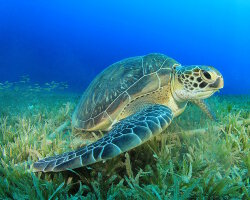
Green sea turtle
(Chelonia mydas)
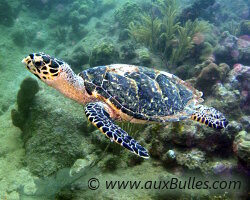
Hawksbill sea turtle
(Eretmochelys imbricata)
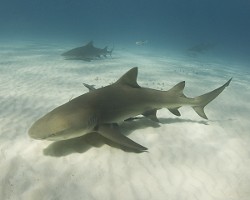
Lemon shark
(Negaprion brevirostris)
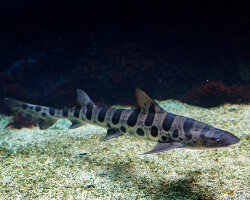
Leopard shark
(Triakis semifasciata)

Loggerhead sea turtle
(Caretta caretta)
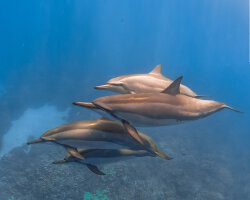
Spinner dolphin
(Stenella longirostris)
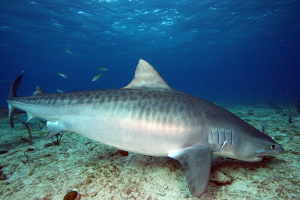
Tiger shark
(Galeocerdo cuvier)
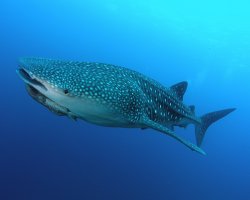
Whale shark
(Rhincodon typus)
A visiter dans le monde
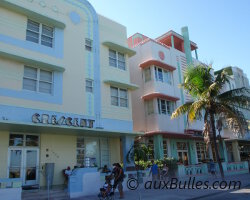
The Art Deco district

The magic of Christmas decorations
The Ding Darling National Wildlife Refuge
Filicudi island
La Gomera island

Christmas magic at Disney hotels
Port-Cros National Park

Wreck diving in Australia