

Sealife guideThe humpback whaleMegaptera novaeangliae
Last updated on 08/23/2024 at 11:53 PM
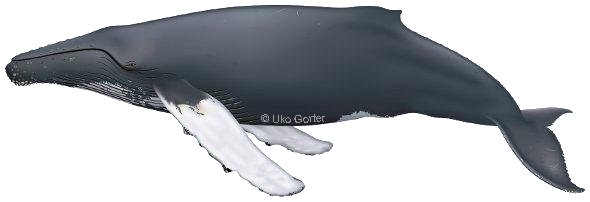
The humpback whale (Megaptera novaeangliae)
Taxonomy
English names
Humpback whale
French namesBaleine à bosseBaleine à taquetJubarteMégaptèreRorqual à bosseRorqual du Cap
Spanish namesRorcual jorobado
Scientific nameMegaptera novaeangliae (Borowski, 1781)
FamilyBalaenopteridae
OrderCetacea
ClassMammalia
Description
The humpback whale is a marine mammal belonging to the order of cetaceans, specifically the baleen whales. With a length of about 50 feet and an average weight of around 44,000 pounds, the humpback whale is among the largest of the cetaceans.
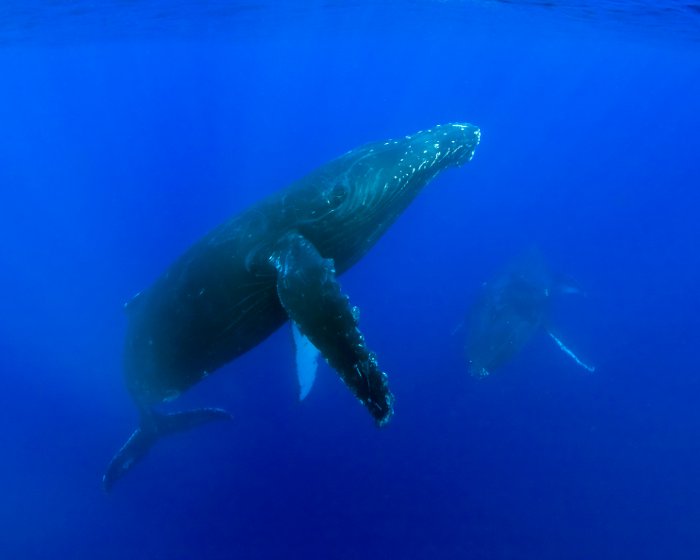
The humpback whale has a stocky body and long pectoral fins
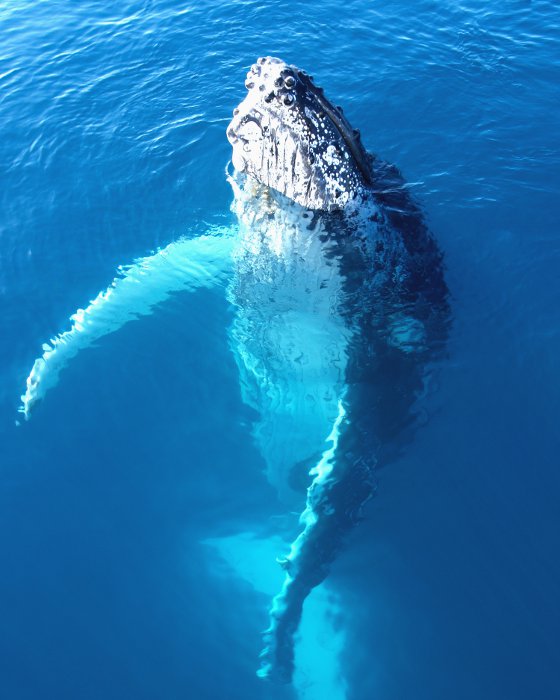
The small bumps called tubercles that cover the front of the humpback whale's head are a distinctive feature of the species and are the origin of its name !
The humpback whale has a stocky body with a black dorsal side. Its pectoral fins are long compared to its body size, nearly one-third of its total length. The underside of the fins is white with black at the base. The front of its head is covered with numerous small bumps called tubercules, which are a distinctive feature of the species and the origin of its name.
Geographic range
The humpback whale is found in all the world's oceans, traveling vast distances during its long migrations. It can be seen off the coast of British Columbia and in the Southern Ocean…
Habitat
The humpback whale is a pelagic marine mammal found offshore in open waters. It undertakes long migrations across oceans to reach its feeding and breeding grounds. During these migrations, the humpback whale can travel over 15,500 miles each year.
Diet
The humpback whale primarily feeds on krill, which it finds in abundance during the summer months in the icy waters of the polar oceans. In winter, the humpback whale relies on the reserves it has built up during the summer.
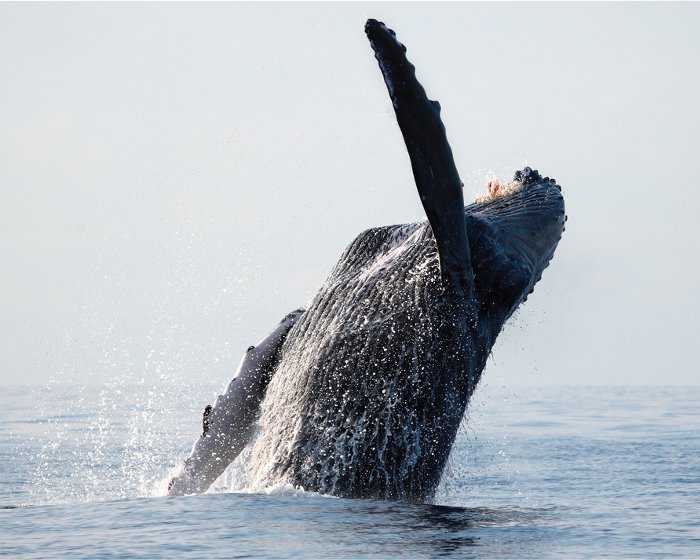
The humpback whale performs spectacular breaches out of the water !
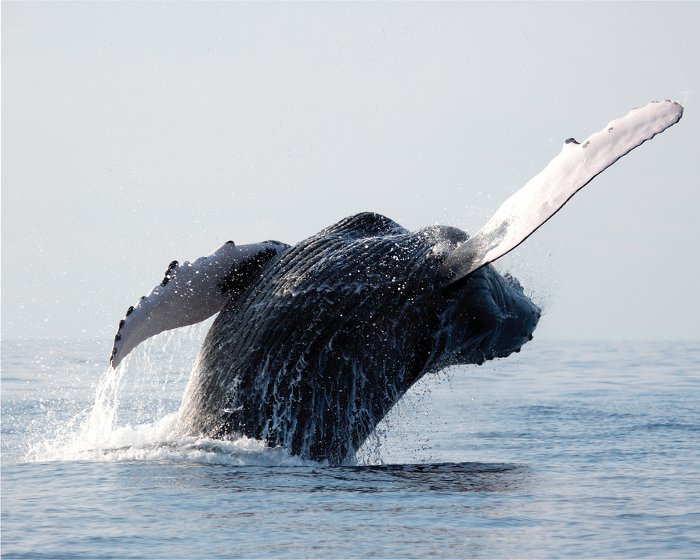
The aerial acrobatics of a humpback whale !
Reproduction
Reaching sexual maturity around the age of 5, the humpback whale gives birth to a calf only every two years. During the breeding season, humpback whales migrate to warmer tropical waters to mate and give birth.
Did you know ?
The humpback whale can be easily identified by its tail, which is prominently visible above the water with each dive. Similar to human fingerprints, each whale has a unique tail fluke pattern with distinctive shapes, notches, and black or white markings. Researchers have created detailed identification catalogs of humpback whales based on photographs of the tails of different individuals encountered. Humpback whales are thus cataloged worldwide according to their distribution areas.
The humpback whale frequently falls victim to ship collisions as well as entanglement in derelict fishing nets, where it can suffocate. The humpback whale has been listed on the IUCN Red List of Threatened Species since 1996. Initially classified as « endangered » then « vulnerable » and since 2008 as « least concern », the status of the humpback whale remains precarious and continues to face significant threats.
The humpback whale also benefits from protection measures and sanctuaries in several countries. Additionally, the humpback whale is listed on CITES Appendix I, which includes species that are the most endangered of all animal species.
Tips for observing
The humpback whale puts on a show with spectacular leaps out of the water, and with each dive, it gives photographers the chance to capture stunning shots and provides scientists with valuable images of its tail as it emerges above the surface.
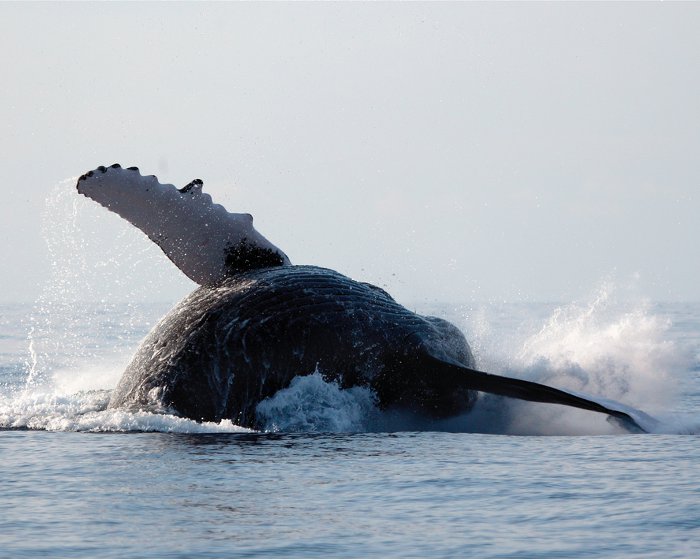
The humpback whale puts on a show, performing spectacular leaps out of the water !
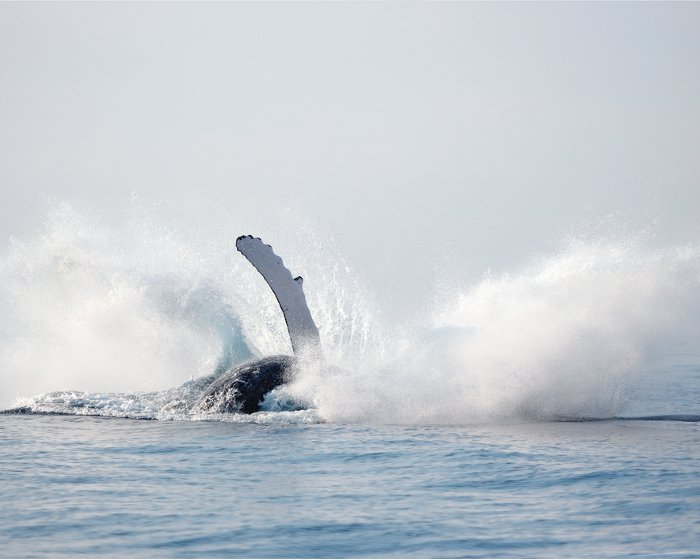
End of the humpback whale's show !
Whale watching is the art of observing whales in their natural habitat, but the challenge lies in finding the perfect vantage point ! Therefore, I suggest you discover where to see whales in Australia
Within the same family
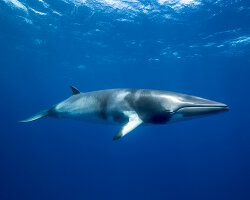
Dwarf minke whale
(Balaenoptera acutorostrata)
(Balaenoptera acutorostrata)
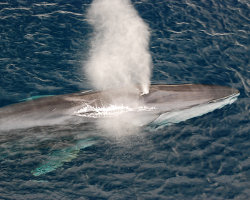
Fin whale
(Balaenoptera physalus)
(Balaenoptera physalus)
Discover also

Atlantic white-sided dolphin
(Leucopleurus acutus)
(Leucopleurus acutus)

Australian sea lion
(Neophoca cinerea)
(Neophoca cinerea)
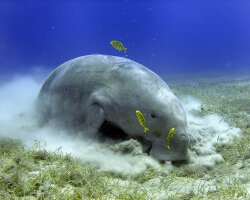
Dugong
(Dugong dugon)
(Dugong dugon)

Harbor seal
(Phoca vitulina)
(Phoca vitulina)

Indo-Pacific humpback dolphin
(Sousa chinensis)
(Sousa chinensis)

Long-finned pilot whale
(Globicephala melas)
(Globicephala melas)

Short-beaked common dolphin
(Delphinus delphis)
(Delphinus delphis)

Short-finned pilot whale
(Globicephala macrorhynchus)
(Globicephala macrorhynchus)
Our latestUpdates
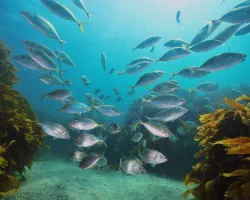
The white trevallyDiscover the white trevally (Pseudocaranx dentex), a silvery fish with a blue-green back that schools near reefs and rocky bottoms.Read more

Morrocoy National ParkDiscover Morrocoy National Park in Venezuela, with white-sand beaches, turquoise waters, coral reefs, mangroves, scenic cayos, and remarkable marine biodiversity.Read more

Milos IslandDiscover Milos Island in the Cyclades, known for its volcanic landscapes, crystal-clear beaches, traditional villages, and the famous Venus de Milo.Read more
Photo of the Day
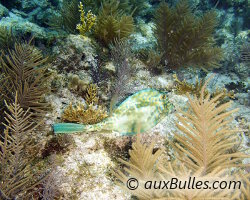
Poisson coffre graffitis
(Acanthostracion quadricornis)
(Acanthostracion quadricornis)
 Copyright © 2007-2026 auxBulles.com - All rights reserved. Legal notices.
Photo credits - Our partners