

Sealife guideThe tasselled wobbegongEucrossorhinus dasypogon
Last updated on 08/08/2026 at 01:42 AM
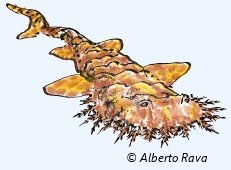
The tasselled wobbegong (Eucrossorhinus dasypogon) © Alberto Rava
Taxonomy
English names
Tasselled wobbegong
French namesRequin tapis barbu
Spanish namesTapicero barbudo
Scientific nameEucrossorhinus dasypogon (Bleeker, 1867)
FamilyOrectolobidae
OrderOrectolobiformes
ClassElasmobranchii
Description
The tasseled wobbegong is a shark that reaches an average length of 4 feet. The tasseled wobbegong is recognizable by its broad head edged with numerous skin flaps resembling a beard !
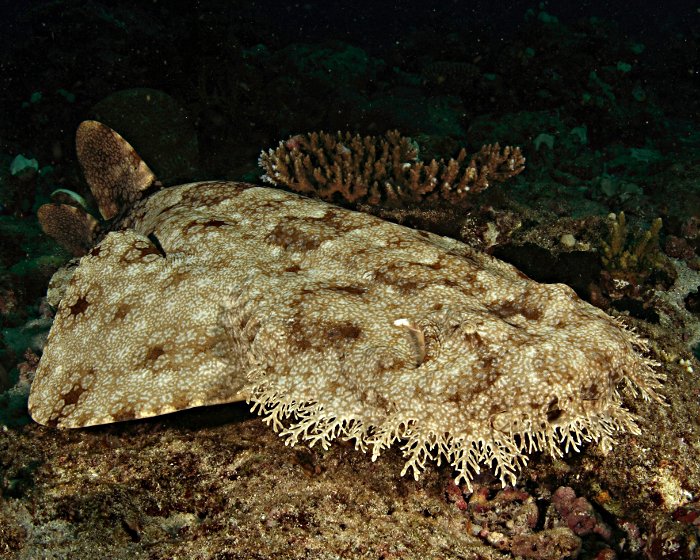
The tasseled wobbegong is easily recognizable by its broad head edged with numerous skin flaps resembling a beard
Geographic range
The tasseled wobbegong lives in shallow temperate and tropical waters of the southwestern Pacific ocean and eastern Indian ocean, mainly in northern Australia from Ningaloo Reef in Western Australia to Bundaberg in Queensland, around Indonesia, and Papua New Guinea.
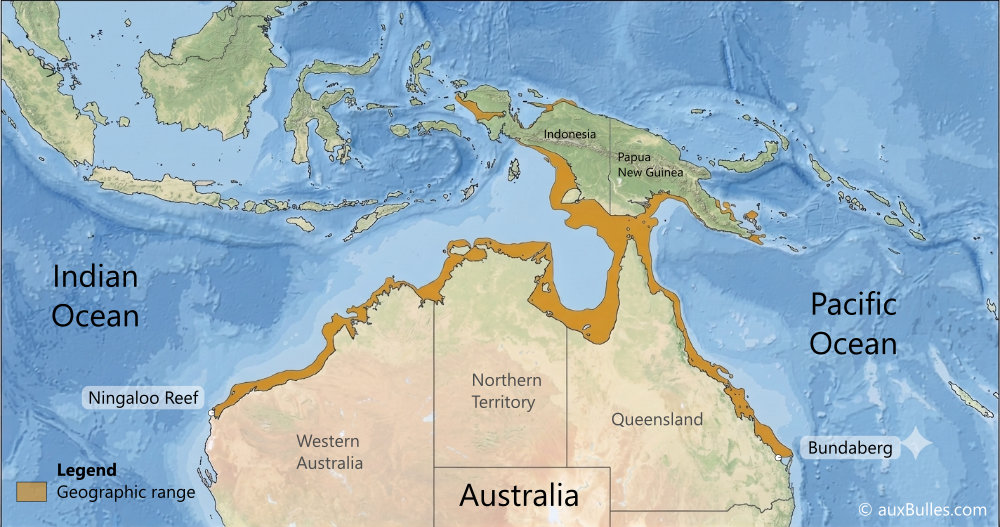
Geographic range of the tasseled wobbegong (Eucrossorhinus dasypogon)
Habitat
The tasseled wobbegong inhabits shallow coastal waters in tropical regions, including coral reefs, rocky areas, and lagoons. It spends most of its time resting on the seafloor, perfectly camouflaged among reef structures where it waits for its prey. It can be found on some reefs of the Great Barrier Reef.
Although it mainly lives in shallow waters, the tasseled wobbegong can be observed at depths of up to around 165 feet.
Diet
The tasseled wobbegong takes advantage of its ability to blend into its surroundings, making itself almost invisible and allowing it to capture fish that venture too close to it.
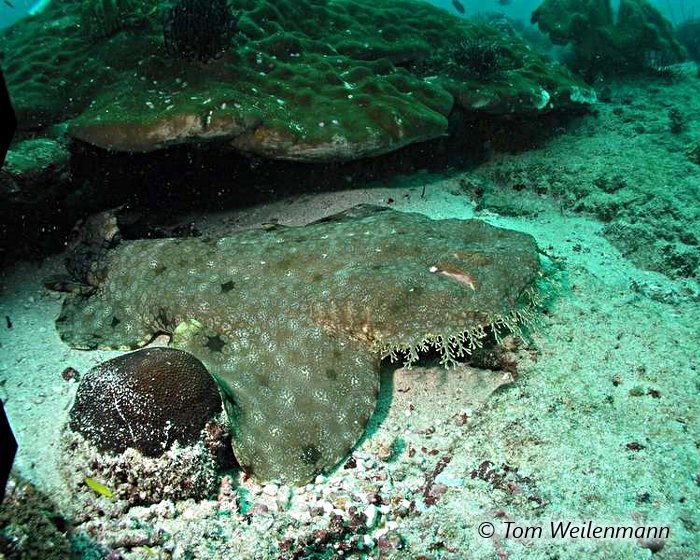
With its body covered in symmetrical patterns resembling the designs of a carpet, the tasseled wobbegong blends perfectly into its surroundings © Tom Weilenmann
Reproduction
The tasseled wobbegong is ovoviviparous. At birth, young sharks measure around 8 inches in length.
Did you know ?
With its body covered in a series of symmetrical patterns resembling the designs of a carpet, the tasseled wobbegong blends remarkably well into its environment !
Although the tasseled wobbegong is not directly targeted by fishing, its population is declining due to the degradation and destruction of its habitat, coral reefs, caused by pollution and the devastating effects of blast fishing ! After being classified by the IUCN as a Near Threatened shark species in 2003, the tasseled wobbegong was reclassified in 2015 and 2023 as a species of Least Concern.
Tips for observing
As with nurse sharks, when observing a tasseled wobbegong, approach slowly and above all leave it an escape route so that it can slip away if it feels discovered !
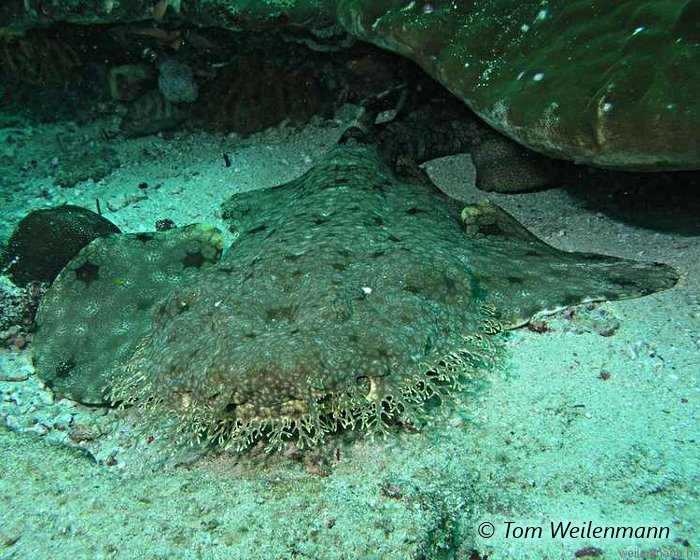
The almost invisible tasseled wobbegong ambushes fish that venture too close to it © Tom Weilenmann
Within the same family
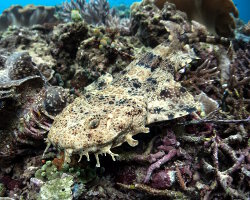
Japanese wobbegong
(Orectolobus japonicus)
(Orectolobus japonicus)
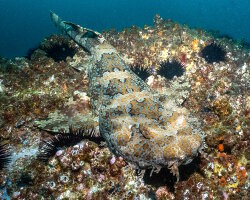
Ornate wobbegong
(Orectolobus ornatus)
(Orectolobus ornatus)
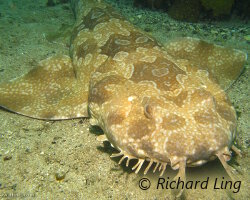
Spotted wobbegong
(Orectolobus maculatus)
(Orectolobus maculatus)
Discover also

Blacktip reef shark
(Carcharhinus melanopterus)
(Carcharhinus melanopterus)
Blind shark
(Brachaelurus waddi)
(Brachaelurus waddi)
Brownbanded bamboo shark
(Chiloscyllium punctatum)
(Chiloscyllium punctatum)
Dark shyshark
(Haploblepharus pictus)
(Haploblepharus pictus)
Dusky shark
(Carcharhinus obscurus)
(Carcharhinus obscurus)
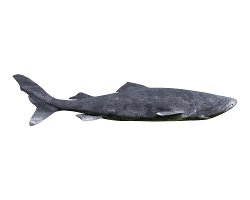
Greenland shark
(Somniosus microcephalus)
(Somniosus microcephalus)
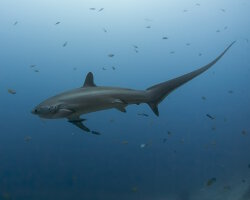
Pelagic thresher shark
(Alopias pelagicus)
(Alopias pelagicus)
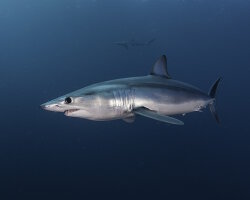
Short fin mako
(Isurus oxyrinchus)
(Isurus oxyrinchus)
Our latestUpdates
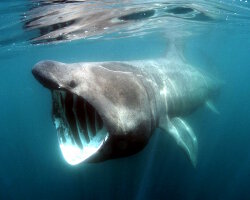
The basking sharkDiscover the basking shark (Cetorhinus maximus), the world's second-largest fish. This huge shark feeds on plankton by filtering large amounts of water.Read more
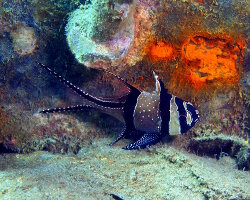
The Banggai cardinalfishDiscover the Banggai cardinalfish (Pterapogon kauderni), a small marine fish endemic to the Banggai Islands, known for its black-and-white stripes and unique reproductive behavior.Read more
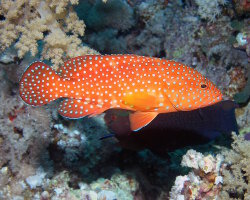
The coral hindDiscover the coral hind (Cephalopholis miniata), a colorful Indo-Pacific grouper known for its reddish-orange body covered with small blue spots.Read more
Photo of the Day
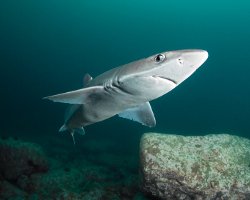
Aiguillat commun
(Squalus acanthias)
(Squalus acanthias)
 Copyright © 2007-2026 auxBulles.com - All rights reserved. Legal notices.
Photo credits - Our partners