Sealife guideThe smallmouth gruntHaemulon chrysargyreum
Last updated on 09/05/2024 at 09:40 PM
Taxonomy
- Common name: Smallmouth grunt
- French name: Gorette à petite bouche, gorette tibouche
- Spanish name: Ronco boquichica
- Scientific name: Haemulon chrysargyreum (Günther, 1859)
- Family name: Haemulidae
- Order name: Perciformes
- Class name: Actinopterygii
Description
The smallmouth grunt is a medium-sized fish, typically around 6 inches long, with a maximum length of about 8 inches. The smallmouth grunt has an oblong, slightly elongated body with a silvery-gray color and each side is marked by six broad yellow longitudinal stripes. All of its fins—pelvic, dorsal, anal and caudal—are yellow. A common trait of grunts is that the inside of their mouth is red.
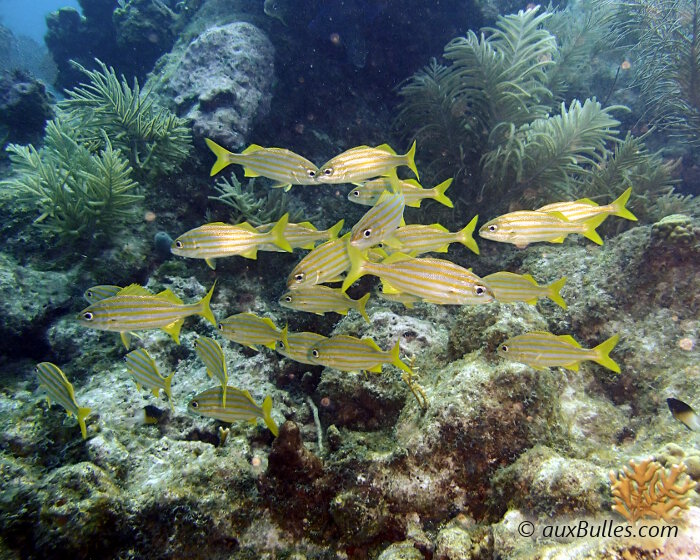
The smallmouth grunt has a silvery-gray body with broad yellow longitudinal stripes along each side and all of its fins are yellow
The smallmouth grunt’s dorsal fin has 12 spiny rays and 13 soft rays, while the anal fin usually has 3 spiny rays and 9 soft rays, occasionally 10.
Its name, smallmouth grunt, comes from having the smallest mouth of all grunt species.
In its juvenile stage, the smallmouth grunt is distinguished by a dark central longitudinal stripe running the length of its body.
Geographic range
The smallmouth grunt is commonly found along the coasts of the Caribbean sea, the southern Gulf of Mexico and parts of the adjacent Atlantic ocean. It inhabits the tropical waters of the western Atlantic, ranging from southern
Florida in the north to the coasts of Brazil in the south, including the coasts of Central America and the islands of the Caribbean, such as the Keys, the
Bahamas and
Guadeloupe.
Habitat
Smallmouth grunts typically live in shallow waters from the surface down to about 100 feet. They often form schools around coral reefs, positioning themselves near the bottom, along rocks, sheltered under rock overhangs or the large branches of
elkhorn coral.
Diet
The smallmouth grunt is a carnivorous fish that hunts at night. Its diet consists mainly of small invertebrates, such as shrimp,
mollusks, and
marine worms.
In the marine food chain, the smallmouth grunt is preyed upon by larger fish that inhabit coral reefs, like groupers.
Reproduction
Smallmouth grunts reproduce sexually.
Did you know ?
The common English name « grunt » comes from the sound the fish makes, which resembles the grunting of a pig. This sound is produced by the fish's well-developed teeth located in its throat.
Grunts are related to snappers but are generally smaller and have more deeply forked tails.
The smallmouth grunt is listed as many other marine species within The
IUCN Red List of threatened species. The smallmouth grunt appears in the
IUCN Red List since 2015 within the category Least Concern !
Tips for observing
Schools of grunts rarely consist of just one species. It’s common to see a mix of species, including the
blue striped grunt, the
white grunt, the
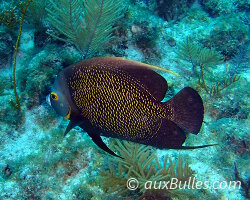
french grunt and the smallmouth grunt, making it tricky to identify the odd one out unless you carefully examine the stripe patterns and colors.
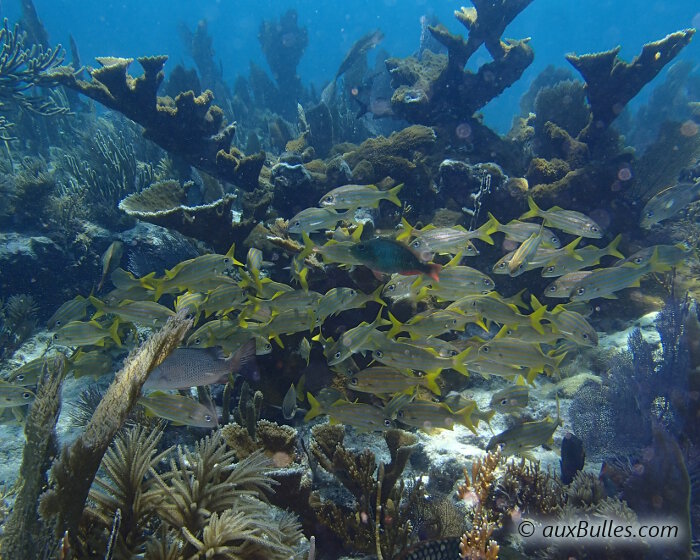
Most often, schools of smallmouth grunts position themselves near the bottom, sheltered by the large branches of elk horn coral
Within the same genus
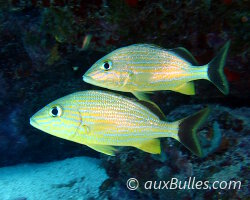
Blue striped grunt
(Haemulon sciurus)
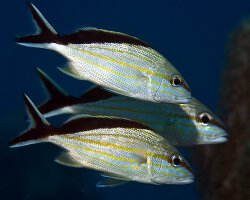
Cottonwick grunt
(Haemulon melanurum)
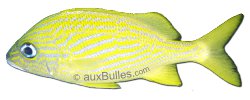
French grunt
(Haemulon flavolineatum)
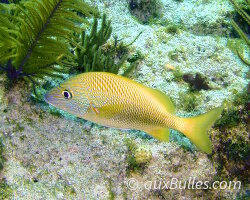
White grunt
(Haemulon plumierii)
Within the same family
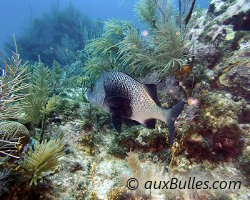
Black margate
(Anisotremus surinamensis)
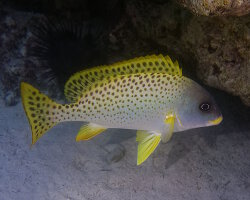
Blackspotted rubberlips
(Plectorhinchus gaterinus)
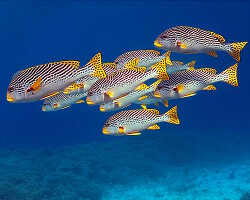
Diagonal-banded Sweetlip
(Plectorhinchus lineatus)
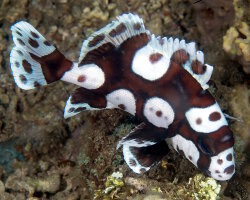
Harlequin sweetlips
(Plectorhinchus chaetodonoides)
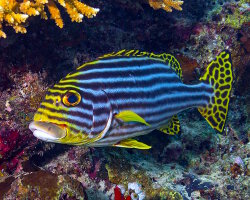
Oriental sweetlips
(Plectorhinchus vittatus)
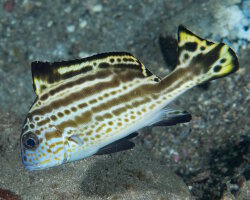
Painted sweetlips
(Diagramma pictum)
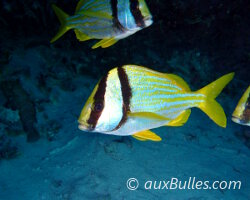
Porkfish
(Anisotremus virginicus)
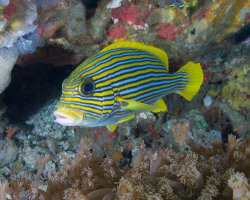
Ribboned sweetlips
(Plectorhinchus polytaenia)
Discover also
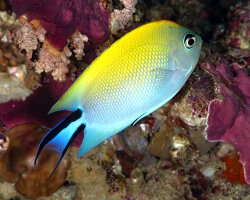
Black-spot angelfish
(Genicanthus melanospilos)
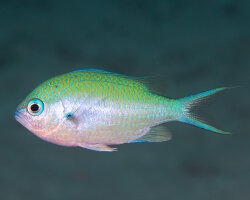
Black axil chromis
(Chromis atripectoralis)
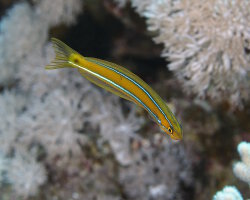
Bluestriped fangblenny
(Plagiotremus rhinorhynchos)
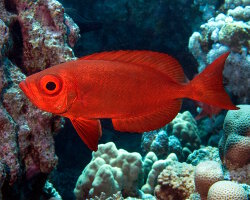
Common bigeye
(Priacanthus hamrur)
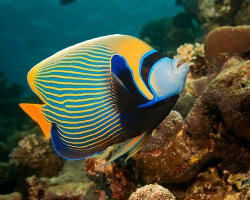
Emperor angelfish
(Pomacanthus imperator)
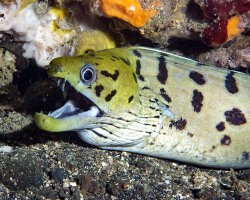
Fimbriated moray
(Gymnothorax fimbriatus)
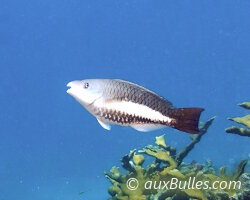
Queen parrotfish
(Scarus vetula)
Yellowtail wrasse
(Anampses meleagrides)
The marine species in Florida
Blue tang surgeonfish
(Acanthurus coeruleus)

Gag grouper
(Mycteroperca microlepis)
Hawksbill sea turtle
(Eretmochelys imbricata)
Lemon shark
(Negaprion brevirostris)
Longsnout seahorse
(Hippocampus reidi)

Nurse shark
(Ginglymostoma cirratum)
Scrawled filefish
(Aluterus scriptus)
Spanish slipper lobster
(Scyllarides aequinoctialis)
Best scuba diving destinations
Guadeloupe island
Where to go scuba diving in Guadeloupe ?
Dive centers

'Les Ilets' dive center

Noa dive center

Sea Dwellers Dive Center