Islands destinationFaroe islandsAtlantic ocean
Last updated on 05/07/2026 at 10:13 PM
Located in the heart of the North Atlantic, the Faroe islands form an isolated Danish archipelago between Scotland, Iceland, and Norway. This group of 18 volcanic islands is renowned for its spectacular landscapes, featuring towering cliffs, deep fjords, green valleys, and a constantly changing climate that enhances its dramatic atmosphere. Here, nature largely dominates human activity, making it an ideal destination for travelers seeking authenticity and wide open spaces.
Despite their isolation, the Faroe islands have been inhabited since the Middle Ages by communities that have adapted to a demanding environment. Colorful villages with grass-roofed houses appear nestled between sea and mountains, creating a unique harmony with the landscape. Traveling to the Faroes means discovering a preserved territory where time seems to flow differently.
Spectacular nature shaped by the Atlantic
The landscapes of the Faroe islands are among the most impressive in Northern Europe. The Vestmanna cliffs or Slættaratindur offer breathtaking views over the ocean, while waterfalls plunging directly into the sea, such as the Múlafossur waterfall, are among the most photographed sites in the archipelago. Wind, rain, and sea have carved a raw and powerful, almost surreal scenery.
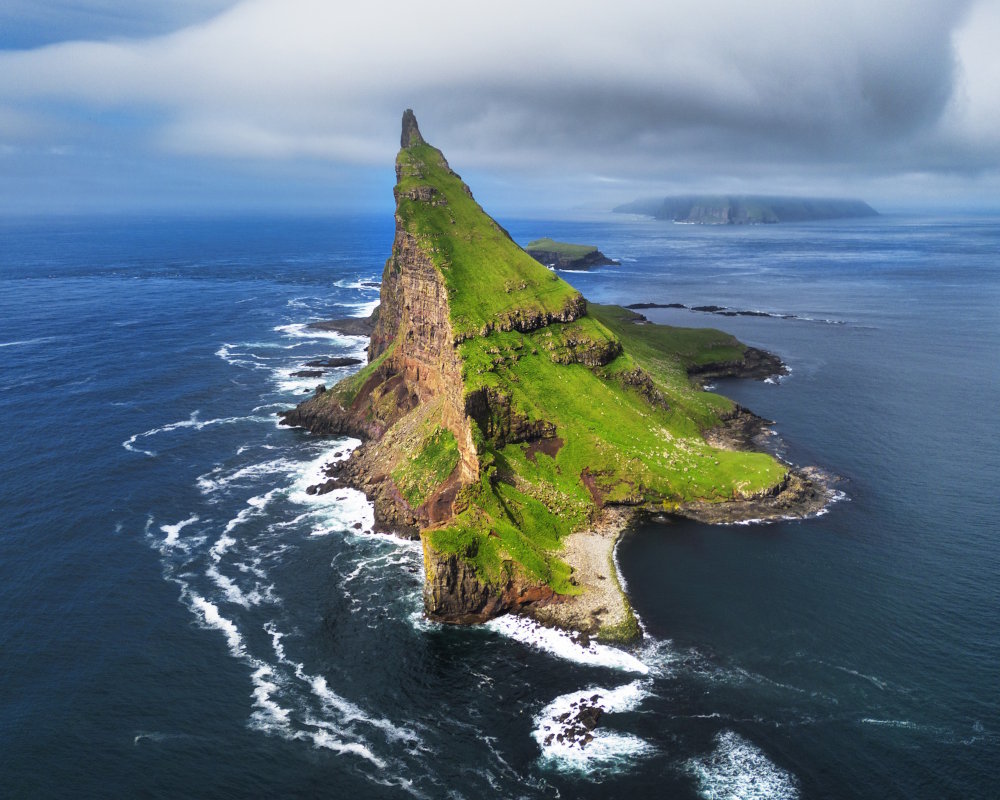
Aerial view of the islet Tindhólmur, located west of Vágar island, in the Faroe islands
© Tomas1111 | Dreamstime.comThe ever-changing weather is an integral part of the Faroese experience. In a single day, it is possible to go from sunshine to thick fog, enhancing the mystical atmosphere of the landscapes. This unique environment attracts hikers and photographers from all over the world, coming to capture the wild beauty of these still-preserved islands.
Culture and traditional villages
The culture of the Faroe islands is deeply connected to the sea and their geographic isolation. The inhabitants have developed a simple way of life centered on fishing and sheep farming, which are omnipresent in the landscape. Local traditions such as music, dance, and ancient stories still play an important role in everyday life.
Tórshavn, the capital, is one of the smallest capitals in the world, yet it has a vibrant cultural life. Its historic district of Tinganes, with its wooden houses and turf roofs, reflects centuries of history. In more remote villages such as Saksun or Gjógv, time seems to have stopped, offering a full immersion into Faroese authenticity.
Hiking and wildlife observation
The Faroe islands are a paradise for hiking enthusiasts. Numerous trails cross cliffs, plateaus, and remote valleys, with constant views over the North Atlantic Ocean. The Trælanípa site, for example, is famous for its view over Lake Sørvágsvatn, which creates the illusion of floating above the sea.
Wildlife is also a major highlight of the archipelago. The cliffs host huge colonies of
seabirds, including puffins, gannets, and guillemots. Birdwatching and coastal landscapes are among the must-do experiences for visitors.
Must-see places
During a trip to the Faroe islands, some sites are absolutely unmissable.
Múlafossur waterfall
The Múlafossur waterfall, located on Vágar island near the village of Gásadalur, is one of the symbols of the archipelago, with its impressive drop plunging directly into the ocean from a dramatic cliff.
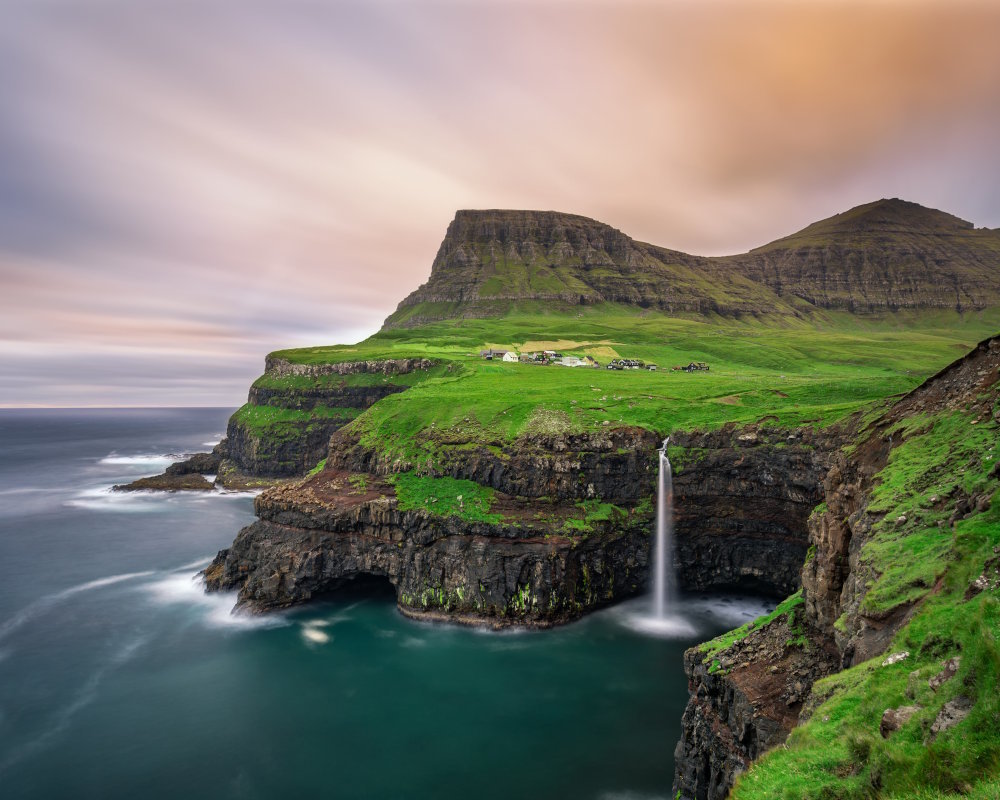
The iconic Múlafossur Waterfall, near the village of Gásadalur on the island of Vágar, in the Faroe islands
© Miroslav Liska | Dreamstime.comLong isolated from the rest of the islands, Gásadalur was only accessible on foot or by helicopter before a tunnel was built, helping preserve its authentic charm. Today, it attracts photographers and travelers eager to admire one of the most iconic views of the Faroe islands, especially when changing light and low clouds enhance the wild atmosphere.
Lake Sørvágsvatn
Lake Sørvágsvatn, located on Vágar island, is one of the most iconic sites in the Faroe islands. It is famous for the stunning optical illusion seen from the Trælanípa viewpoint: from a certain angle, the lake appears to float hundreds of feet above the Atlantic Ocean. In reality, it is only a few dozen feet above sea level, but the dramatic cliffs create the impression of a floating lake.
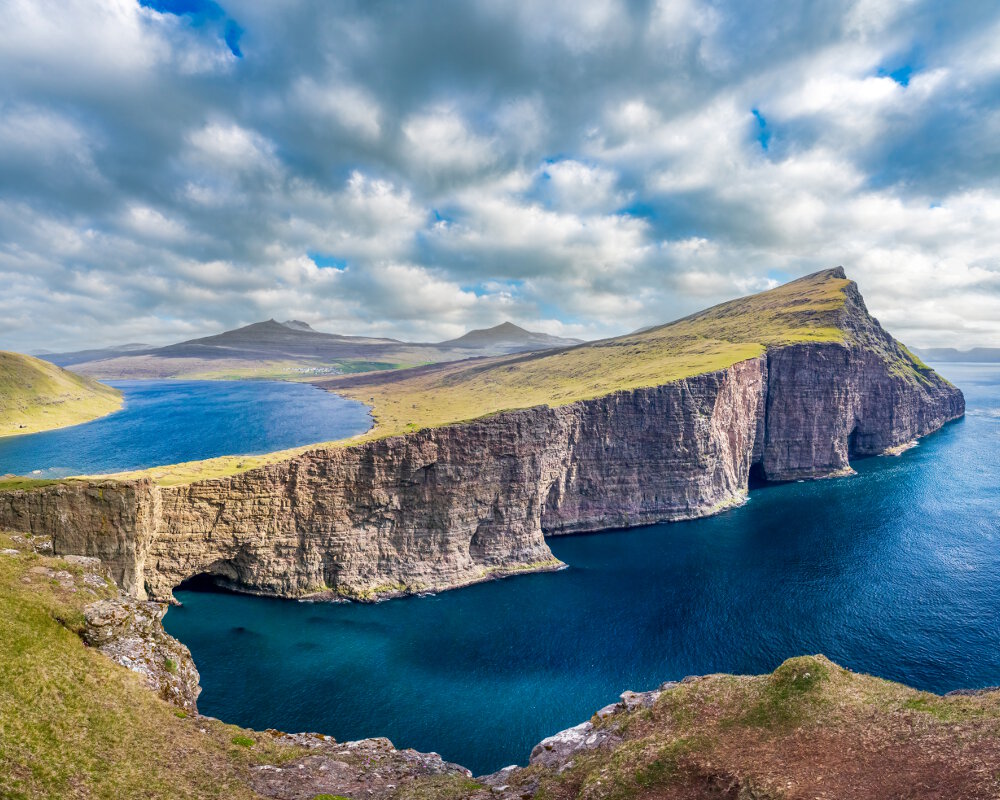
Lake Sørvágsvatn, seen from the Trælanípa viewpoint, creates the illusion of floating above the sea
© Dmitry Malov | Dreamstime.comA hiking trail leads to this unique viewpoint as well as the Bøsdalafossur waterfall, where the lake flows directly into the ocean.
Atlantic puffins
Finally, Mykines, the westernmost island of the Faroe islands, accessible by boat, is a paradise for nature lovers and
seabirds, especially the famous
Atlantic puffins. Its steep cliffs and lighthouse offer a spectacular hiking experience.
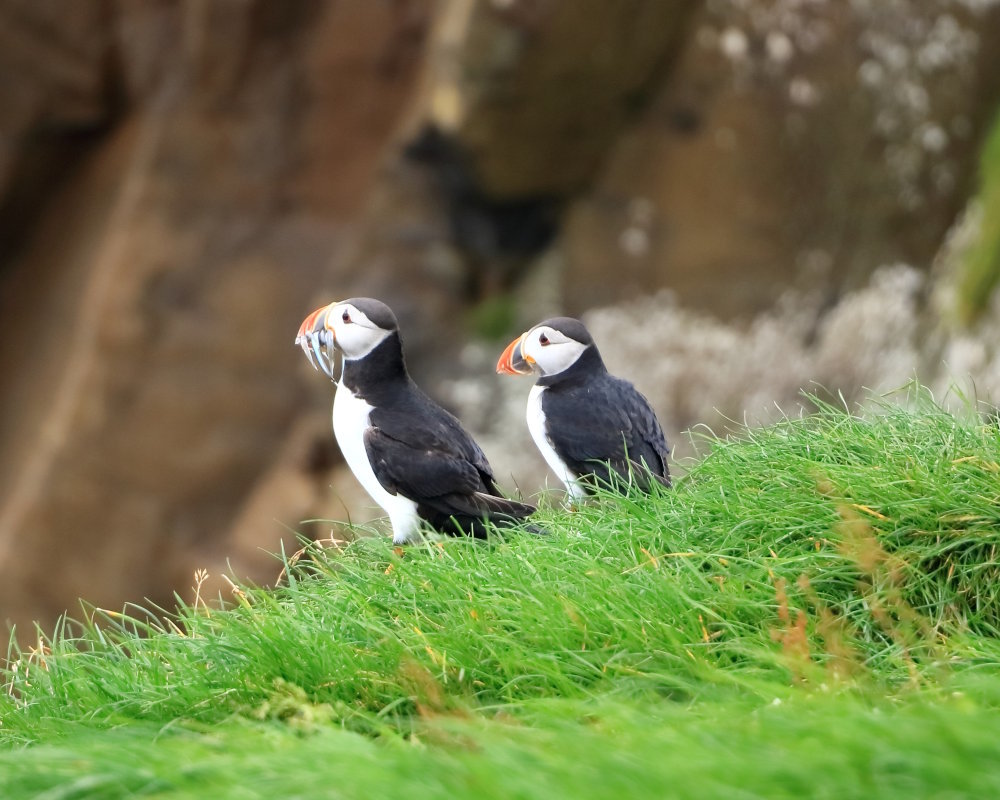
Two Atlantic puffins on Mykines island in the Faroe islands, each holding a fish in its beak
© Dynamoland | Dreamstime.comSaksun village
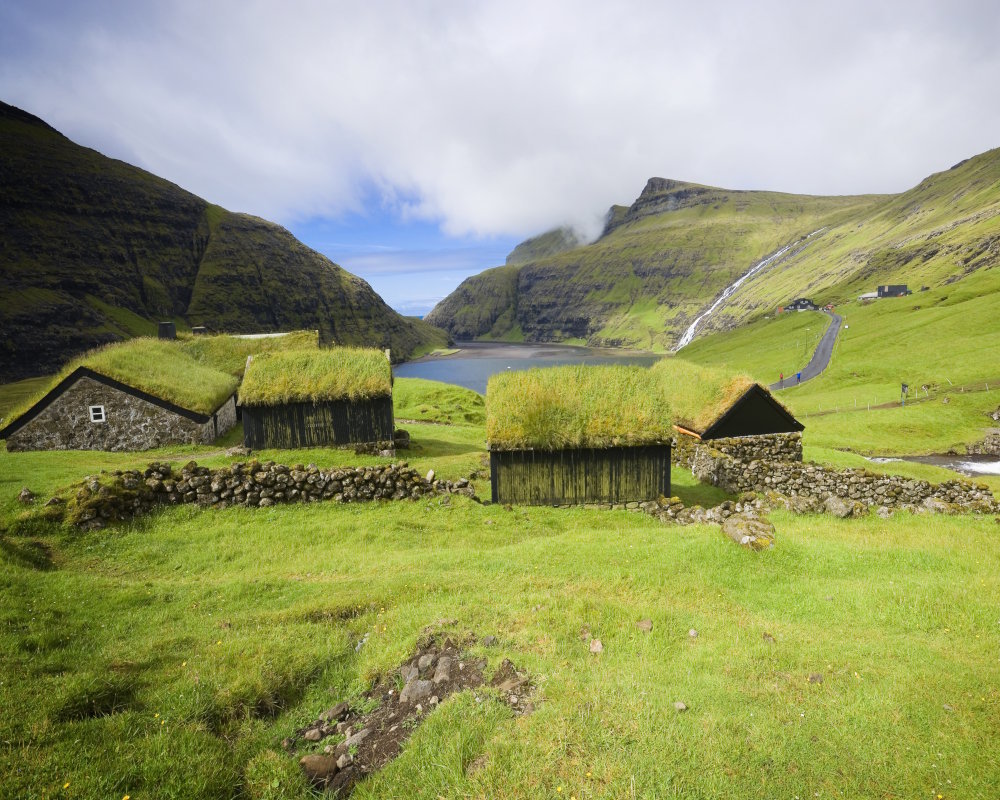
The village of Saksun, surrounded by mountains and a natural lagoon, offers an almost unreal setting on Streymoy island. It is one of the most picturesque villages in the archipelago with its traditional turf-roofed houses.
Gjógv village
Known for its natural gorge used as a small harbor, this charming village is also a starting point for beautiful hikes overlooking the ocean. Gjógv, meaning gorge in Faroese, is located on Eysturoy, the second largest island in the Faroe islands.
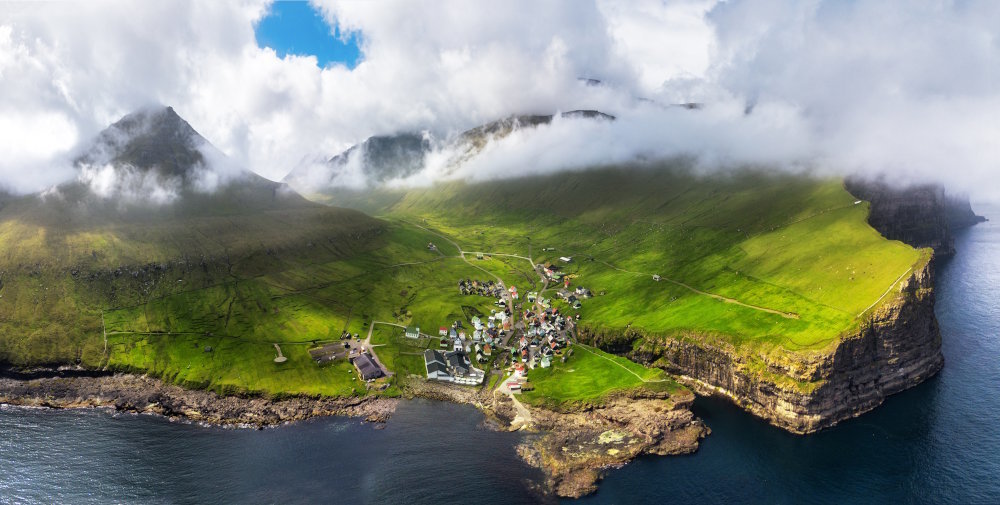
Aerial view of the village of Gjógv, located on Eysturoy island in the Faroe islands, surrounded by mountains and overlooking its famous natural gorge harbor
© Tomas1111 | Dreamstime.comTórshavn, the capital
The capital of the Faroe islands, one of the smallest capitals in the world, charms visitors with its historic Tinganes district, red wooden houses, and authentic Nordic atmosphere.
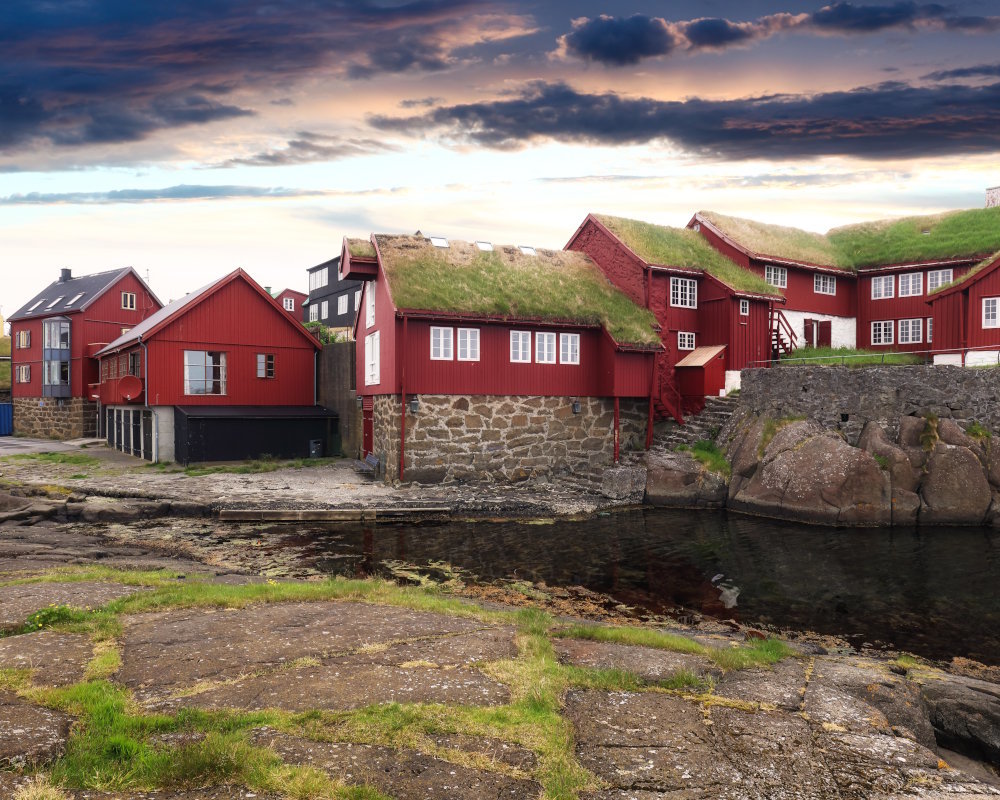
The historic district of Tinganes in Tórshavn, seat of the Parliament of the Faroe islands, with its traditional red houses along the harbor
© Tomas1111 | Dreamstime.comKallur lighthouse
Located in the north of Kalsoy island, this lighthouse offers one of the most spectacular views in the Faroe islands, between towering cliffs and endless Atlantic horizons.
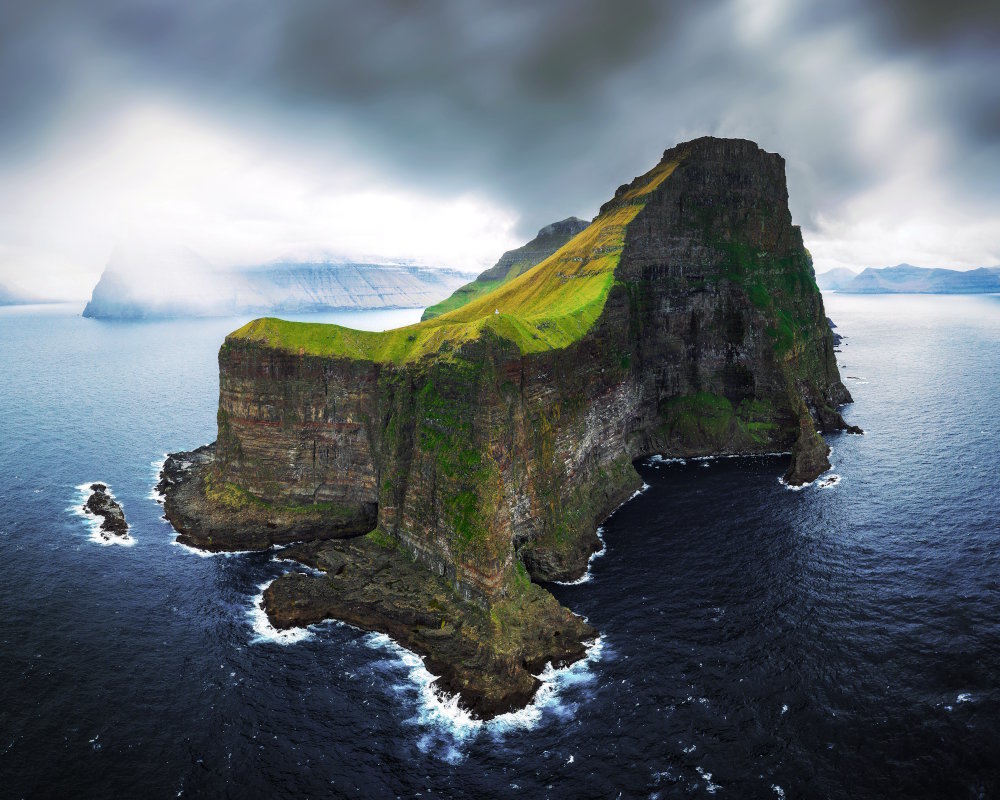
Aerial view of the dramatic cliffs of Kalsoy island in the Faroe islands, with the Kallur Lighthouse perched atop a cliff overlooking the Atlantic ocean
© Miroslav Liska | Dreamstime.comVidareidi village
Vidareidi is the northernmost village in the Faroe islands, located on Vidoy island. Nestled between steep mountains and the Atlantic Ocean, it offers one of the most spectacular landscapes in the archipelago, dominated by Cape Enniberg, considered one of the highest sea cliffs in Europe.
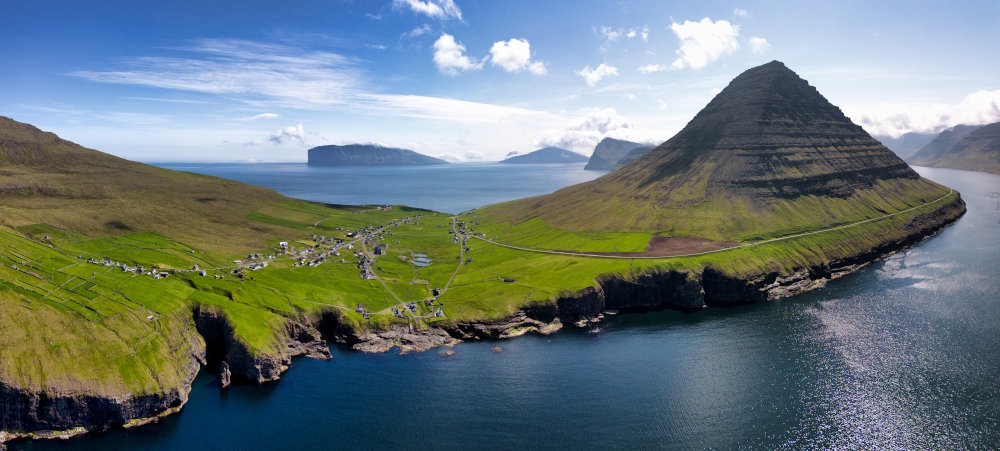
Aerial view of Vidareidi and Cape Enniberg, in the north of the Faroe islands, between dramatic cliffs and the Atlantic ocean
© Tomas1111 | Dreamstime.comHow to get there ?
By plane
The Faroe islands are mainly accessible by plane via Vágar Airport, located on the island of the same name. Regular flights connect the archipelago with Copenhagen, Reykjavik, and several major cities in Northern Europe. The journey is quick and takes you directly into the heart of Faroese landscapes.
By ferry
It is also possible to reach the Faroe islands by ferry from Denmark or Iceland, especially with the Smyril Line company. This option is longer but offers a unique travel experience across the North Atlantic.
Getting around
Once there, renting a car is the ideal way to explore the different islands, which are connected by tunnels and ferries.
The marine species in the Faroe Islands
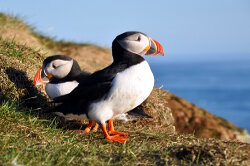
Atlantic puffin
(Fratercula arctica)
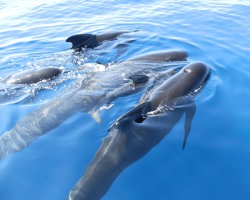
Long-finned pilot whale
(Globicephala melas)
The islands from atlantic ocean
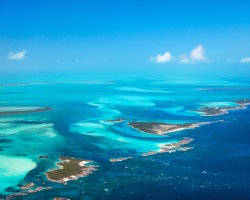
Bahamas islands
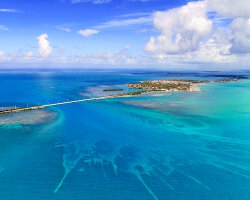
Florida Keys islands
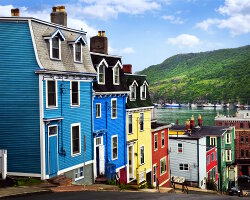
Newfoundland
The islands from atlantic ocean
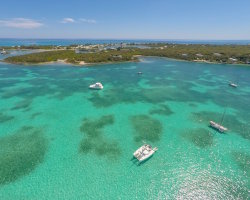
Abaco islands
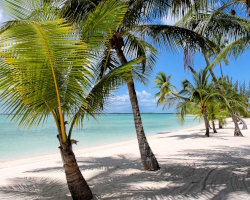
Andros island
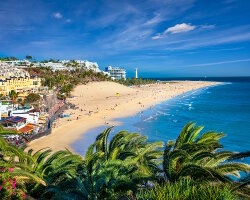
Fuerteventura island
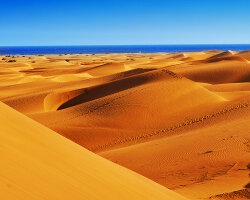
Gran Canaria island
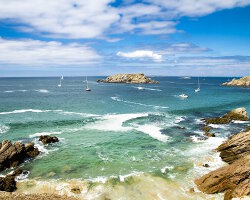
Houat island
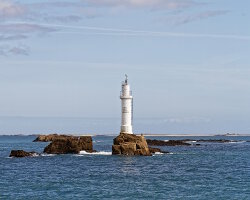
Molène island

Paradise island
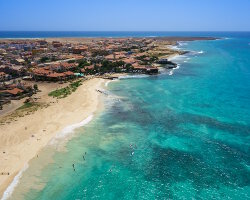
Sal island
Explore new islands
Cook islands
Galapagos islands
Golden island
Iraklia island
Ischia island

Japan islands
Medes islands

Mykonos island



 Copyright © 2007-2026 auxBulles.com - All rights reserved. Legal notices.