

Sealife guideThe atlantic puffinFratercula arctica
Last updated on 07/06/2026 at 10:02 AM
The Atlantic puffin is an iconic seabird of the North Atlantic, easily recognized by its black-and-white plumage and its large colorful beak. It has become a true symbol of northern coastal landscapes.
Taxonomy
- Common name: Atlantic puffin, common puffin
- French name: Macareux moine
- Scientific name: Fratercula arctica (Linnaeus, 1758)
- Family name: Alcidae
- Order name: Charadriiformes
- Class name: The sea birds
Description
The Atlantic puffin has a compact, streamlined body perfectly adapted for swimming and diving. Its black back and white belly provide effective camouflage between the ocean surface and deeper waters. Its large triangular beak becomes especially colorful during the breeding season, displaying bright shades of orange, yellow, and blue.
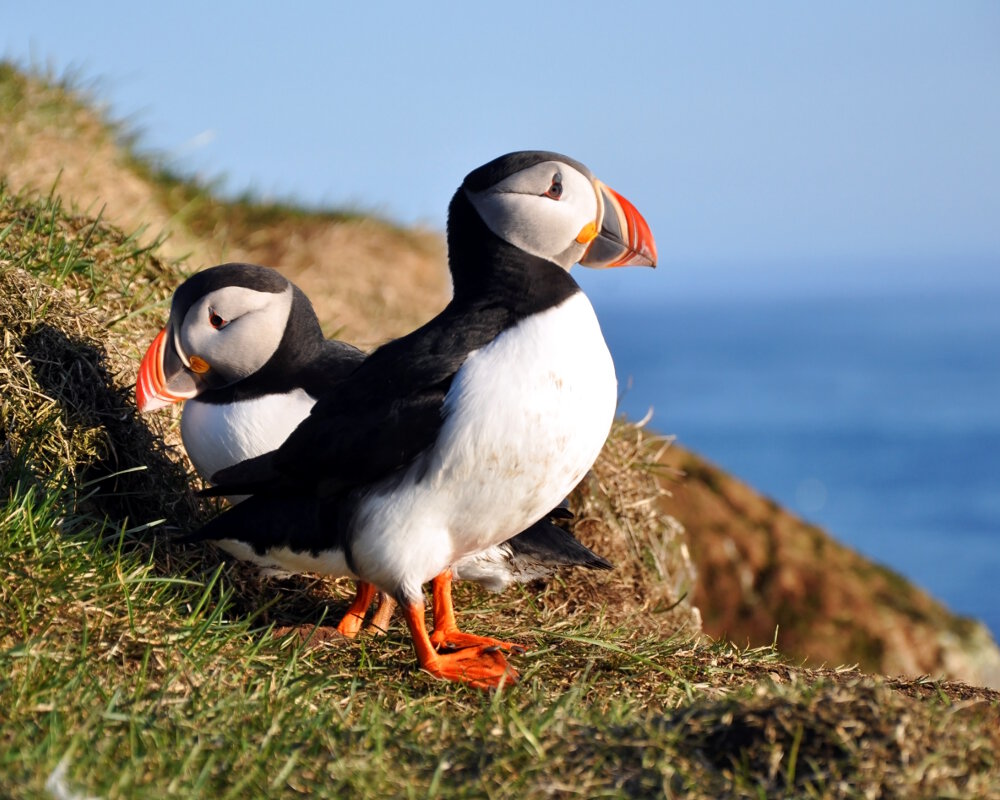
The atlantic puffin (Fratercula arctica) © Pavel Svoboda | Dreamstime.com
Its short wings are perfectly adapted for underwater propulsion but much less efficient for flying, forcing it to flap rapidly and giving it a distinctive appearance. Its orange legs, positioned toward the rear of the body, help with swimming but make walking on land rather clumsy.
Geographic range
The Atlantic puffin is found throughout the North Atlantic ocean. It breeds in Iceland, Norway, the Faroe islands, Scotland, Ireland, Greenland, and eastern Canada. Some populations even reach the northern coasts of France, especially Brittany, and New England.
The Atlantic puffin is a migratory species that spends much of the year far out at sea. Outside the breeding season, it disperses across vast oceanic areas of the North Atlantic.
Habitat
The Atlantic puffin nests on rocky islands and coastal cliffs, often in burrows that it digs itself or reuses. These sites provide protection from land predators and quick access to the sea.
At sea, it lives in open waters and spends most of its time floating or diving. It can travel to distant oceanic areas, returning to land only to breed.
Diet
The Atlantic puffin's diet mainly consists of small fish such as sand eels and herring. It hunts by diving underwater, using its wings like flippers to chase its prey.
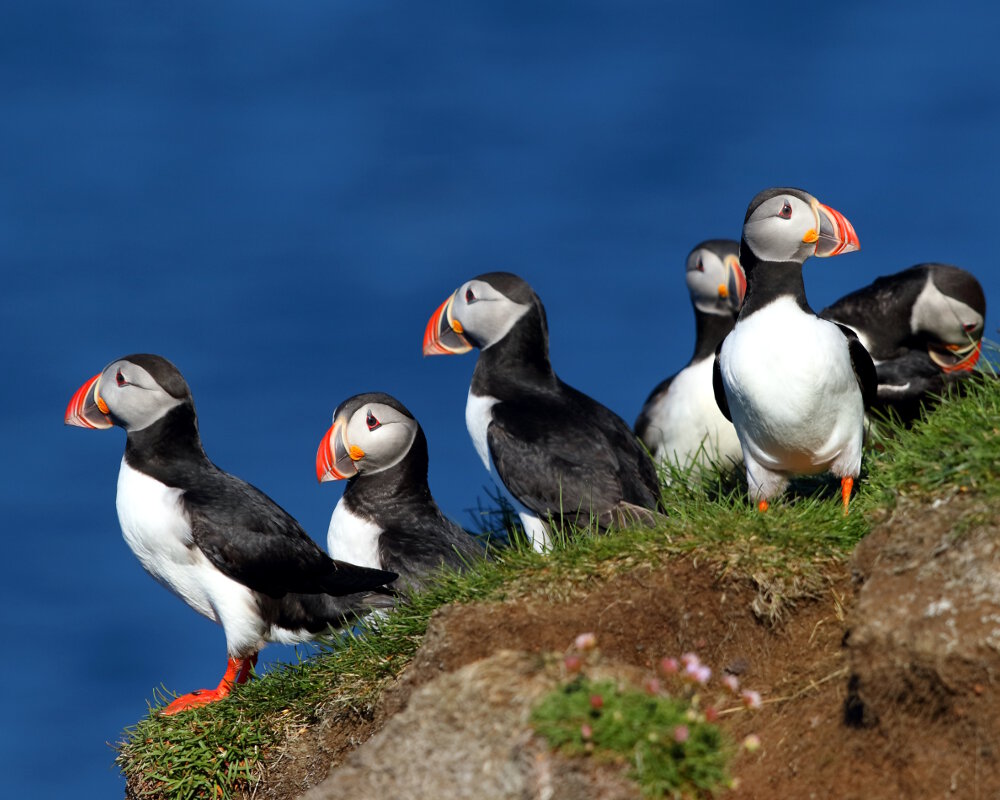
The atlantic puffin (Fratercula arctica) © Antonio Guillem | Dreamstime.com
It is capable of catching several fish at once thanks to its specialized beak, allowing it to efficiently feed its chick during the breeding season.
Reproduction
The Atlantic puffin is faithful to its nesting sites and often to its mate. It lays a single egg in a burrow or rocky cavity, which both parents incubate and where they jointly raise the chick.
After about six weeks, the young bird leaves the nest to join the sea and feed on its own, where it will spend several years before returning to breed.
Did you know ?
The Atlantic puffin is often nicknamed the clown of the sea because of its colorful beak and distinctive expression, which give it a comical appearance. It is also known as the sea parrot, a reference to its large, brightly colored beak, reminiscent of tropical parrots.
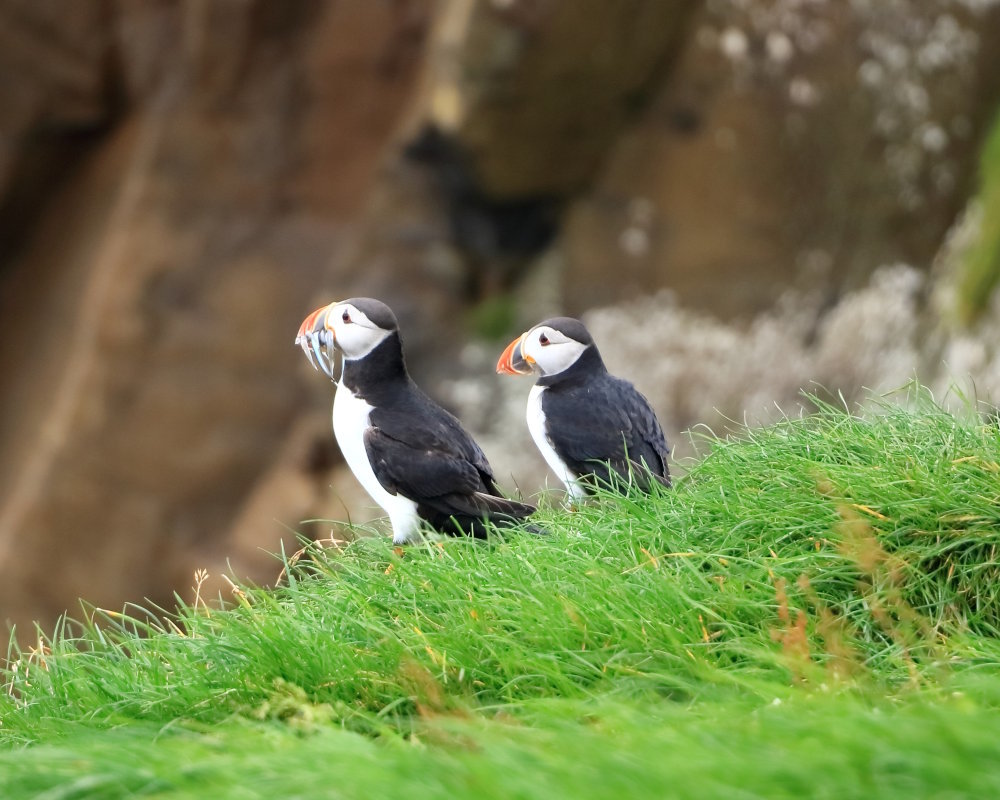
Two Atlantic puffins with fish in their beaks on Mykines island, in the Faroe islands © Dynamoland | Dreamstime.com
The atlantic puffin is listed as many other marine species within The IUCN Red List of threatened species. The atlantic puffin appears in the IUCN Red List since 2018 within the category Vulnerable !
Within the same genus
Horned puffin
(Fratercula corniculata)
(Fratercula corniculata)
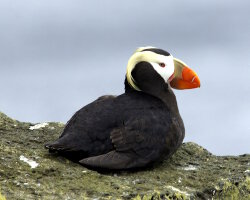
Tufted puffin
(Fratercula cirrhata)
(Fratercula cirrhata)
Within the same family
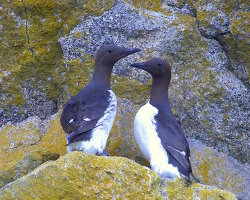
Common murre
(Uria aalge)
(Uria aalge)
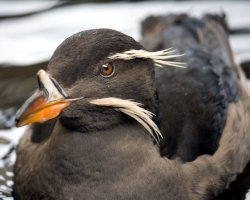
Rhinoceros auklet
(Cerorhinca monocerata)
(Cerorhinca monocerata)
Discover also
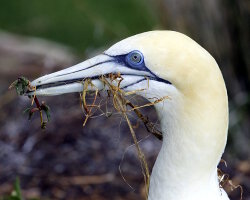
Australasian gannet
(Morus serrator)
(Morus serrator)
Black-browed albatross
(Thalassarche melanophris)
(Thalassarche melanophris)
Black-faced Cormorant
(Phalacrocorax fuscescens)
(Phalacrocorax fuscescens)
Double-crested cormorant
(Phalacrocorax auritus)
(Phalacrocorax auritus)
Kelp goose
(Chloephaga hybrida)
(Chloephaga hybrida)
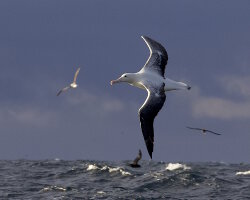
Northern Royal Albatross
(Diomedea sanfordi)
(Diomedea sanfordi)
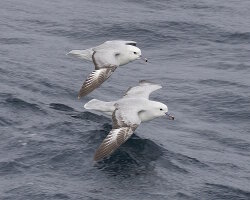
Southern fulmar
(Fulmarus glacialoides)
(Fulmarus glacialoides)
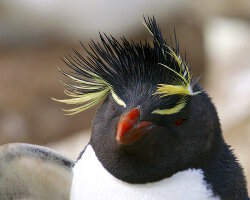
Southern rockhopper penguin
(Eudyptes chrysocome)
(Eudyptes chrysocome)
Our latestUpdates
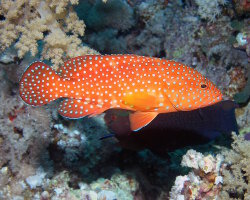
The coral hindDiscover the coral hind (Cephalopholis miniata), a colorful Indo-Pacific grouper known for its reddish-orange body covered with small blue spots.Read more

The striped remoraDiscover the striped remora (Echeneis naucrates), a marine fish easily recognized by the suction disc on its head, which allows it to attach to large marine animals and travel with them.Read more
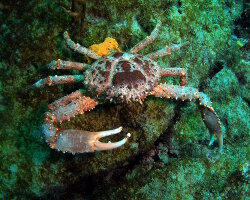
The Caribbean king crabDiscover the Caribbean king crab (Maguimithrax spinosissimus), an impressive reef crab found throughout the Caribbean and western Atlantic.Read more
Photo of the Day
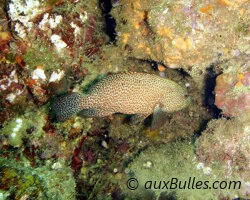
Vieille de roche
(Cephalopholis cruentata)
(Cephalopholis cruentata)
 Copyright © 2007-2026 auxBulles.com - All rights reserved. Legal notices.
Photo credits - Our partners