

Sealife guideThe broadnose sevengill sharkNotorynchus cepedianus
Last updated on 04/20/2026 at 11:28 PM
The broadnose sevengill shark is a large primitive shark easily recognizable by its seven gill slits, a rare trait among modern sharks. It belongs to an ancient group of elasmobranchs and mainly inhabits temperate and subtropical coastal waters in several oceans around the world.
Taxonomy
- Common name: Broadnose sevengill shark, Broadnose cow shark
- French name: Requin plat-nez
- Spanish name: Cañabota gata,tiburón pinto
- Scientific name: Notorynchus cepedianus (Péron, 1807)
- Family name: Hexanchidae
- Order name: Hexanchiformes
- Class name: Elasmobranchii
Description
The broadnose sevengill shark has an elongated and robust body that can reach up to 10 feet in length. Its head is wide with a short, rounded snout, giving it a massive appearance. Its eyes are relatively small, adapted to life in deeper and low-light environments.
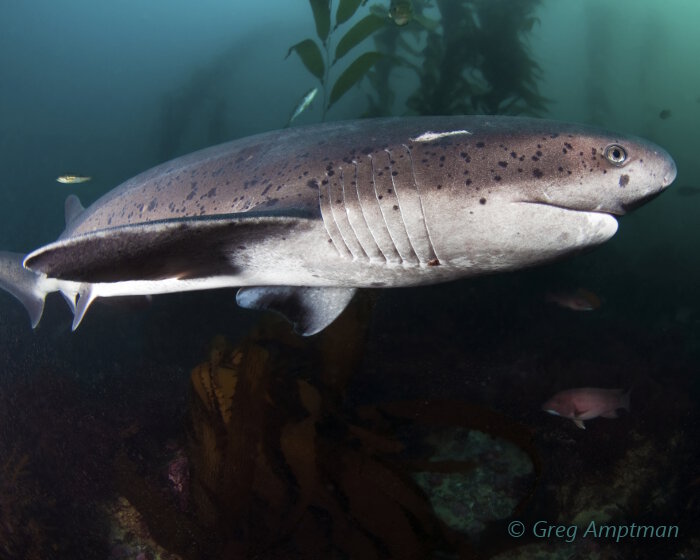
The broadnose sevengill shark (Notorynchus cepedianus) © Gregory A Amptman | Dreamstime.com
Its skin is usually gray-brown to olive, covered with small black spots, a pattern that may fade in some adult individuals. It has a single dorsal fin, positioned far back on the body.
The broadnose sevengill shark is a primitive shark distinguished by the presence of 7 gill slits - you know, the series of small vertical openings on each side of its head - whereas most shark species only have 5.
Geographic range
The broadnose sevengill shark lives in many temperate and subtropical regions around the world, including the Pacific ocean, the South Atlantic ocean, and areas around Australia and South Africa.
Habitat
The broadnose sevengill shark is a benthic, mainly coastal species that lives near the seafloor in bays, estuaries, and continental shelves. It can be found from the surface down to about 1,870 feet deep.
Juvenile sharks most often inhabit shallow waters such as bays and estuaries.
Diet
The broadnose sevengill shark is an opportunistic predator that feeds on fish, smaller sharks, and sometimes marine mammals when fully grown. Its diet varies depending on its size and prey availability.
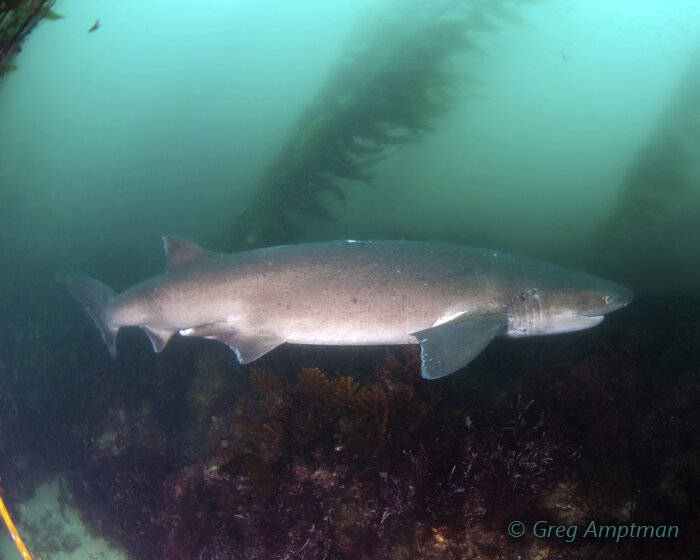
The broadnose sevengill shark (Notorynchus cepedianus) © Gregory A Amptman | Dreamstime.com
Reproduction
The broadnose sevengill shark is ovoviviparous and gives birth to fully developed young after about a one-year gestation period. Litters can contain several dozen pups, and births occur in protected coastal areas.
Did you know ?
The broadnose sevengill shark is listed as many other marine species within The IUCN Red List of threatened species. The broadnose sevengill shark appears in the IUCN Red List since 2020 within the category Vulnerable !
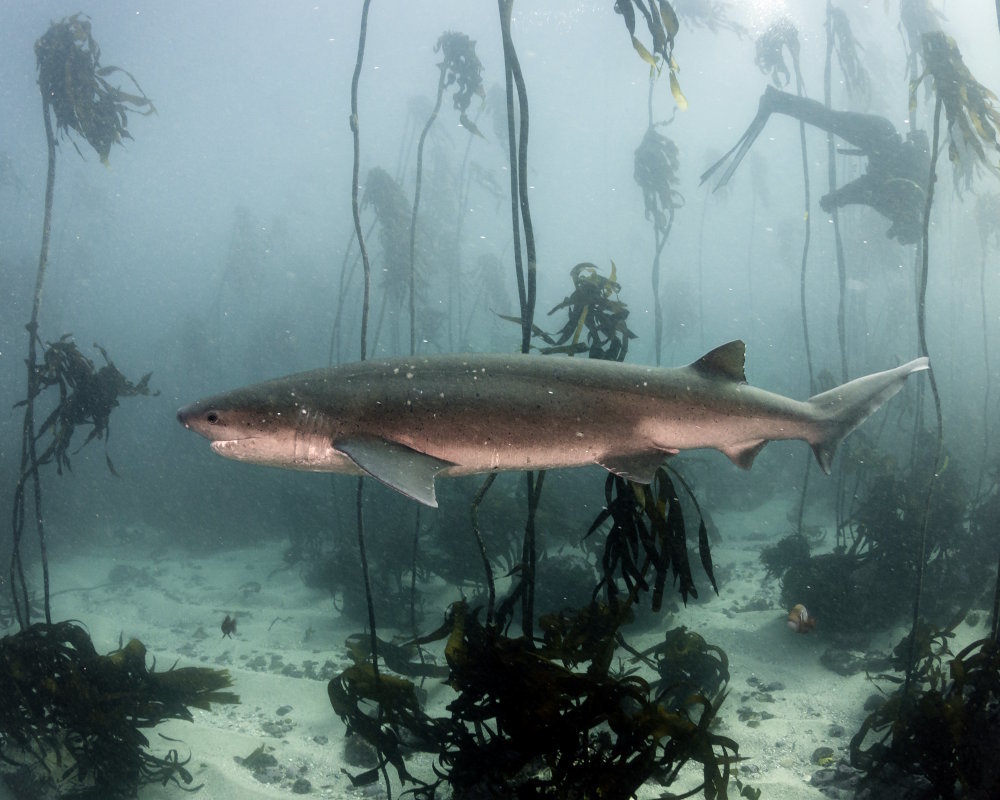
A broadnose sevengill shark swimming among the kelp forests of False Bay, Simon's Town, South Africa © Michael Valos | Dreamstime.com
Discover also
Crested hornshark
(Heterodontus galeatus)
(Heterodontus galeatus)
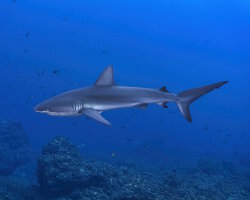
Galapagos shark
(Carcharhinus galapagensis)
(Carcharhinus galapagensis)
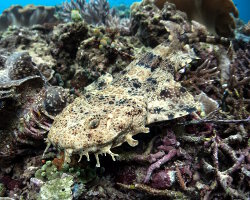
Japanese wobbegong
(Orectolobus japonicus)
(Orectolobus japonicus)
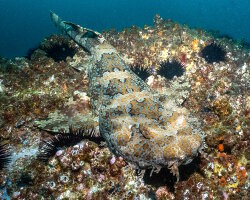
Ornate wobbegong
(Orectolobus ornatus)
(Orectolobus ornatus)
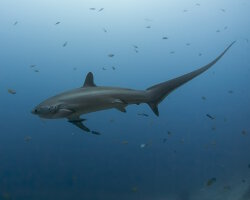
Pelagic thresher shark
(Alopias pelagicus)
(Alopias pelagicus)
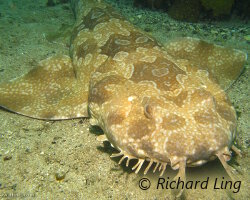
Spotted wobbegong
(Orectolobus maculatus)
(Orectolobus maculatus)
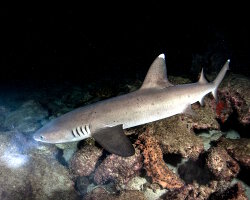
Whitetip reef shark
(Triaenodon obesus)
(Triaenodon obesus)
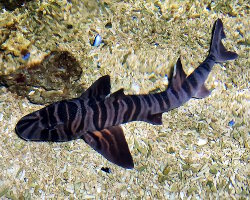
Zebra bullhead shark
(Heterodontus zebra)
(Heterodontus zebra)
Our latestUpdates
Saturday, September 12th 2026
The Caribbean king crab
Discover the Caribbean king crab (Maguimithrax spinosissimus), an impressive reef crab found throughout the Caribbean and western Atlantic.
Thursday, September 10th 2026
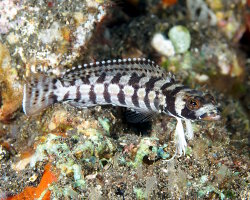
The reticulated sandperch
Discover the reticulated sandperch (Parapercis tetracantha), a small Indo-Pacific fish known for its elongated body and distinctive brown and white pattern.
Monday, September 7th 2026
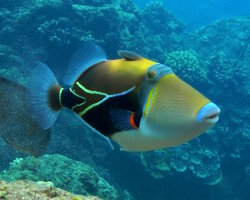
The wedgetail triggerfish
Discover the wedgetail triggerfish, Hawaii's famous state fish. Learn about its vibrant colors, coral reef habitat, unique behavior, and cultural significance in Hawaii.
Photo of the Day
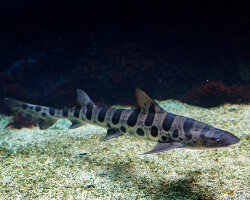
Requin léopard
(Triakis semifasciata)
(Triakis semifasciata)
 Copyright © 2007-2026 auxBulles.com - All rights reserved. Legal notices.
Photo credits - Our partners