

Sealife guideThe flatback sea turtleNatator depressus
Last updated on 08/03/2026 at 11:01 PM
The flatback sea turtle is a unique marine turtle species found nowhere else in the world. Unlike other sea turtle species with wide oceanic distributions, this species is endemic to the tropical and subtropical waters of northern Australia and lays its eggs exclusively on Australian beaches.
Taxonomy
English names
Flatback sea turtle
French namesTortue de mer à dos platTortue olivâtre d'Australie
Scientific nameNatator depressus (Garman, 1880)
FamilyCheloniidae
OrderTestudines
Description
The flatback sea turtle is easily recognized by its low, flattened shell, with slightly raised edges, a shape adapted for swimming in the shallow waters of coastal regions. Its oval or slightly heart-shaped shell has non-overlapping scutes and is generally olive-gray to greenish-gray on the upper surface, while its plastron is lighter, ranging from cream to yellowish in color.
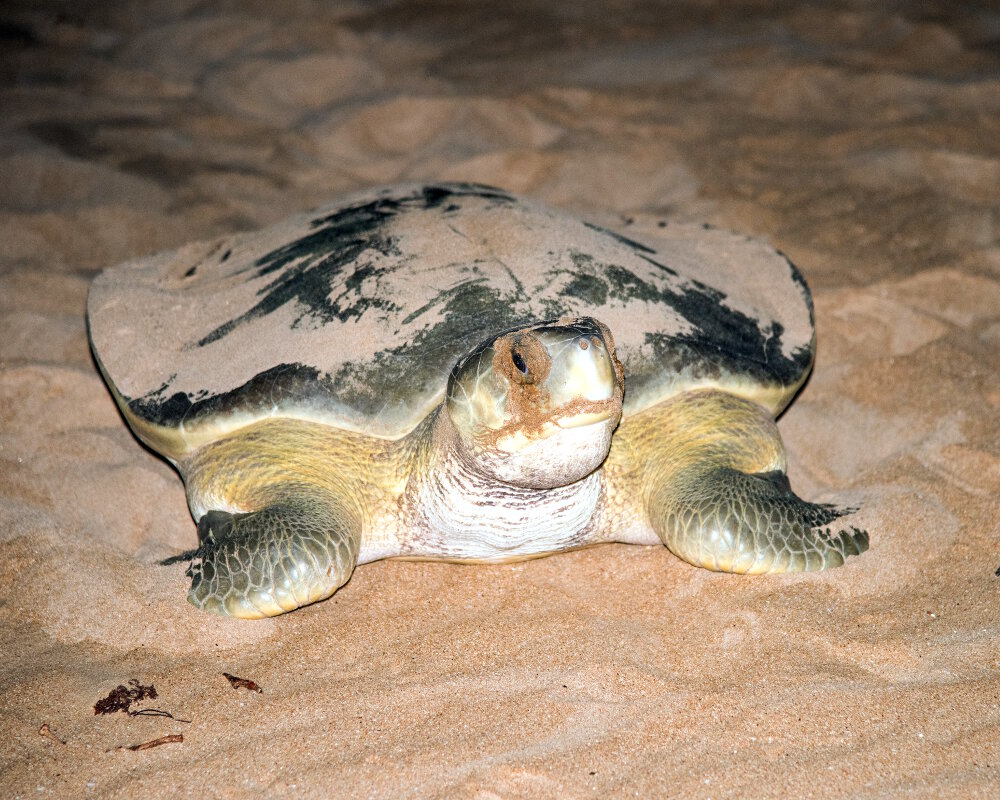
The flatback sea turtle (Natator depressus) © Lizgiv | Dreamstime.com
As an adult, the flatback sea turtle can reach approximately 3.3 feet in carapace length. Its relatively broad head and powerful front flippers allow it to move efficiently along coastal seabeds where it searches for food.
Geographic range
The flatback sea turtle has one of the most restricted distributions among sea turtle species. It is endemic to the Australian region, and the main known breeding areas are found exclusively on beaches and islands in northern Australia. Females come ashore to nest from southern Queensland to the northwestern coast of Western Australia, with important nesting areas in the Gulf of Carpentaria, the Torres Strait, the Northern Territory, and Queensland.
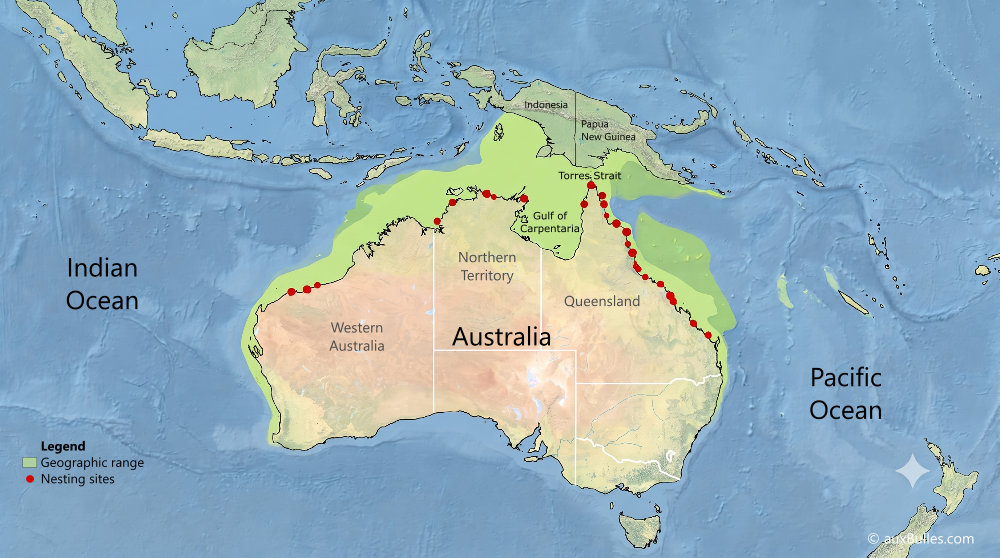
Geographic range and major nesting sites of the flatback sea turtle (Natator depressus)
After their breeding period, individuals may travel to coastal waters of Papua New Guinea and the Indonesian archipelago to feed.
Habitat
The flatback sea turtle mainly inhabits shallow coastal waters of the Australian continental shelf. It prefers soft bottoms made up of sand, mud, or marine debris rather than the deep coral reefs frequented by some other sea turtles. It is often observed in bays, lagoons, estuaries, and marine areas close to shore where food is abundant.
Unlike many sea turtles, young flatback sea turtles do not appear to undergo a long pelagic phase in the open ocean and remain more closely associated with coastal environments.
Diet
The flatback sea turtle has a mainly carnivorous diet. It feeds on soft-bodied marine animals captured on shallow seabeds, including jellyfish, sea cucumbers, soft corals, mollusks, and various marine invertebrates. Its morphology, with a robust head and an adapted beak, allows it to efficiently seize these prey items in the soft-bottom habitats it frequents.
Reproduction
The reproduction of the flatback sea turtle takes place exclusively on Australian beaches. Females return to nest on shorelines or islands close to the coast, often near their feeding areas. They dig a nest in the sand and generally lay several dozen eggs per clutch.
A female can lay several clutches during the same nesting season, usually spaced about two weeks apart, and then typically waits several years before returning to breed. The main nesting periods vary depending on the region, with peak activity observed between the Australian summer and winter seasons depending on the population.
Did you know ?
The flatback sea turtle is protected in Australia, but it remains threatened by several factors linked to human activities, including the degradation of nesting beaches, accidental capture in fishing gear, marine pollution, and the effects of climate change on coastal habitats. Its limited distribution makes this species particularly vulnerable to environmental changes.
Within the same family
Green sea turtle
(Chelonia mydas)
(Chelonia mydas)
Hawksbill sea turtle
(Eretmochelys imbricata)
(Eretmochelys imbricata)
Kemp's ridley sea turtle
(Lepidochelys kempii)
(Lepidochelys kempii)

Loggerhead sea turtle
(Caretta caretta)
(Caretta caretta)
Olive ridley sea turtle
(Lepidochelys olivacea)
(Lepidochelys olivacea)
Sea turtles
(7 espèces)
(7 espèces)
Discover also
Leatherback sea turtle
(Dermochelys coriacea)
(Dermochelys coriacea)
Our latestUpdates
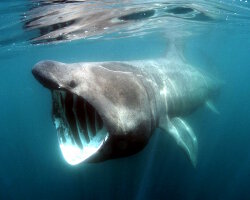
The basking sharkDiscover the basking shark (Cetorhinus maximus), the world's second-largest fish. This huge shark feeds on plankton by filtering large amounts of water.Read more
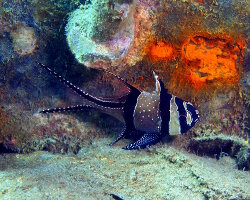
The Banggai cardinalfishDiscover the Banggai cardinalfish (Pterapogon kauderni), a small marine fish endemic to the Banggai Islands, known for its black-and-white stripes and unique reproductive behavior.Read more
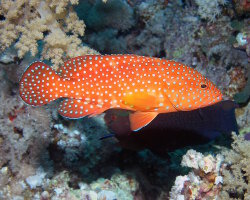
The coral hindDiscover the coral hind (Cephalopholis miniata), a colorful Indo-Pacific grouper known for its reddish-orange body covered with small blue spots.Read more
Photo of the Day
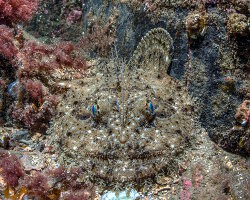
Baudroie commune
(Lophius piscatorius)
(Lophius piscatorius)
 Copyright © 2007-2026 auxBulles.com - All rights reserved. Legal notices.
Photo credits - Our partners