

Sealife guideThe short-finned pilot whaleGlobicephala macrorhynchus
Last updated on 05/06/2026 at 10:17 PM
The short-finned pilot whale is a large dolphin belonging to the Delphinidae family. Despite its English name of pilot whale, it is in fact a cetacean closely related to dolphins, known for its strong sociability and deep diving behavior in search of squid.
Taxonomy
- Common name: Short-finned pilot whale
- French name: Globicéphale tropical
- Spanish name: Calderón tropical
- Scientific name: Globicephala macrorhynchus (Gray, 1846)
- Family name: Delphinidae
- Order name: Cetacea
- Class name: Sea mammals [Mammalia]
Description
The short-finned pilot whale has a robust body, entirely dark in color, ranging from black to very dark gray. Its head is highly distinctive: large, rounded, and bulbous, with no true beak like the classic dolphin shape, giving it a massive profile.
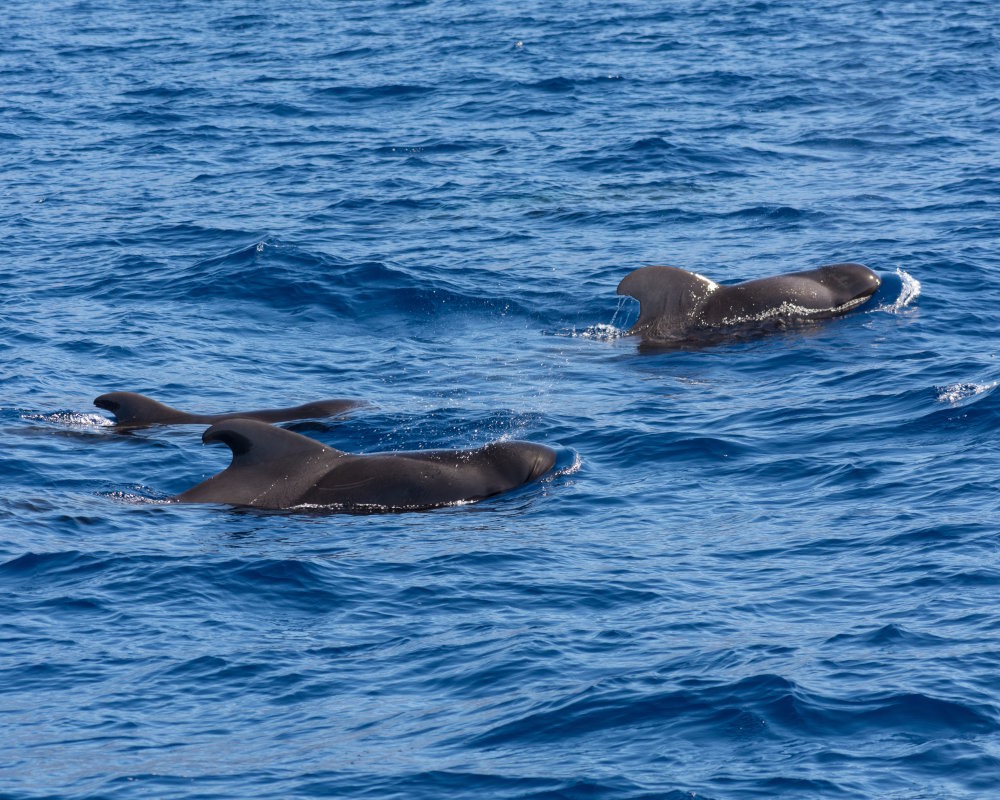
The dorsal fin of the short-finned pilot whale is low and broad, with a slightly curved, rounded shape © Gema Álvarez | Dreamstime.com
The short-finned pilot whale measures between 10 and 23 feet in length, with males generally larger than females. Its dorsal fin is relatively low but broad, located toward the front of the body and showing a rounded and slightly hooked shape. The pectoral fins are slender and pointed, sickle-shaped, shorter than those of the long-finned pilot whale, and play an important role in stability and maneuvering during deep dives.
Geographic range
The short-finned pilot whale is found in tropical and subtropical waters worldwide, including the Atlantic, Pacific, and Indian Oceans. In some regions such as the Canary islands, it is one of the most frequently observed cetaceans, especially around deep submarine canyons.
Habitat
The short-finned pilot whale mainly inhabits deep waters, often near continental shelves or above submarine canyons. It prefers deep oceanic zones, squid-rich areas, and warm to temperate waters.
It is a highly social species, living in stable family groups called pods, typically consisting of 15 to 30 individuals, and sometimes up to around 100.
It is also a highly mobile species that follows its prey over long distances.
Diet
The diet of the short-finned pilot whale consists almost exclusively of cephalopods, mainly squid, but also occasionally octopus and, more rarely, small fish.
It usually hunts at night or at depth, performing dives that can exceed several hundred meters (over 1,000 feet).
Reproduction
The reproductive cycle of the short-finned pilot whale is slow, with a gestation period of about 14 to 15 months, spaced several years apart, after which a single calf is born per female.
Females play a key role in the group, and family bonds are very strong. Young individuals remain with their mother and the group for many years, sometimes several years.
Did you know ?
The short-finned pilot whale is listed as many other marine species within The IUCN Red List of threatened species. The short-finned pilot whale appears in the IUCN Red List since 2018 within the category Least Concern !
Tips for observing
Pilot whales are regularly observed during whale-watching excursions in Madeira as well as in the Canary islands, especially off Tenerife, where resident populations of short-finned pilot whales are present.
Within the same genus

Long-finned pilot whale
(Globicephala melas)
(Globicephala melas)
Within the same family

Atlantic white-sided dolphin
(Leucopleurus acutus)
(Leucopleurus acutus)

Commerson's dolphin
(Cephalorhynchus commersonii)
(Cephalorhynchus commersonii)

False killer whale
(Pseudorca crassidens)
(Pseudorca crassidens)

Indo-Pacific humpback dolphin
(Sousa chinensis)
(Sousa chinensis)

Pacific white-sided dolphin
(Sagmatias obliquidens)
(Sagmatias obliquidens)
Risso's dolphin
(Grampus griseus)
(Grampus griseus)

Spinner dolphin
(Stenella longirostris)
(Stenella longirostris)
Striped dolphin
(Stenella coeruleoalba)
(Stenella coeruleoalba)
Discover also
Aron's blenny
(Ecsenius aroni)
(Ecsenius aroni)
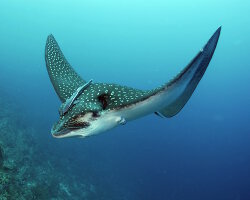
Atlantic white-spotted eagle ray
(Aetobatus narinari)
(Aetobatus narinari)
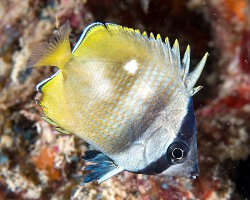
Blacklip butterflyfish
(Chaetodon kleinii)
(Chaetodon kleinii)
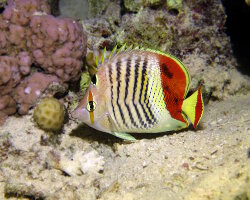
Crown butterflyfish
(Chaetodon paucifasciatus)
(Chaetodon paucifasciatus)
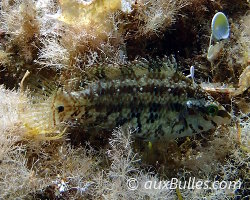
Five-spotted wrasse
(Symphodus roissali)
(Symphodus roissali)
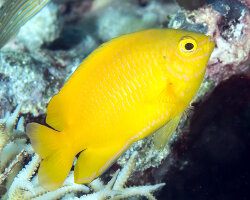
Lemon damselfish
(Pomacentrus moluccensis)
(Pomacentrus moluccensis)
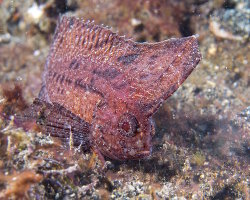
Spiny leaf fish
(Ablabys macracanthus)
(Ablabys macracanthus)
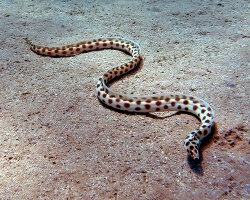
Tiger snake eel
(Myrichthys maculosus)
(Myrichthys maculosus)
Our latestUpdates
Friday, September 18th 2026
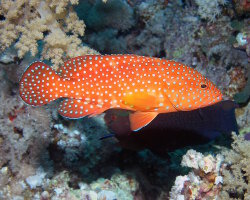
The coral hind
Discover the coral hind (Cephalopholis miniata), a colorful Indo-Pacific grouper known for its reddish-orange body covered with small blue spots.

Monday, September 14th 2026
The striped remora
Discover the striped remora (Echeneis naucrates), a marine fish easily recognized by the suction disc on its head, which allows it to attach to large marine animals and travel with them.
Saturday, September 12th 2026
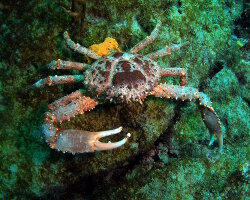
The Caribbean king crab
Discover the Caribbean king crab (Maguimithrax spinosissimus), an impressive reef crab found throughout the Caribbean and western Atlantic.
Photo of the Day
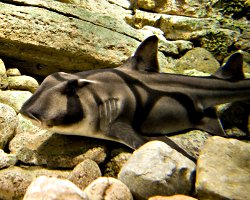
Requin dormeur taureau
(Heterodontus portusjacksoni)
(Heterodontus portusjacksoni)
 Copyright © 2007-2026 auxBulles.com - All rights reserved. Legal notices.
Photo credits - Our partners