

Sealife guideInk, arms and brains: the fascinating world of cephalopodsThe marine mollusks
Last updated on 10/16/2025 at 11:50 PM
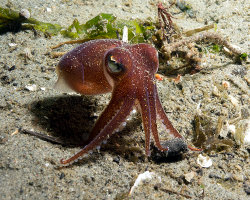
The class of cephalopods, derived from the Greek képhalé meaning head and podos meaning foot, includes some of the most astonishing marine animals. Their name perfectly illustrates their anatomy: their foot has evolved into tentacles that surround the head directly. These tentacles, with or without suckers, are used to catch prey, move around, communicate and explore their surroundings.
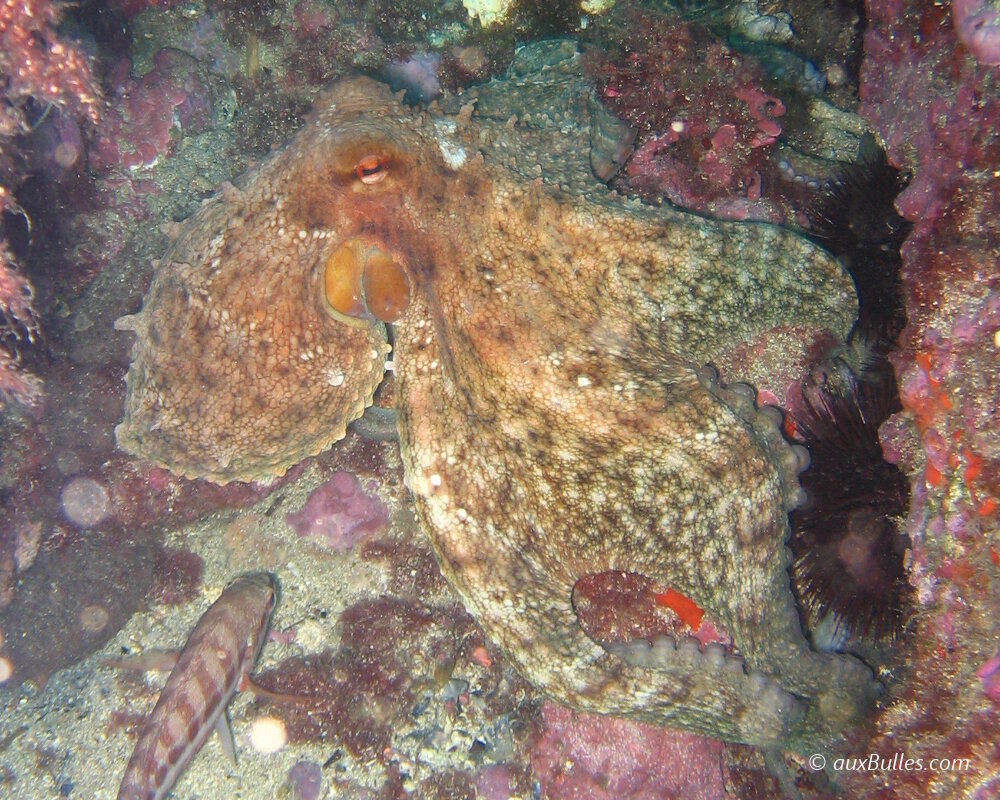
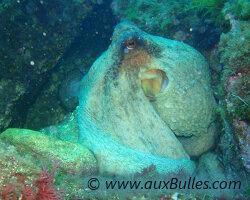
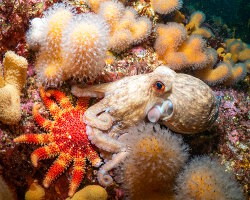

The common octopus uses camouflage to blend into its surroundings
The stars of the deep
Cephalopods are among the most highly evolved mollusks. The best-known species are the octopus, the squid and the cuttlefish. Each has fascinating characteristics:
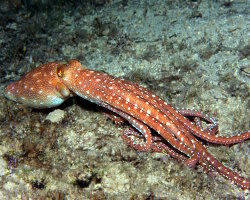
- The octopus is a master of camouflage, able to change color and texture in an instant.
- The squid is a fast swimmer, often living in open waters.
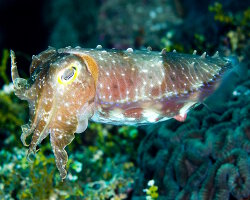
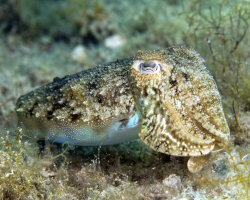
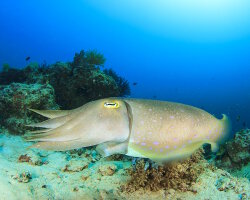
- The cuttlefish, with its internal shell called a cuttlebone, can float or dive thanks to precise control of its buoyancy.
The geniuses of the sea
Unlike many other invertebrates, cephalopods have a complex brain and a highly developed nervous system. This gives them real learning and memory abilities.
They can solve problems, recognize shapes, manipulate objects such as opening jars and even escape from aquariums ! The common octopus, for example, learns by observing and can adapt its behavior to different situations.
A natural jet propulsion system
To move around, cephalopods have developed an ingenious form of locomotion: jet propulsion. By expelling water contained in their mantle cavity through a siphon located between the head and the body, they propel themselves quickly in the opposite direction, much like a tiny underwater jet. This technique allows them to flee predators or move gracefully in all directions.
Masters of camouflage and deception
The common octopus can blend into its surroundings by instantly changing the color, brightness and even texture of its skin, thanks to specialized cells called chromatophores. This ability allows it to hunt discreetly or disappear from sight when threatened.
And in the face of immediate danger, cephalopods have another formidable weapon: they release a cloud of black ink that confuses the predator, creating a smoke screen that allows them to vanish into the depths.
Marvels of adaptation
Cephalopods perfectly illustrate the richness and creativity of marine life. Agile predators, clever thinkers and masters of disguise, they continue to fascinate both scientists and the general public.
Studying these creatures means diving into a world where intelligence, evolution and beauty come together in the heart of the oceans.
Discover marine cephalopods
Broadclub cuttlefishAscarosepion latimanus
Common cuttlefishSepia officinalis
Common octopusOctopus vulgaris
Curled octopusEledone cirrhosa
North Pacific giant octopusEnteroctopus dofleini
Pharaoh cuttlefishSepia pharaonis
Stubby squidRossia pacifica
White-spotted octopusCallistoctopus macropus
Discover marine mollusks
Our latestUpdates

The Guide des poissons de Nouvelle-CalédonieDiscover Guide to the Fishes of New Caledonia by Pierre Laboute and René Grandperrin, an illustrated reference featuring nearly 1,200 species, from rivers and coral reefs to the depths of the ocean.Read more
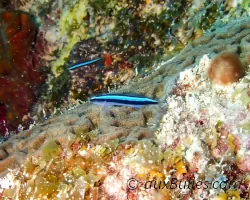
The neon gobyDiscover the neon goby (Elacatinus oceanops), a small western Atlantic reef fish known for its brilliant blue stripe and its role as a cleaner fish that removes parasites from other fish.Read more
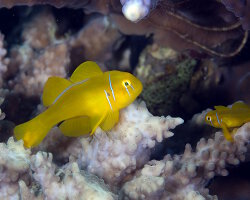
The poison gobyDiscover the poison goby (Gobiodon citrinus), a tiny reef fish with a bright yellow body and distinctive blue markings. It lives among branching Acropora corals in the tropical waters of the Indo-Pacific.Read more
Photo of the Day
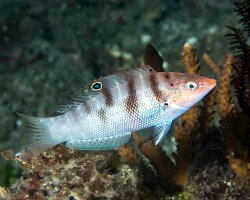
Girelle de Batu
(Coris batuensis)
(Coris batuensis)
 Copyright © 2007-2026 auxBulles.com - All rights reserved. Legal notices.
Photo credits - Our partners