

Sealife guideThe atlantic spotted dolphinStenella frontalis
Last updated on 01/19/2026 at 11:38 PM
Taxonomy
English names
Atlantic spotted dolphin
French namesDauphin tacheté de l'Atlantique
Spanish namesDelfín moteado del Atlántico
Scientific nameStenella frontalis (Cuvier, 1829)
FamilyDelphinidae
OrderCetacea
ClassMammalia
Description
The Atlantic spotted dolphin generally measures 5.2 to 7.5 feet in length and weighs between 220 and 315 lbs as an adult. Its coloration features a three-tone gray pattern: a dark gray back, lighter gray sides, and a often whitish belly, all covered with distinctive spots that become more numerous with age. Calves are born without spots, which gradually appear as they grow.

The Atlantic spotted dolphin is a highly social dolphin species, typically found in schools or pods © Naluphoto | Dreamstime.com
The Atlantic spotted dolphin has a long, narrow rostrum, a well-defined melon and a falcate dorsal fin — meaning sickle-shaped — giving it an elegant and dynamic silhouette.
Geographic range
The Atlantic spotted dolphin inhabits tropical, subtropical, and warm temperate waters of the Atlantic ocean, ranging from the coasts of North and South America to areas around oceanic islands, such as the Canary islands and the Azores.
Habitat
The Atlantic spotted dolphin is often found near the continental shelf and its slopes, but also further offshore.
The Atlantic spotted dolphin is a highly social species, typically forming groups ranging from a few individuals to several dozen. It is also very active at the surface, performing jumps, acrobatics, and frequently swimming alongside the bows of boats.
The Atlantic spotted dolphin lives in well-organized groups and spends a lot of time interacting with other individuals. Sometimes, it even joins other dolphin species to play or hunt together.
Diet
The Atlantic spotted dolphin hunts in groups, with members working together to surround schools of fish, cephalopods, or other small marine animals to feed. Additionally, their complex social structure involves extensive interactions among individuals and sometimes even associations with other dolphin species.

The atlantic spotted dolphin (Stenella frontalis) © sheilapic76 sous licence Creative Commons
Reproduction
Gestation in female Atlantic spotted dolphins lasts about 11 to 12 months, resulting in calves approximately 2.6 feet long, born without spots. Females reach sexual maturity relatively late, usually between 9 and 15 years of age.
Did you know ?
The atlantic spotted dolphin is listed as many other marine species within The IUCN Red List of threatened species. The atlantic spotted dolphin appears in the IUCN Red List since 2018 within the category Least Concern !

The atlantic spotted dolphin (Stenella frontalis) © sheilapic76 sous licence Creative Commons
Within the same genus

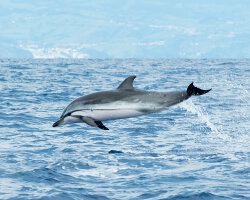
Within the same family

Atlantic white-sided dolphinLeucopleurus acutus

False killer whalePseudorca crassidens

Long-finned pilot whaleGlobicephala melas

Pacific white-sided dolphinSagmatias obliquidens
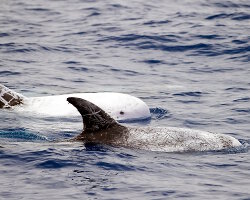
Risso's dolphinGrampus griseus

Short-beaked common dolphinDelphinus delphis

Short-finned pilot whaleGlobicephala macrorhynchus
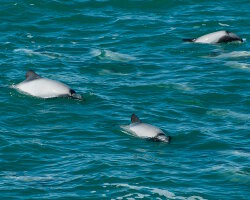
White headed dolphinCephalorhynchus hectori
Discover also

Our latestUpdates

The Guide des poissons de Nouvelle-CalédonieDiscover Guide to the Fishes of New Caledonia by Pierre Laboute and René Grandperrin, an illustrated reference featuring nearly 1,200 species, from rivers and coral reefs to the depths of the ocean.Read more
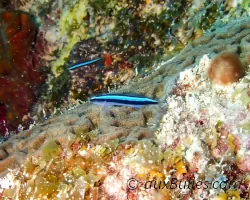
The neon gobyDiscover the neon goby (Elacatinus oceanops), a small western Atlantic reef fish known for its brilliant blue stripe and its role as a cleaner fish that removes parasites from other fish.Read more
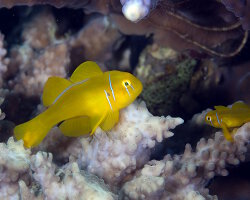
The poison gobyDiscover the poison goby (Gobiodon citrinus), a tiny reef fish with a bright yellow body and distinctive blue markings. It lives among branching Acropora corals in the tropical waters of the Indo-Pacific.Read more
Photo of the Day
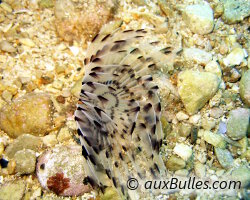
Sabelle paon
(Sabella pavonina)
(Sabella pavonina)
 Copyright © 2007-2026 auxBulles.com - All rights reserved. Legal notices.
Photo credits - Our partners