

Sealife guideThe mahi-mahiCoryphaena hippurus
Last updated on 08/06/2026 at 12:15 AM
Taxonomy
English names
Mahi-mahiCommon dolphinfish
French namesDaurade coryphèneMahi-mahi
Scientific nameCoryphaena hippurus (Linnaeus, 1758)
FamilyCoryphaenidae
OrderCarangiformes
ClassActinopterygii
Description
The mahi-mahi, also known as the dolphinfish, is a large pelagic fish with a highly distinctive body shape.
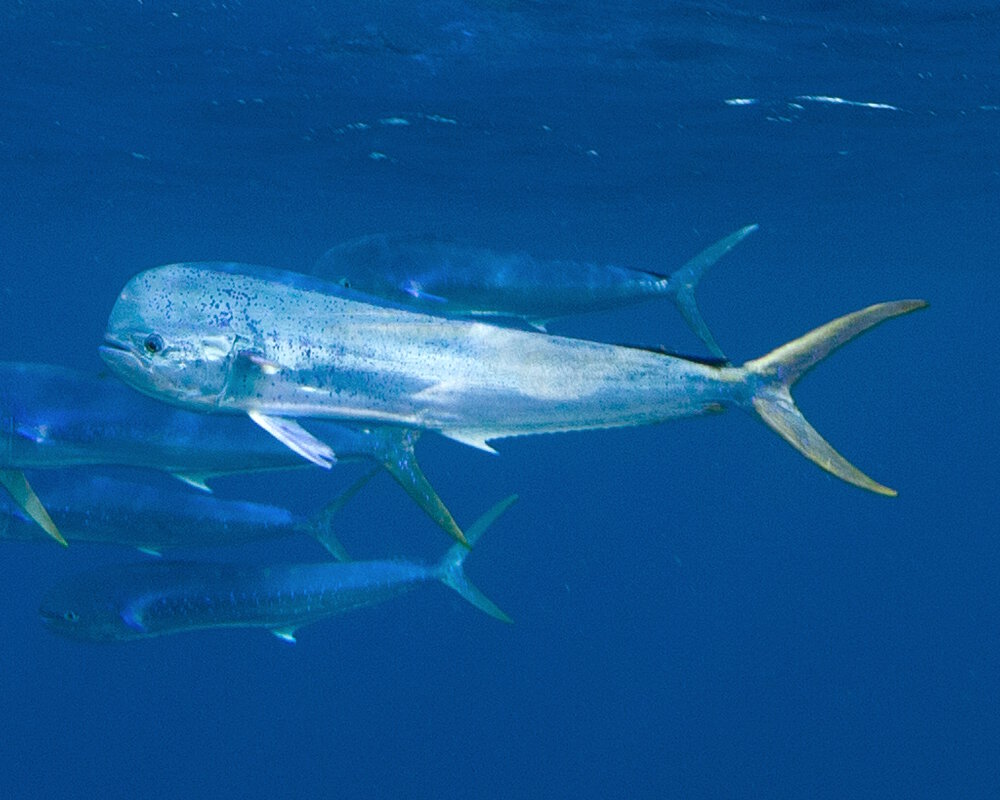
The mahi-mahi (Coryphaena hippurus) © Martin Procházka | Dreamstime.com
The mahi-mahi has a streamlined body with a very pronounced forehead. Its coloration is metallic, with silvery, golden, bluish, or greenish reflections, and its flanks are covered with bluish spots.
As an adult, the mahi-mahi can reach up to 5 feet in length and weigh up to 88 pounds.
Geographic range
The mahi-mahi inhabits warm tropical and subtropical waters of the Atlantic, Indian, and Pacific oceans. It is found notably around French Polynesia, Hawaii, Costa Rica, and the Gulf of Mexico.
In Florida, the mahi-mahi is never far from the warm waters of the Gulf Stream, which flow northward along the Atlantic coast. The best spots to encounter mahi-mahi are Cape Canaveral in May each year, Saint Augustine, Jacksonville Beach, Key West, and the Florida Keys.
Habitat
The mahi-mahi is a pelagic fish that mainly lives in the open ocean, but it sometimes approaches coastal waters, frequents coral reef areas, and gathers around floating objects at the surface, such as drifting mats of sargassum.
Diet
The mahi-mahi has a varied diet and mainly feeds on smaller fish, squid, and crustaceans. It is often attracted to schools of baitfish and floating objects, making it easier to target by anglers and fishing nets.
Did you know ?
With its white, firm, lean flesh and mild, slightly sweet flavor, mahi-mahi is a popular fish served in restaurants around the world. It can be prepared in many different ways, including grilled, pan-seared, roasted, fried, marinated, or served as sashimi.
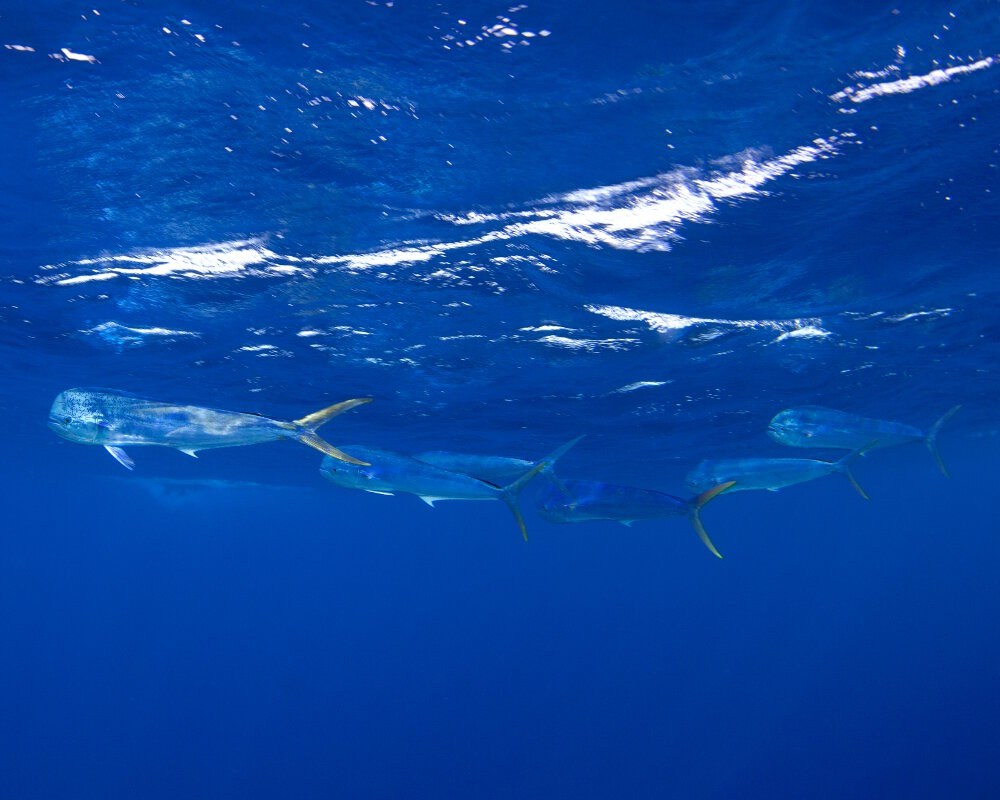
The mahi-mahi (Coryphaena hippurus) © Martin Procházka | Dreamstime.com
Highly fast-moving and difficult to capture, this fish is very popular among sport and recreational anglers, especially in Florida.
The term « mahi » means « strong » in Hawaiian and refers to the fighting spirit of this fish, which continues to struggle until exhaustion when caught.
The mahi-mahi is listed as many other marine species within The IUCN Red List of threatened species. The mahi-mahi appears in the IUCN Red List since 2011 within the category Least Concern !
Discover also
Coney
(Cephalopholis fulva)
(Cephalopholis fulva)
Double barred rabbitfish
(Siganus virgatus)
(Siganus virgatus)
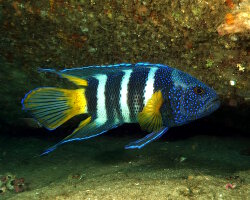
Eastern blue devil
(Paraplesiops bleekeri)
(Paraplesiops bleekeri)
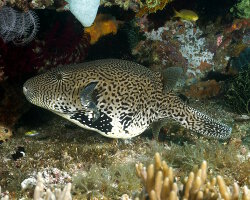
Guineafowl puffer
(Arothron meleagris)
(Arothron meleagris)
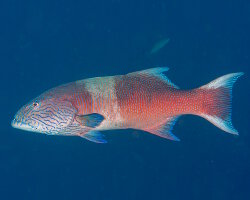
Highfin coral grouper
(Plectropomus oligacanthus)
(Plectropomus oligacanthus)
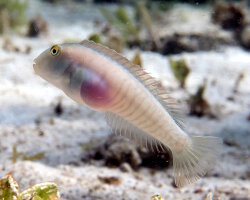
Knife razorfish
(Cymolutes praetextatus)
(Cymolutes praetextatus)
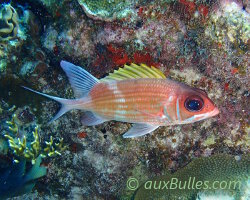
Squirrelfish
(Holocentrus adscensionis)
(Holocentrus adscensionis)
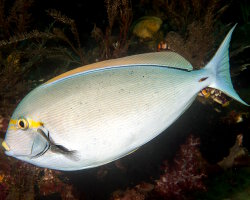
Yellowmask surgeonfish
(Acanthurus mata)
(Acanthurus mata)
Our latestUpdates

Morrocoy National ParkDiscover Morrocoy National Park in Venezuela, with white-sand beaches, turquoise waters, coral reefs, mangroves, scenic cayos, and remarkable marine biodiversity.Read more
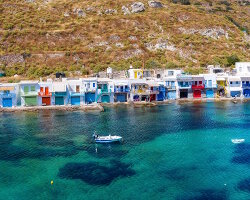
Milos IslandDiscover Milos Island in the Cyclades, known for its volcanic landscapes, crystal-clear beaches, traditional villages, and the famous Venus de Milo.Read more
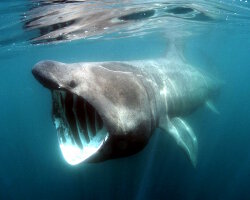
The basking sharkDiscover the basking shark (Cetorhinus maximus), the world's second-largest fish. This huge shark feeds on plankton by filtering large amounts of water.Read more
Photo of the Day
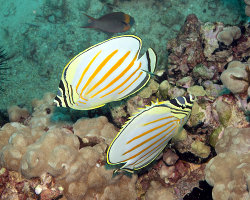
Poisson papillon orné
(Chaetodon ornatissimus)
(Chaetodon ornatissimus)
 Copyright © 2007-2026 auxBulles.com - All rights reserved. Legal notices.
Photo credits - Our partners