Sealife guideThe red sea urchinMesocentrotus franciscanus
Last updated on 09/30/2025 at 11:08 PM
Taxonomy
English names
Red sea urchin
French namesOursin rouge
Scientific nameMesocentrotus franciscanus (A. Agassiz, 1863)
Description
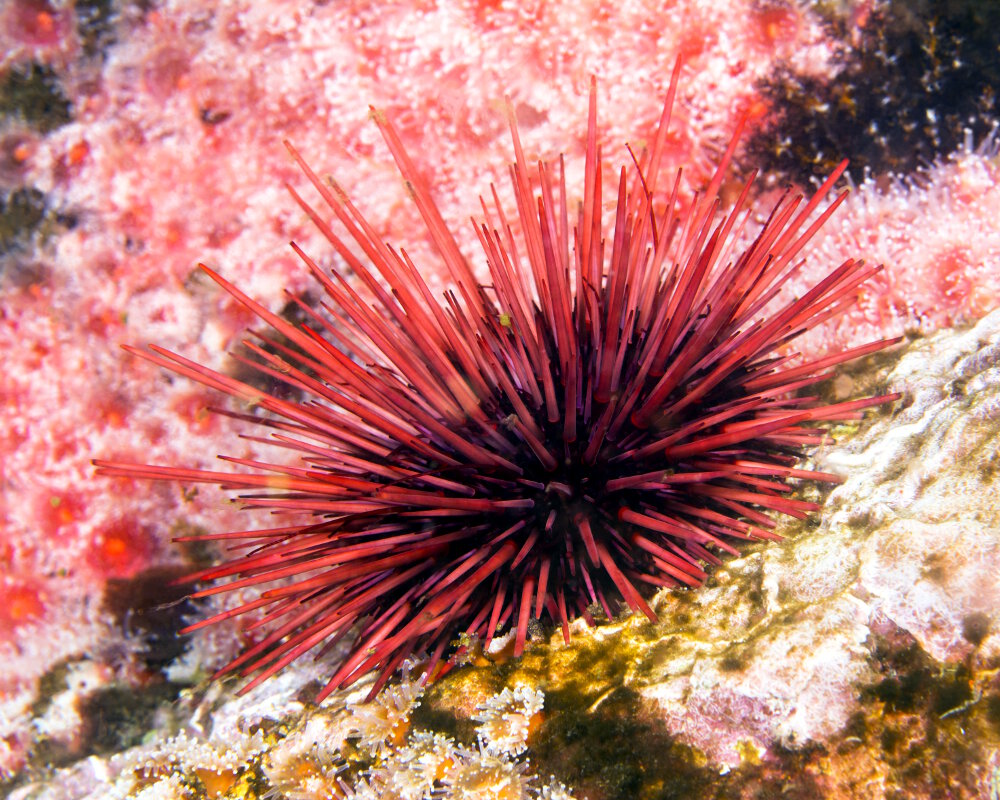
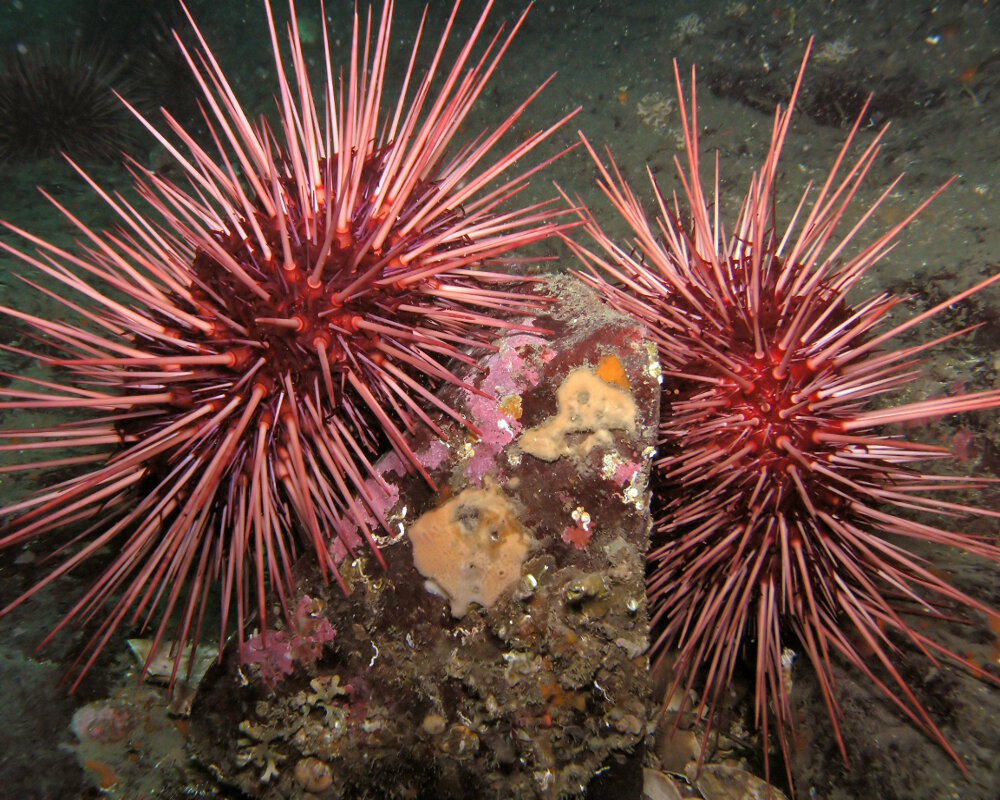
The red sea urchin is the largest sea urchin species and can reach a diameter of about 7 inches in the largest specimens. Its body is dark red to black in color with large, lighter red spines.
Geographic range
The red sea urchin is found on the eastern side of the Pacific ocean, along the west coast of North America down to the tip of Baja California, Mexico.
Habitat
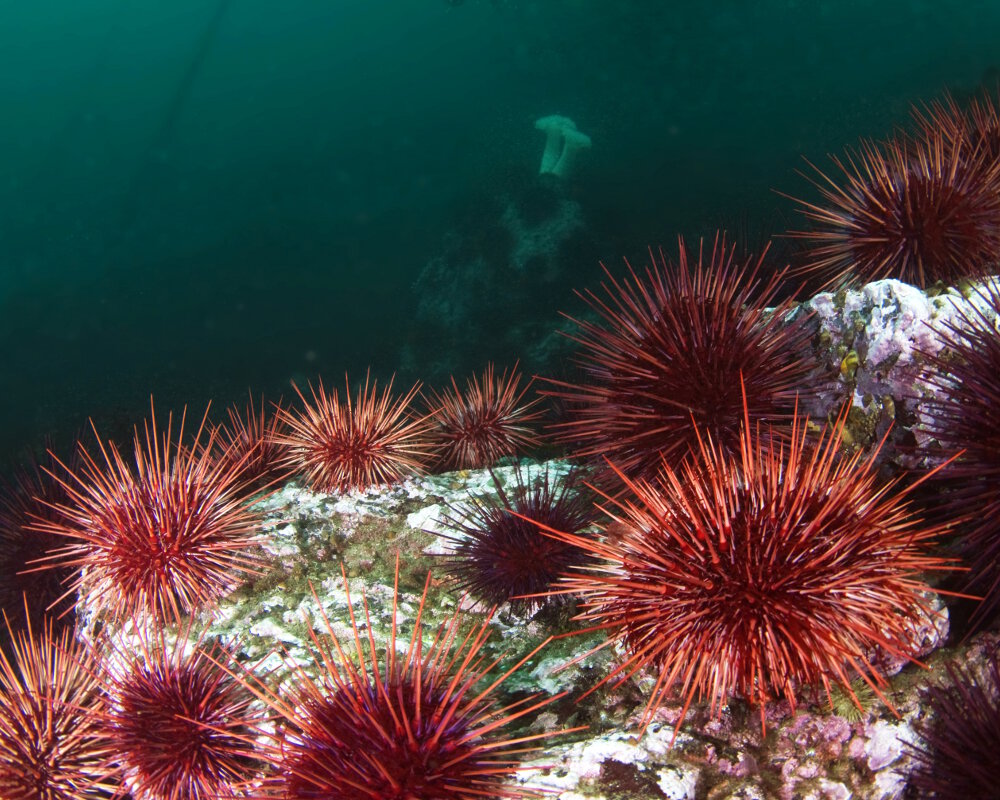
The red sea urchin mainly lives in the rocky parts of the shoreline, also called the intertidal zone and down to depths of about 525 feet.
Diet
The red sea urchin is an herbivore and feeds mainly on kelp, which is why it is often found in kelp forests.
Reproduction
After the eggs are released into the seawater and fertilized, larvae hatch and drift freely before settling on the seafloor and developing into young juvenile
sea urchins.
Did you know ?
By feeding on
giant kelp, the red sea urchin plays an important role in the development of giant kelp forests and in shaping the structure of the entire ecosystem.
Discover also
Biscuit sea star
(Peltaster placenta)
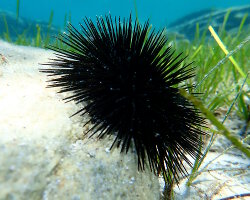
Black sea urchin
(Arbacia lixula)
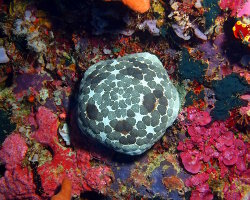
Cushion starfish
(Culcita novaeguineae)
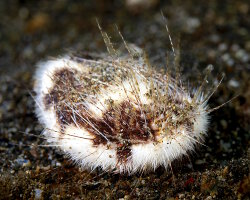
Heart urchin
(Maretia planulata)
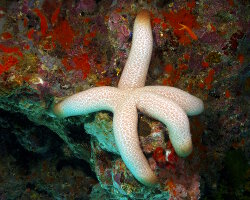
Heavy starfish
(Thromidia catalai)
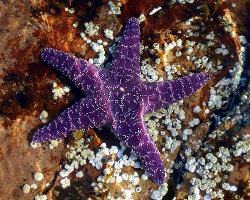
Ochre sea star
(Pisaster ochraceus)
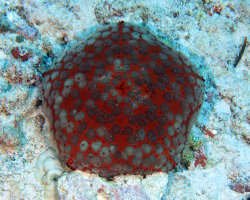
Pin cushion sea star
(Culcita schmideliana)
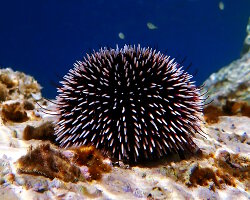
Violet sea urchin
(Sphaerechinus granularis)
The marine species in the Eastern Pacific
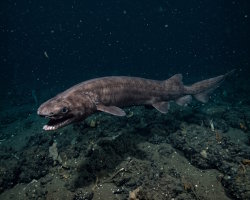
Frilled shark
(Chlamydoselachus anguineus)
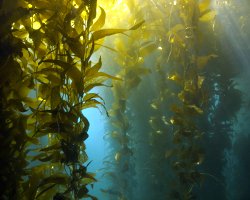
Giant kelp
(Macrocystis pyrifera)
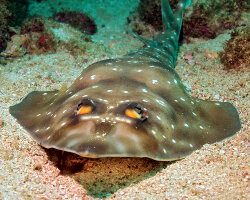
Gorgona guitarfish
(Pseudobatos prahli)
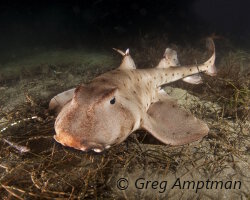
Horn shark
(Heterodontus francisci)
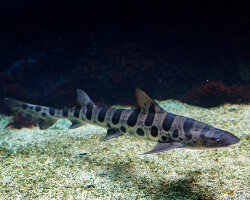
Leopard shark
(Triakis semifasciata)
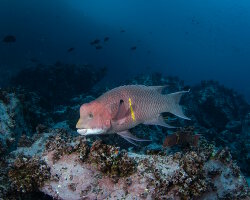
Mexican hogfish
(Bodianus diplotaenia)

Pacific angelshark
(Squatina californica)

Sheep crab
(Loxorhynchus grandis)