

Islands destinationKomodo islandLesser Sunda islands | Pacific Ocean
Last updated on 05/21/2026 at 11:14 PM
Komodo island is part of the eastern zone of the Sunda island chain. Unlike the western zone, which is made up of larger and more imposing islands such as Sumatra and Java, the eastern zone consists of small islands, and Komodo island is no exception with only 150 square miles.
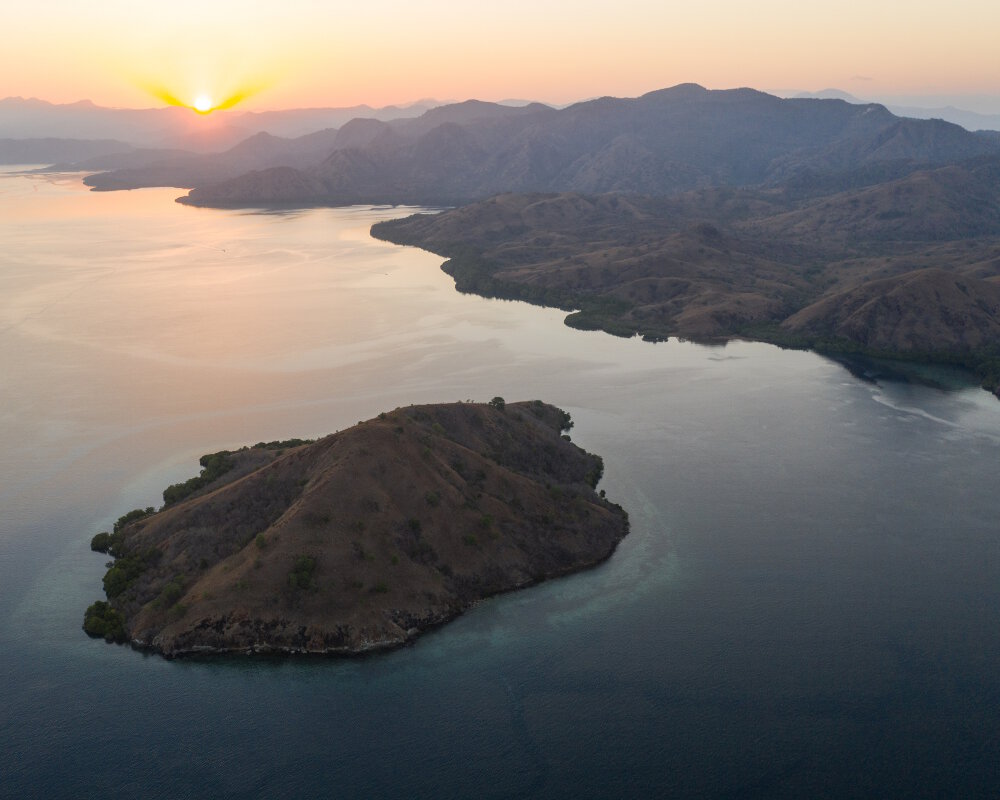
Aerial view of Komodo island located in the Lesser Sunda islands archipelago © Ethan Daniels | Dreamstime.com
Komodo National Park
Komodo National Park is located in the heart of the Indonesian archipelago between the islands of Sumbawa and Flores and is mainly composed of three large uninhabited islands, namely Komodo island, Padar island, and Rinca island, as well as a multitude of smaller islands, all of volcanic origin.
Located at the junction of two continental plates, the park is home to remarkable terrestrial and marine ecosystems. The arid landscapes contrast strongly with sandy beaches and marine environments rich in coral reefs, swept by strong currents that bring sea turtles, whales, dolphins, and dugongs.
In 1986, Komodo National Park was declared a UNESCO World Heritage Site and a Man and Biosphere Reserve.
An iconic inhabitant
The most iconic inhabitant of Komodo National Park is undoubtedly the Komodo dragon (Varanus komodoensis), a giant lizard whose behavior and appearance have earned it this name ! It is the largest living species of lizard in the world, with an average length of about 6.5 to 10 feet and a weight of over 150 lbs.
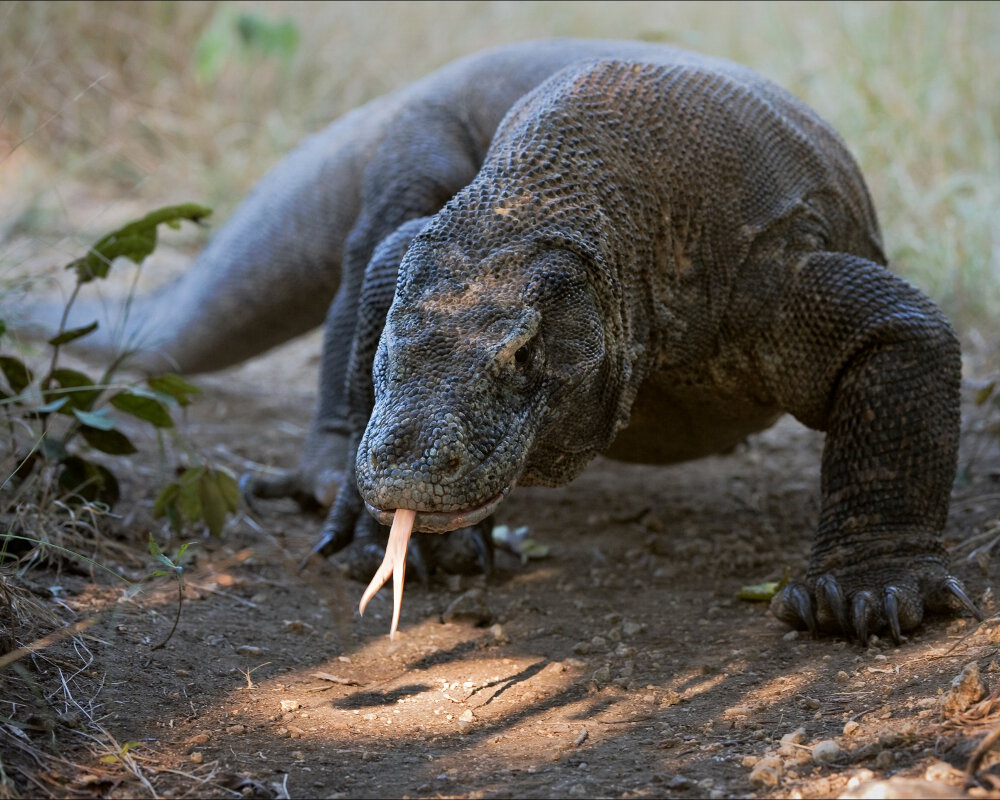
Komodo dragon (Varanus komodoensis) © Sergey Uryadnikov | Dreamstime.com
Alongside this giant lizard, which has no natural predators, other remarkable land species coexist, such as the orange-footed scrubfowl and the Timor deer, as well as endemic species like the Rinca rat and the Komodo frog.
One of the seven pink beaches in the world
Don't miss this unique beach called Pantai Merah, which means « Red Beach » in Indonesian, whose pale pink color comes from coral fragments mixed with white sand.
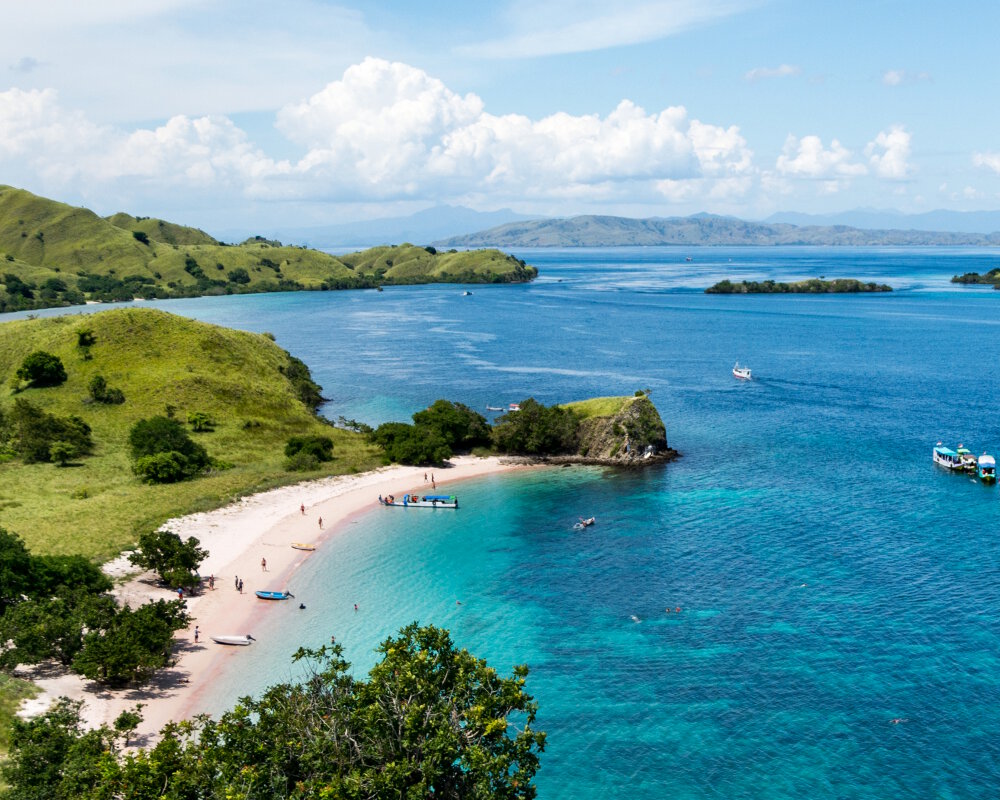
The Pink Beach of Komodo island is one of the seven pink beaches in the world © Pannaponn Tantimasakul | Dreamstime.com
With its panoramic views of lush green hills, turquoise waters, and a deep blue sky, it offers an unforgettable spectacle and is one of only seven pink beaches in the world !
How to get there ?
Only day trips are allowed on Komodo island, which is accessible by boat from the port of Labuan Bajo on Flores island.
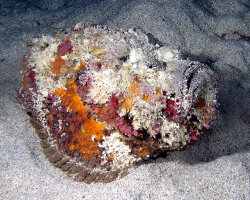
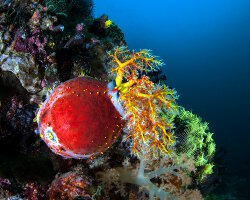
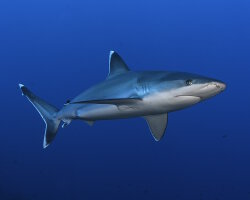
The marine species in Komodo
The islands from pacific Ocean
Ai island
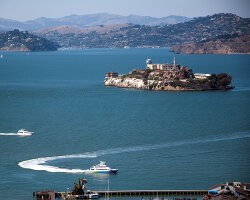
Alcatraz island
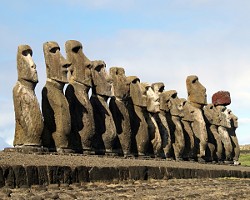
Easter island
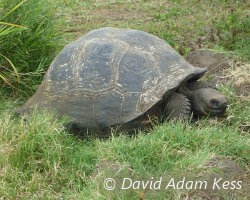
Galapagos islands
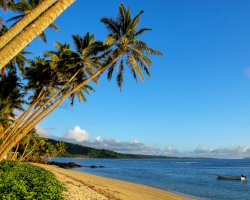
Taveuni island
Tinian Island
Tubuai island
Yasawa islands
Explore new islands

Our latestUpdates

The Guide des poissons de Nouvelle-CalédonieDiscover Guide to the Fishes of New Caledonia by Pierre Laboute and René Grandperrin, an illustrated reference featuring nearly 1,200 species, from rivers and coral reefs to the depths of the ocean.Read more
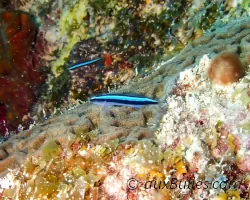
The neon gobyDiscover the neon goby (Elacatinus oceanops), a small western Atlantic reef fish known for its brilliant blue stripe and its role as a cleaner fish that removes parasites from other fish.Read more
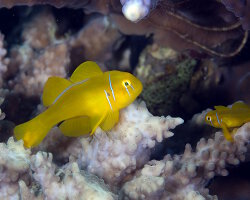
The poison gobyDiscover the poison goby (Gobiodon citrinus), a tiny reef fish with a bright yellow body and distinctive blue markings. It lives among branching Acropora corals in the tropical waters of the Indo-Pacific.Read more
Photo of the Day
Sabelle paon
(Sabella pavonina)
(Sabella pavonina)
 Copyright © 2007-2026 auxBulles.com - All rights reserved. Legal notices.
Photo credits - Our partners