

Sealife guideWhere to see groupers in the Mediterranean ?Marine fish
Last updated on 04/29/2026 at 12:18 AM
The grouper, or more precisely the dusky grouper, is one of the most emblematic fish of the Mediterranean Sea. With its impressive size and varied colors, it attracts both experienced divers and snorkeling enthusiasts. Observing a grouper in its natural habitat is a fascinating experience that helps better understand the region’s marine biodiversity.
If you are planning an underwater outing or freediving session, knowing the best spots to see this majestic fish will help you meet it and get better acquainted. We invite you to discover must-see locations to observe the grouper in the Mediterranean Sea.
Faithful to its hideout
Knowing the traits of the grouper is an asset to anticipate its behavior and increase your chances of encountering it.
The grouper is a very sedentary fish that generally remains faithful to a well-defined territory. It often occupies a cave or a rocky crevice that it uses as its main shelter and around which it moves to feed.
After its movements, even if it sometimes explores the surroundings, it almost always returns to its usual refuge. This fidelity to a specific shelter makes it an easy species to observe in rocky areas, where the same individuals can be encountered over long periods.
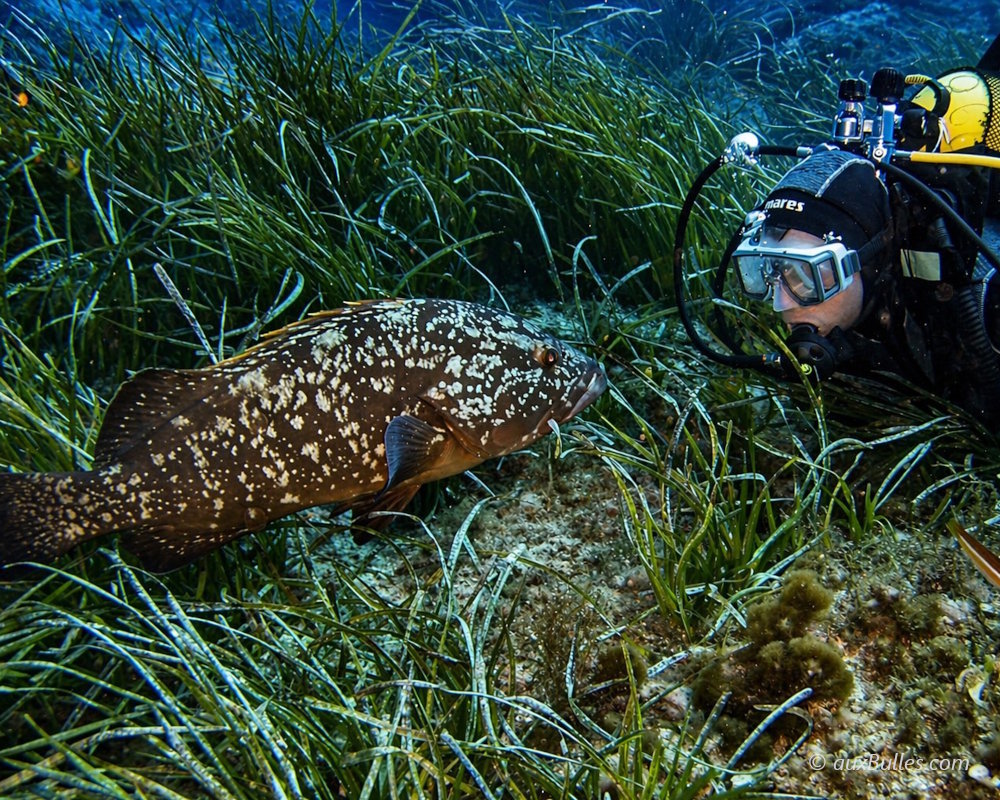
The encounter with a rather unfearful brown grouper in Port-Cros in the Mediterranean Sea
In protected areas where it is little disturbed by human activity, the Mediterranean grouper can appear quite unfearful and relatively confident around divers. It often remains motionless or calmly observes visitors, allowing close and extended encounters while diving.
French coasts
The French coasts offer several famous spots to observe groupers. The French Riviera, in particular, is known for its clear waters and rich marine life. Protected areas such as the Port-Cros National Park host stable grouper populations, often visible from just a few meters deep.
Other lesser-known sites, such as the Calanques of Marseille or the Hyères islands, also allow encounters with these impressive fish. These rocky formations are highly appreciated by divers, but also by groupers, which like to hide there, offering spectacular and photogenic sightings.
Port-Cros
The Port-Cros National Park is today one of the best spots in France to observe the grouper while diving, with frequent and sometimes very close encounters, especially around La Gabinière.
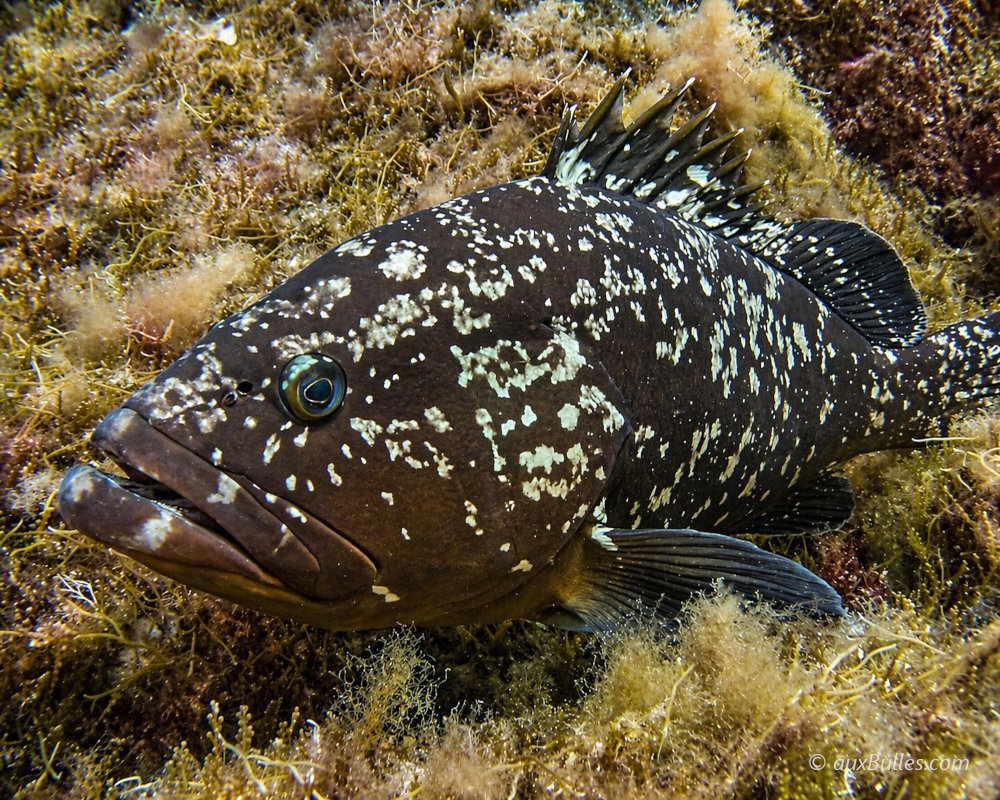
A brown grouper resting on the seabed at La Gabinière, Port-Cros
The most famous site is La Gabinière, considered one of the best diving spots in the Mediterranean to see groupers. You will find a high concentration of individuals there, especially along drop-offs and rocky rubble offering many hiding places. It is common to observe several groupers during a single dive, often between 33 and 131 feet deep.
Other sites such as Pointe du Vaisseau or Pointe de la Croix also allow frequent encounters, as groupers have become less shy and accustomed to divers in these protected areas.
Cerbère-Banyuls
In the Cerbère-Banyuls National Nature Reserve, the grouper is now easily observable while diving thanks to decades of protection. The rocky seabeds, rich in caves and crevices, provide ideal conditions for encountering this territorial species, with frequent sightings across many sites in the reserve.
Scandola or the Lavezzi islands
Corsica is one of the best places in the Mediterranean to observe the grouper, especially in protected natural reserves such as Scandola or the Lavezzi islands. Thanks to strong protection and preserved rocky habitats, groupers are numerous and not very shy, offering frequent and high-quality encounters for divers.
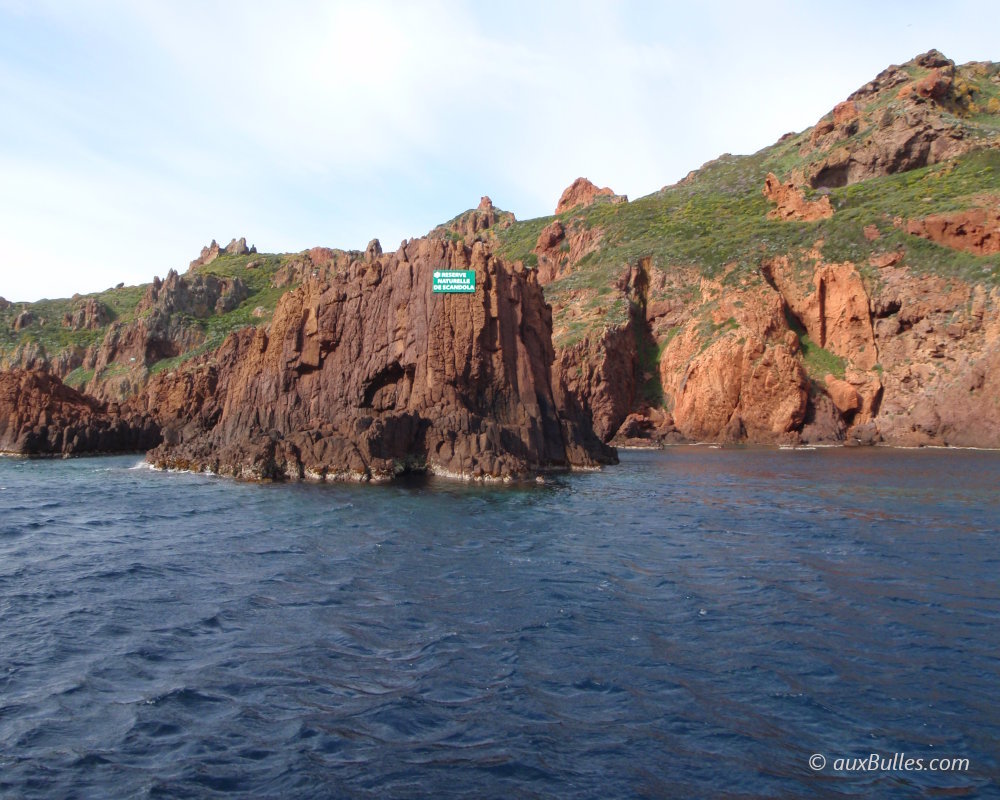
Bathed in translucent waters, the red cliffs of the Scandola Nature Reserve offer the dusky grouper a natural refuge
Italian coasts
The Italian coasts offer several areas suitable for observing the grouper, especially in marine protected areas such as the Aeolian islands, Sardinia, and the Portofino Marine Protected Area. These diving sites, characterized by rocky bottoms, drop-offs, and clear waters, provide ideal habitats, with grouper presence enhanced in well-protected zones.
Italian marine reserves have implemented protection measures that allow grouper populations to thrive. These areas are particularly recommended for beginner and intermediate divers wishing to observe these fish without disturbing their natural environment.
Spanish coasts
In Spain, certain areas of the western Mediterranean, such as the Balearic islands, especially along the coasts of Mallorca and the Costa Brava, are known for their groupers. The clear waters and rocky reefs provide ideal conditions for observation, especially in spring and summer when visibility is at its best.
The Medes islands
The Medes islands, located off the Costa Brava in Spain, are a marine protected area known for their rich biodiversity and strong grouper presence. Thanks to decades of protection from fishing, this site has become a must-see diving spot in the Mediterranean, where groupers are frequently observed in clear waters and around rocky cavities.
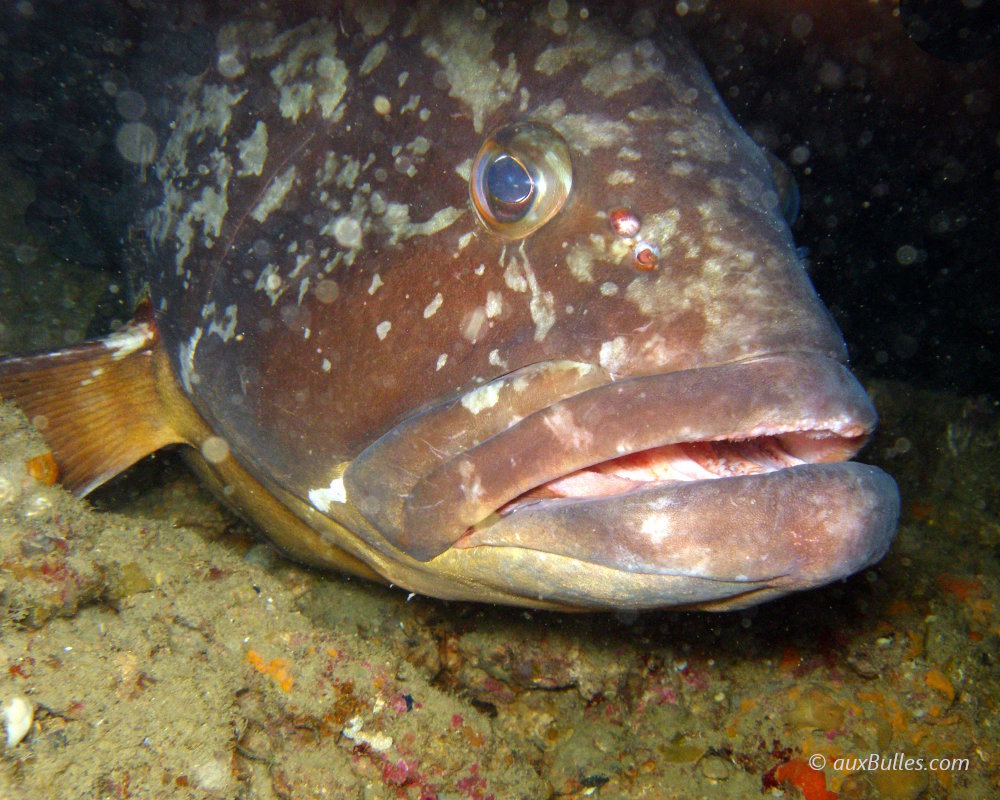
A brown grouper watching from a rocky overhang in the Medes islands
The dive site La Vaca is one of the most famous: this underwater tunnel hosts many groupers in its cavities, offering close encounters during dives.
The dive sites of Pedra de Déu and Carall Bernat are also very popular, with rocky walls and crevices where groupers are frequently observed.
Greek and Turkish coasts
The Greek and Turkish coasts are must-see destinations for observing the grouper in the eastern Mediterranean. Islands such as Crete or the Turkish coasts near Bodrum offer rich and varied seabeds, with an abundance of underwater caves and canyons where groupers like to shelter.
In the eastern Mediterranean, although the grouper is naturally present, populations are generally more discreet and less abundant. Higher fishing pressure and fewer effective protected areas explain rarer sightings and more cautious individuals.
Our latestUpdates

Thursday, May 7th 2026
Faroe islands
Discover the Faroe islands, a remote archipelago between Iceland and Norway known for its dramatic cliffs, colorful villages, and untouched Nordic landscapes. Find travel tips, itineraries, hiking guides, local culture, and inspiration to explore this unique destination in the North Atlantic.

Wednesday, May 6th 2026
The short-finned pilot whale
Discover the tropical pilot whale (Globicephala macrorhynchus), a highly social large cetacean from tropical and subtropical waters, specialized in deep dives in search of squid.
Monday, April 20th 2026
The broadnose sevengill shark
Discover the broadnose sevengill shark (Notorynchus cepedianus), a large primitive coastal shark with seven gill slits living in temperate and subtropical waters around the world.
Photo of the Day
Corail corne d'élan
(Acropora palmata)
(Acropora palmata)
 Copyright © 2007-2026 auxBulles.com - All rights reserved. Legal notices.
Photo credits - Our partners