

Sealife guideThe wedgetail triggerfishRhinecanthus rectangulus
Last updated on 09/07/2026 at 11:22 PM
The wedgetail triggerfish is a tropical fish species easily recognizable by its colorful pattern.
Taxonomy
English names
Wedgetail triggerfishReef triggerfishV-line humu humu
French namesBaliste Picasso à bandeau noirBaliste Picasso à chevronsBaliste écharpe
Scientific nameRhinecanthus rectangulus (Bloch & Schneider, 1801)
FamilyBalistidae
OrderTetraodontiformes
ClassActinopterygii
Description
The wedgetail triggerfish has a robust, stocky body, with a broad head and a prominent snout. Its coloration is dominated by orange-brown tones on the upper part of the body, contrasting with a white to whitish head and belly. A broad oblique black band crosses the eye and extends toward the lower part of the body to the base of the anal fin. The caudal peduncle and rear part of the body bear a triangular, wedge-shaped black marking bordered in yellow and accompanied by a second parallel yellowish line. The base of its pectoral fin features a vivid reddish-orange arc.
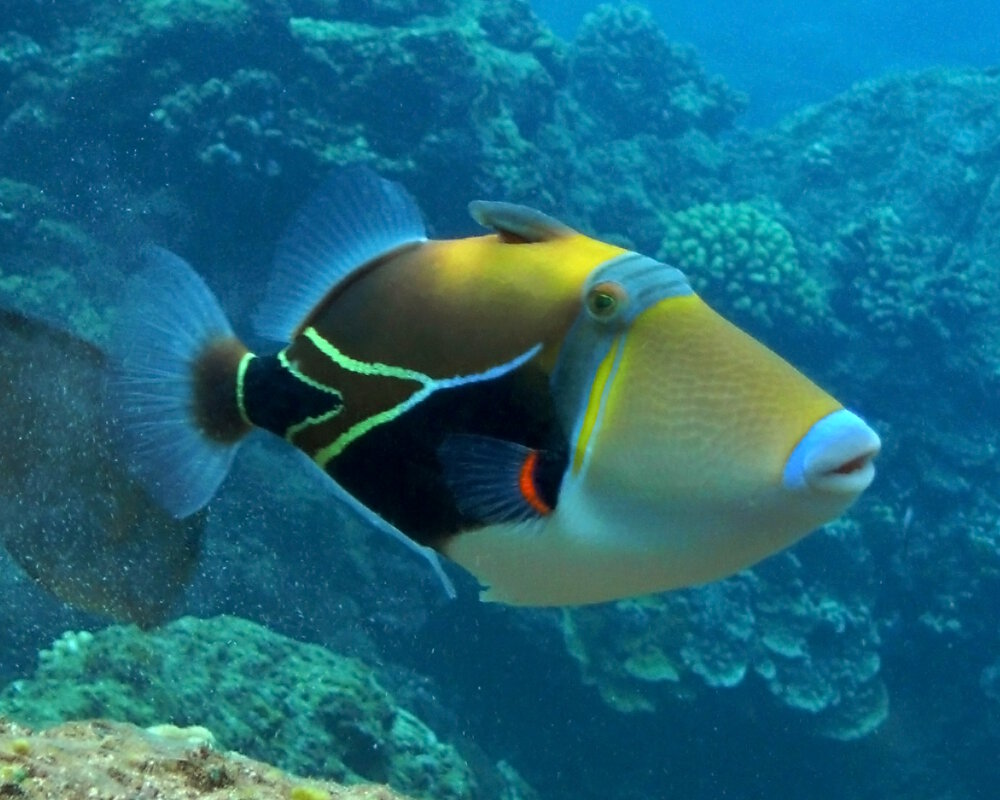
The wedgetail triggerfish (Rhinecanthus rectangulus) © Underwatermaui | Dreamstime.com
With its unique colorful geometric patterns, it is nicknamed « Picasso » due to its artistic appearance. Like a chameleon, the wedgetail triggerfish can adjust the intensity of its coloration depending on the circumstances.
The wedgetail triggerfish is a medium-sized fish, typically measuring between 6 and 8 inches in length, though some individuals can reach a maximum size of 12 inches.
Geographic range
The wedgetail triggerfish is found in the tropical waters of the western and central Pacific, as well as in the Indian Ocean and the Red Sea, notably along the coasts of eastern Africa, India, Indonesia, Papua New Guinea, the Philippines, Taiwan, southern Japan, the Samoa islands, the Marquesas and Hawaii.
Habitat
The wedgetail triggerfish inhabits shallow coral reefs, typically between 33 and 66 feet deep. It is often seen on bare rocks or in areas formed by coral spur-and-groove structures, where the substrate alternates between rocks, corals and debris. Juveniles prefer algal reefs, zones where attached algae cover the substrate, providing both food and shelter for young fish.
Diet
The wedgetail triggerfish is omnivorous with a carnivorous tendency. It feeds mainly on algae, organic debris, mollusks, crustaceans, marine worms, echinoderms, fish, sponges and eggs. It also helps maintain the health of coral reefs by clearing corals of invasive algae and small debris.
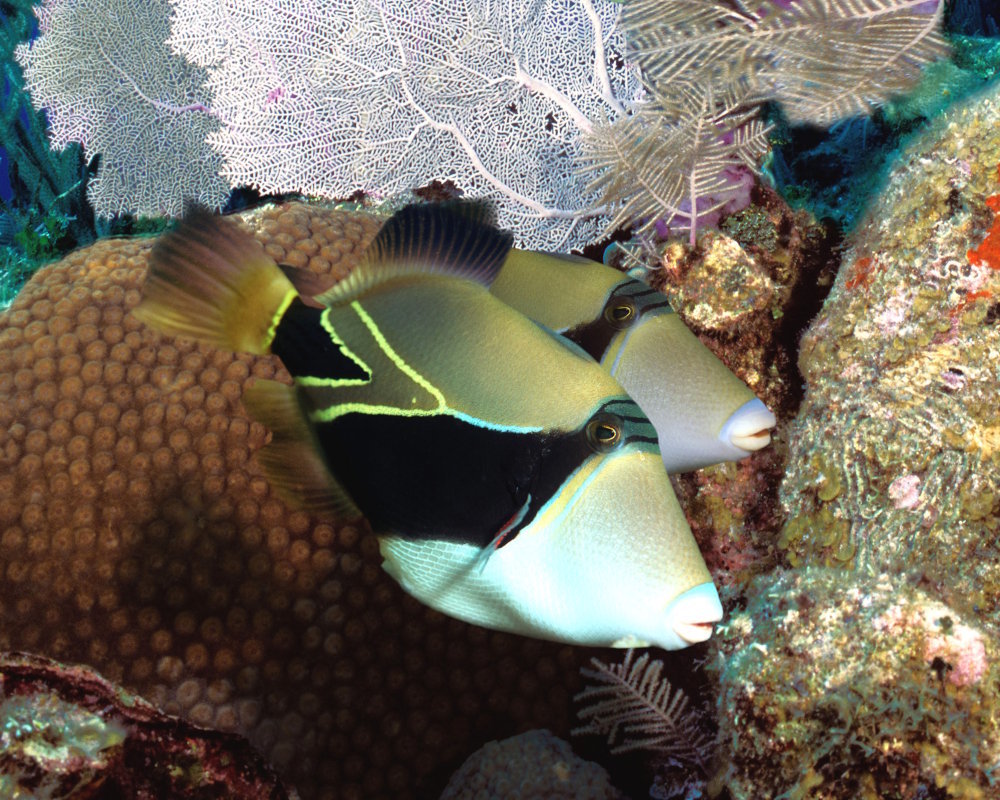
The wedgetail triggerfish (Rhinecanthus rectangulus) © Krishnacreations | Dreamstime.com
Reproduction
The wedgetail triggerfish is oviparous and is known for its territorial behavior, especially during the breeding season when it vigorously defends its territory against intruders. After fertilization, the eggs are deposited in a nest dug into the soft substrate.
Did you know ?
The Hawaiian name of the wedgetail triggerfish is « Humuhumunukunukuāpuaʻa », meaning « pig-nosed fish ». This name refers to the shape of the fish's snout, which resembles that of a pig. It was elected the official state fish of Hawaii in 1985 for a five-year period. After 1990, no decision was made to renew or replace it, causing it to lose its title, which it finally regained permanently in 2006.
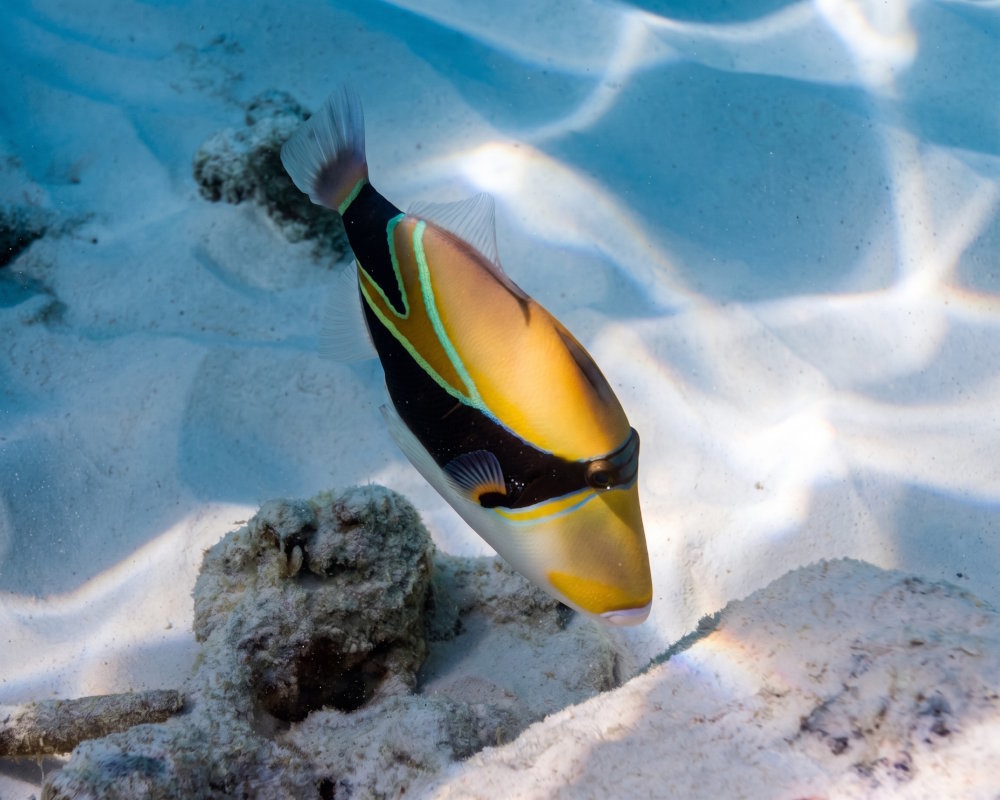
A wedgetail triggerfish (Rhinecanthus rectangulus) in the waters of Similan Islands National Park, Thailand © Tae208 | Dreamstime.com
Like all triggerfish, it has a first dorsal fin composed of three spines that functions like a trigger. When lowered, the wedgetail triggerfish can slip into a crevice for shelter and stay in place by raising its dorsal fin. Secured in this way, it can spend the night without being swept away by currents.
The wedgetail triggerfish is listed as many other marine species within The IUCN Red List of threatened species. The wedgetail triggerfish appears in the IUCN Red List since 2022 within the category Least Concern !
Within the same genus
Within the same family
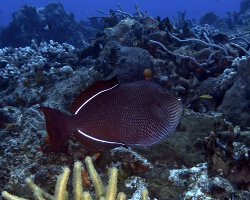
Black triggerfishMelichthys niger
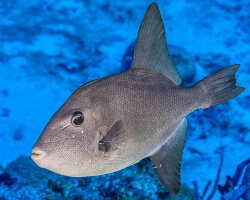
Ocean triggerfishCanthidermis sufflamen
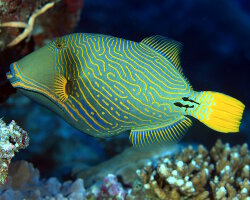
Orange striped triggerfishBalistapus undulatus
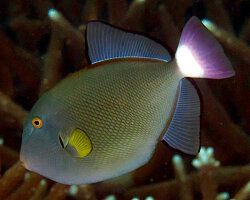
Pinktail triggerfishMelichthys vidua
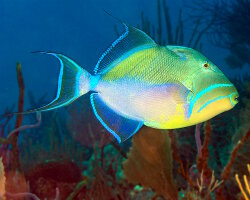
Queen triggerfishBalistes vetula
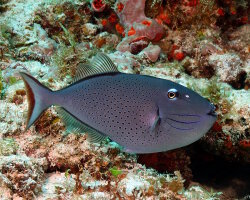
Sargassum triggerfishXanthichthys ringens
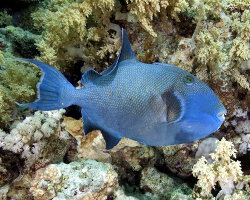
Yellow-spotted triggerfishPseudobalistes fuscus
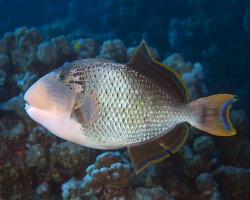
Yellowmargin triggerfishPseudobalistes flavimarginatus
Discover also
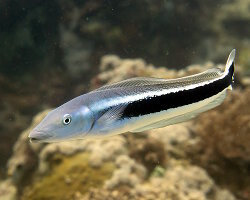
Blue tilefishMalacanthus latovittatus
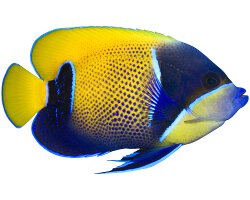
Bluegirdled angelfishPomacanthus navarchus
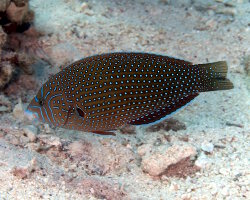
Bluespotted wrasseAnampses caeruleopunctatus
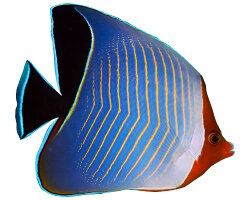
Hooded butterflyfishChaetodon larvatus
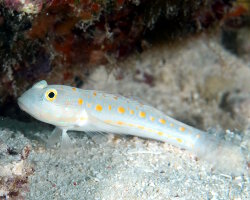
Maiden gobyValenciennea puellaris
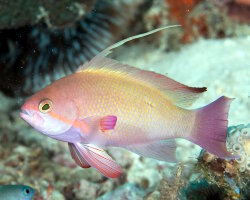
Threadfin anthiasPseudanthias huchtii
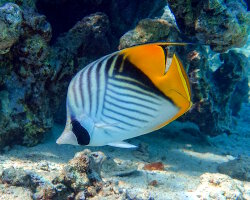
Threadfin butterflyfishChaetodon auriga
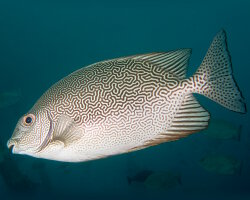
Vermiculate rabbitfishSiganus vermiculatus
The marine species in Hawaii



Best scuba diving destinations


Our latestUpdates

The Guide des poissons de Nouvelle-CalédonieDiscover Guide to the Fishes of New Caledonia by Pierre Laboute and René Grandperrin, an illustrated reference featuring nearly 1,200 species, from rivers and coral reefs to the depths of the ocean.Read more
The neon gobyDiscover the neon goby (Elacatinus oceanops), a small western Atlantic reef fish known for its brilliant blue stripe and its role as a cleaner fish that removes parasites from other fish.Read more
The poison gobyDiscover the poison goby (Gobiodon citrinus), a tiny reef fish with a bright yellow body and distinctive blue markings. It lives among branching Acropora corals in the tropical waters of the Indo-Pacific.Read more
Photo of the Day
Girelle de Batu
(Coris batuensis)
(Coris batuensis)
 Copyright © 2007-2026 auxBulles.com - All rights reserved. Legal notices.
Photo credits - Our partners