

Sealife guideThe giant tube wormRiftia pachyptila
Last updated on 04/20/2026 at 11:28 PM
The giant tube worm is a fascinating marine worm that lives in the extreme depths of the oceans, near hydrothermal vents. Discovered in the late 1970s, it has become a symbol of deep-sea ecosystems and life forms capable of surviving without sunlight.
Taxonomy
English names
Giant tube worm
French namesVer tubicole géant
Scientific nameRiftia pachyptila (Jones, 1981)
FamilySiboglinidae
OrderSabellida
ClassPolychaeta
Description
The giant tube worm can grow over 6.5 feet in length and lives inside a rigid white tube that it secretes. It has a bright red plume rich in hemoglobin, used to capture the gases necessary for its survival.
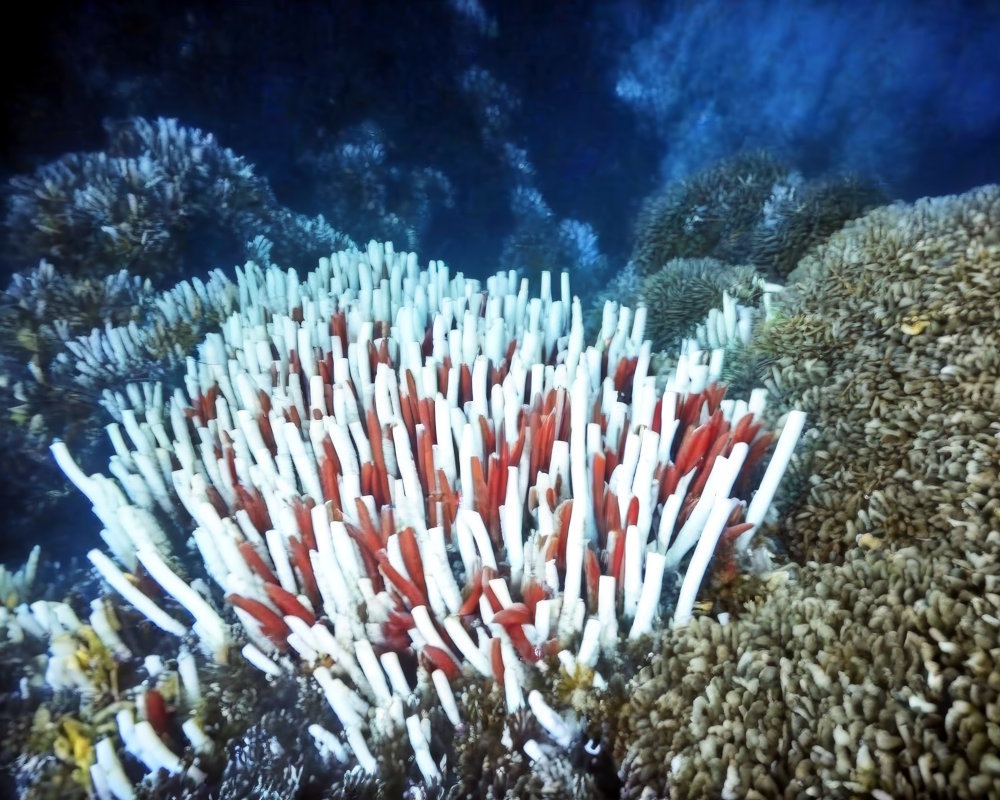
The giant tube worm (Riftia pachyptila) © Galih Wisnu | Dreamstime.com
Geographic range
The giant tube worm is mainly found in the Pacific Ocean, along mid-ocean ridges, particularly near hydrothermal vents in the East Pacific. Its distribution is closely linked to these extreme environments.
Habitat
The giant tube worm lives at great depths, often between 6,500 and 9,800 feet, in close proximity to hydrothermal vents where water temperatures can reach very high levels. These environments are rich in chemicals but completely devoid of light.
Diet
Unlike most animals, the giant tube worm has neither a mouth nor a digestive system. It lives in symbiosis with bacteria that convert chemical compounds, such as hydrogen sulfide, into energy through chemosynthesis.
Reproduction
The giant tube worm reproduces by releasing its gametes into the water, where fertilization is external. The larvae then drift in the ocean before settling near a hydrothermal vent and developing their bacterial symbiosis.
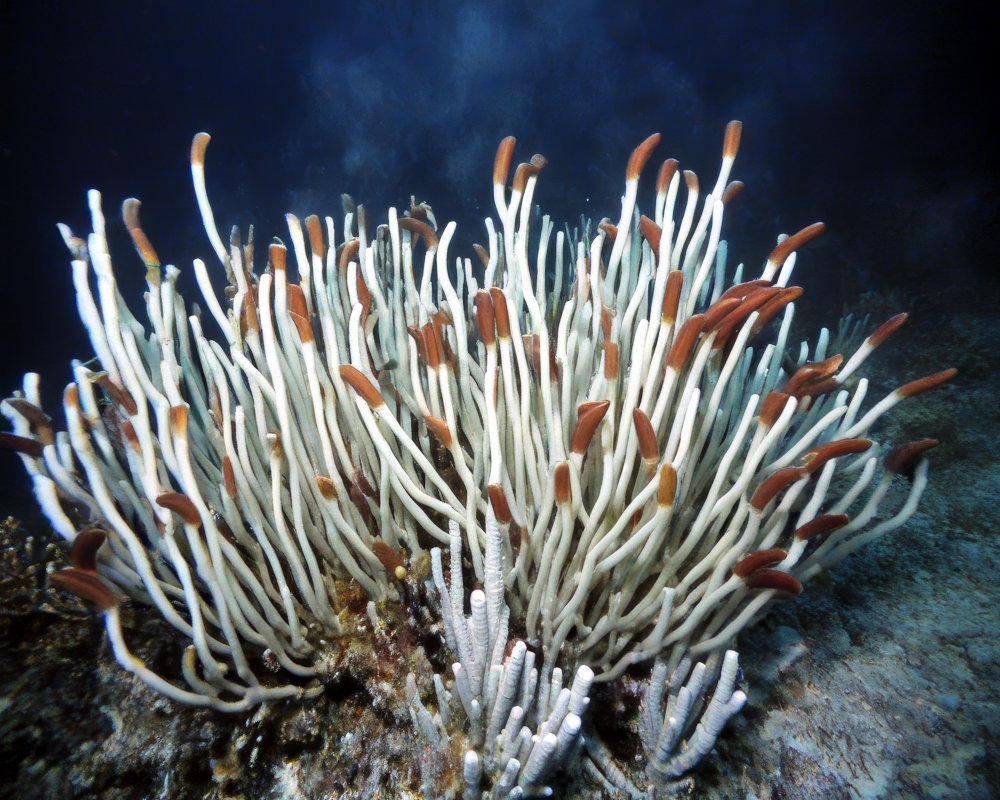
The giant tube worm (Riftia pachyptila) © Galih Wisnu | Dreamstime.com
The marine species in the Eastern Pacific


Our latestUpdates
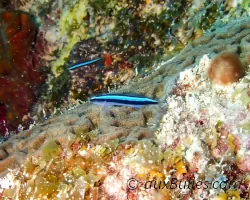
The neon gobyDiscover the neon goby (Elacatinus oceanops), a small western Atlantic reef fish known for its brilliant blue stripe and its role as a cleaner fish that removes parasites from other fish.Read more
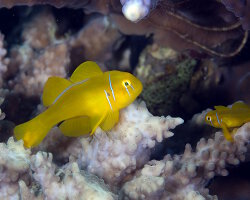
The poison gobyDiscover the poison goby (Gobiodon citrinus), a tiny reef fish with a bright yellow body and distinctive blue markings. It lives among branching Acropora corals in the tropical waters of the Indo-Pacific.Read more
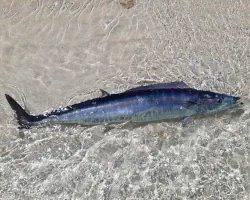
The wahooDiscover the wahoo (Acanthocybium solandri), a powerful pelagic predator found in tropical and subtropical oceans. Recognizable by its streamlined body and distinctive blue vertical stripes, it is a fast swimmer that feeds mainly on fish and squid.Read more
Photo of the Day

Fou à pieds rouges
(Sula sula)
(Sula sula)
 Copyright © 2007-2026 auxBulles.com - All rights reserved. Legal notices.
Photo credits - Our partners