

Sealife guideThe gray whaleEschrichtius robustus
Last updated on 01/26/2026 at 11:55 PM
Taxonomy
English names
Gray whaleGrey whaleSummer whale
French namesBaleine griseBaleine à six bosses
Scientific nameEschrichtius robustus (Lilljeborg, 1861)
FamilyEschrichtiidae
OrderCetacea
ClassMammalia
Description
The gray whale is a marine mammal that belongs to the order of mysticete cetaceans. In other words, it is a baleen whale ! In addition, the gray whale is the only species in its family !
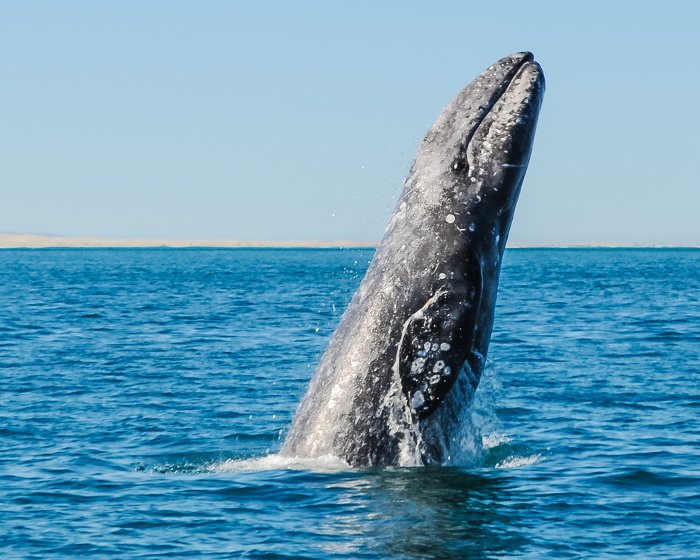
The gray whale occasionally breaches at the surface of the water
With a length of nearly 46 feet, the gray whale ranks near the bottom of the top 10 largest baleen whales.
The gray whale has a gray-colored body marked with whitish patches. It is characterized by the absence of a dorsal fin and a massive head with a slender, arched jaw topped with parasitic barnacles.
Geographic range
During summer, the gray whale migrates to cold polar waters to feed and rebuild its fat reserves. The gray whale is divided into two populations: the eastern gray whale, which frequents the coastal waters of Baja California in Mexico, and the western gray whale, which inhabits Asian waters.
Habitat
The gray whale is a pelagic marine mammal that can be found offshore in open waters. It is capable of diving to depths of more than 330 feet.
Diet
The gray whale feeds mainly on crustaceans, including amphipods and isopods, which it finds in abundance in the shallow cold waters near the Arctic.
Remarkably, the gray whale also captures prey living on the seafloor by scraping and filtering sediment layers using its baleen plates.
Reproduction
At birth, a gray whale calf measures about 10 to 16 feet in length and weighs around 2,200 pounds. The female gives birth to a single calf every two years after a gestation period of just over one year. She nurses the calf for nearly seven months.
Did you know ?
The term gray whale actually refers to two geographically distinct populations, and this distinction makes a major difference in terms of the threats facing these whales.
While the eastern gray whale is not currently a major conservation concern, its cousin, the western gray whale, has been classified as critically endangered since 2000, and the situation continues to worsen !
Tips for observing
The gray whale is a marine mammal and must regularly surface to breathe. Occasionally, it puts on an impressive display by breaching and leaping out of the water !
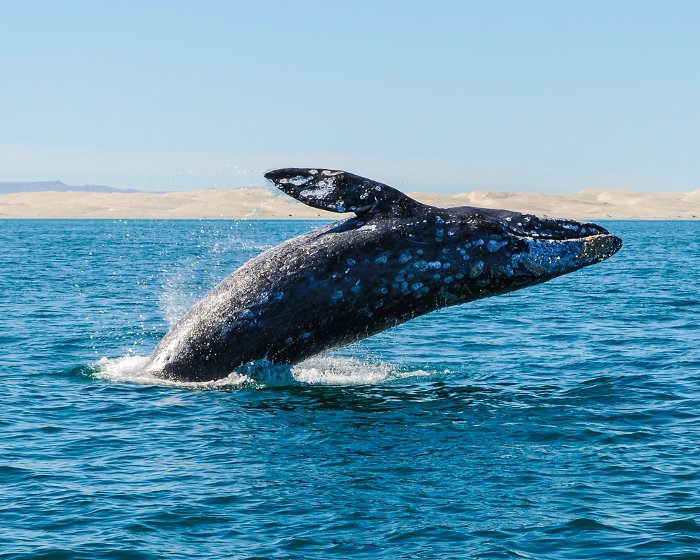
The magical moment when the gray whale breaches above the water's surface !
Discover also
Black and gold chromis
(Neoglyphidodon nigroris)
(Neoglyphidodon nigroris)
Forkbeard
(Phycis phycis)
(Phycis phycis)
Longnose hawkfish
(Oxycirrhites typus)
(Oxycirrhites typus)

Mimic surgeonfish
(Acanthurus pyroferus)
(Acanthurus pyroferus)
Redspotted hawkfish
(Amblycirrhitus pinos)
(Amblycirrhitus pinos)
Southern stingray
(Dasyatis americana)
(Dasyatis americana)
Spotgill cardinalfish
(Ostorhinchus chrysopomus)
(Ostorhinchus chrysopomus)
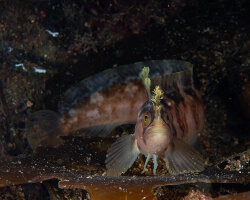
Yarrell's blenny
(Chirolophis ascanii)
(Chirolophis ascanii)
Our latestUpdates
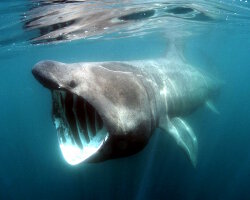
The basking sharkDiscover the basking shark (Cetorhinus maximus), the world's second-largest fish. This huge shark feeds on plankton by filtering large amounts of water.Read more
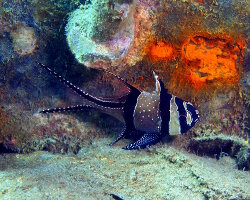
The Banggai cardinalfishDiscover the Banggai cardinalfish (Pterapogon kauderni), a small marine fish endemic to the Banggai Islands, known for its black-and-white stripes and unique reproductive behavior.Read more
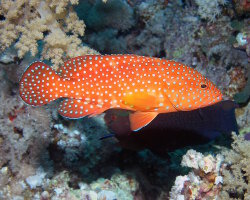
The coral hindDiscover the coral hind (Cephalopholis miniata), a colorful Indo-Pacific grouper known for its reddish-orange body covered with small blue spots.Read more
Photo of the Day
Ver de feu
(Hermodice carunculata)
(Hermodice carunculata)
 Copyright © 2007-2026 auxBulles.com - All rights reserved. Legal notices.
Photo credits - Our partners