

Sealife guideThe common dolphinDelphinus delphis
Last updated on 01/19/2026 at 11:38 PM
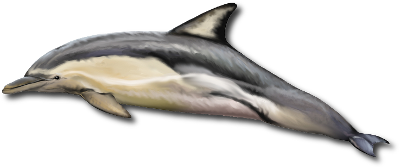
The common dolphin (Delphinus delphis)
Taxonomy
English names
Common dolphinShort-beaked common dolphinLong-beaked common dolphin
French namesDauphin communDauphin commun à petit becDauphin commun à long bec
Spanish namesDelfín común
Scientific nameDelphinus delphis (Linnaeus, 1758)
FamilyDelphinidae
OrderCetacea
ClassMammalia
Description
The common dolphin is a moderately sized dolphin species, with an average length of about 6.5 feet and a weight of around 220 lbs.
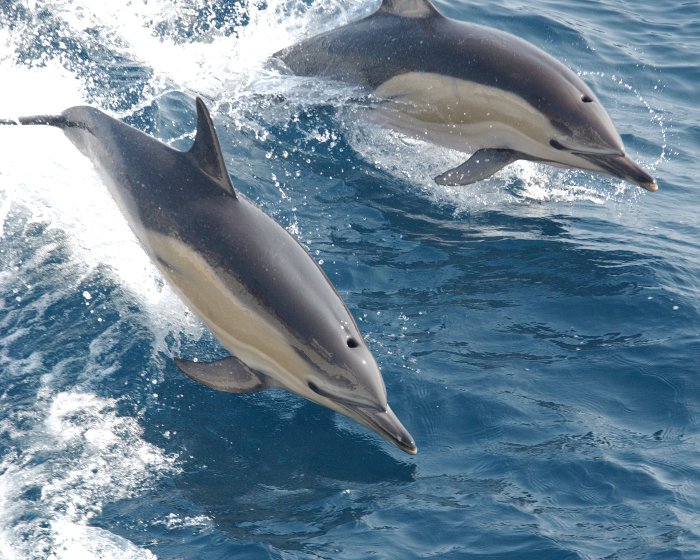
The common dolphin is recognizable by its dark bluish-gray coloration on its back and whitish flanks © NOAA
The common dolphin is recognizable by its dark bluish-gray coloration on the back and whitish flanks. Yellowish and bluish patterns form an hourglass-shaped marking along its sides. Its belly is light-colored.
The dorsal fin of the common dolphin is dark gray with a lighter area in its center.
The common dolphin has a slender overall appearance, with a streamlined melon and a long, narrow beak, also known as the rostrum.
Geographic range
The common dolphin is a widespread and abundant species in tropical and temperate waters of the Atlantic and Pacific Oceans. It is particularly common in the Mediterranean Sea as well as in the Black Sea.
The common dolphin is also found in the Sea of Japan, the Sea of Okhotsk, and the Indian Ocean, along the southeastern coast of Africa and the western coast of Australia.
Habitat
The common dolphin is a social species that travels in groups ranging from about ten to forty individuals. It mainly inhabits coastal waters but can also be found several thousand miles offshore.
Diet
The common dolphin mainly feeds on small schooling pelagic fish such as anchovies, sardines and herring, as well as squid, although its diet remains very diverse.
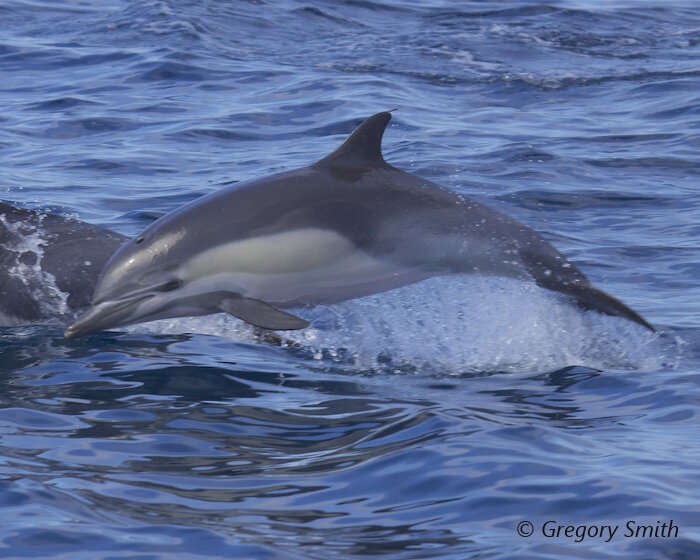
Yellowish and bluish color variations form an hourglass-shaped pattern along the sides of the common dolphin © Gregory "Slobirdr" Smith sous licence Creative Commons
Reproduction
After a gestation period of about eleven months, female common dolphins give birth to a calf during the summer season. The mother then nurses the calf for more than one year.
Did you know ?
The common dolphin can be confused with two other dolphin species with similar coloration: the striped dolphin, found in northern Mediterranean waters, and the Cape dolphin, which inhabits more tropical regions.
The common dolphin is listed as many other marine species within The IUCN Red List of threatened species. The common dolphin appears in the IUCN Red List since 2021 within the category Least Concern !
Tips for observing
The common dolphin often makes its presence known near the bow of the boat, where it may playfully perform jumps out of the water !
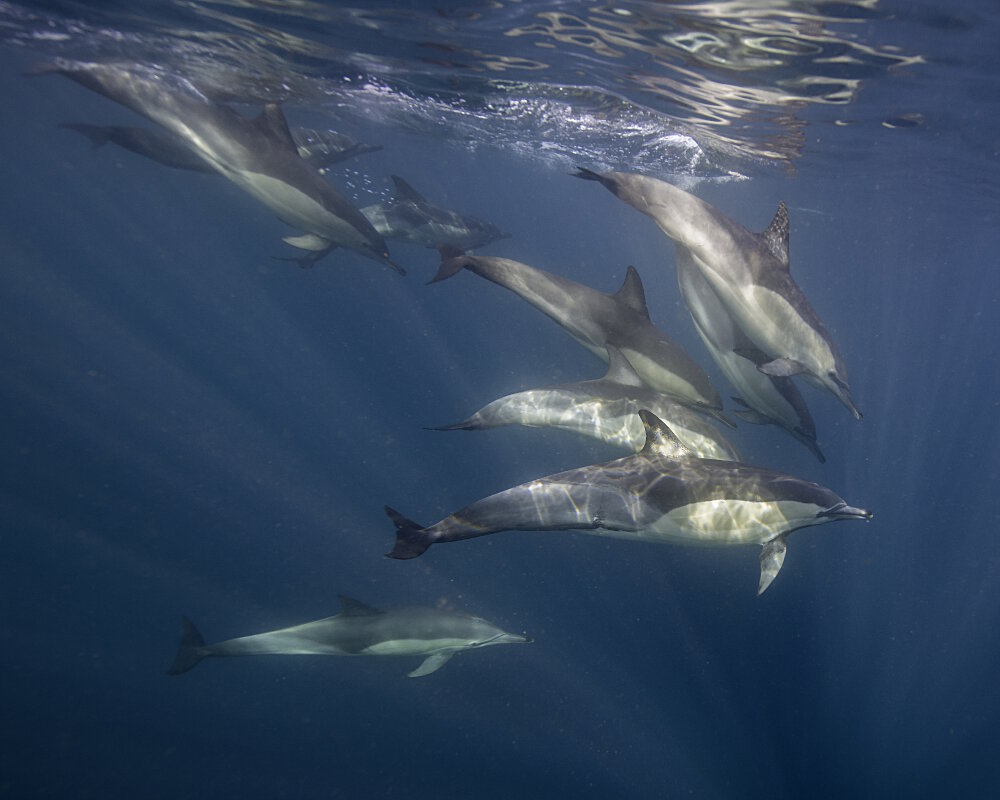
The common dolphin (Delphinus delphis) © Michael Valos | Dreamstime.com
Within the same family

Atlantic spotted dolphinStenella frontalis
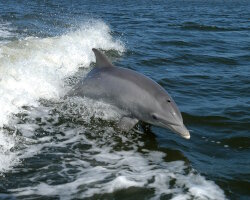
Common bottlenose dolphinTursiops truncatus

False killer whalePseudorca crassidens

Indo-Pacific humpback dolphinSousa chinensis
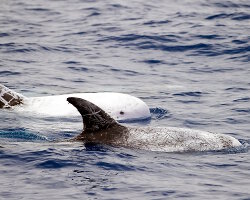
Risso's dolphinGrampus griseus

Spinner dolphinStenella longirostris
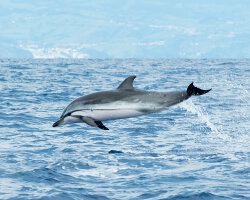
Striped dolphinStenella coeruleoalba
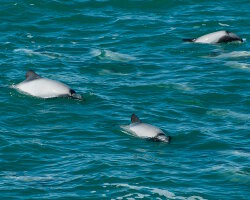
White headed dolphinCephalorhynchus hectori
Discover also
Our latestUpdates

The Guide des poissons de Nouvelle-CalédonieDiscover Guide to the Fishes of New Caledonia by Pierre Laboute and René Grandperrin, an illustrated reference featuring nearly 1,200 species, from rivers and coral reefs to the depths of the ocean.Read more
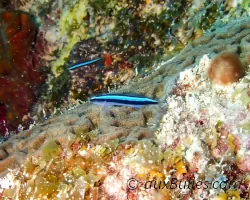
The neon gobyDiscover the neon goby (Elacatinus oceanops), a small western Atlantic reef fish known for its brilliant blue stripe and its role as a cleaner fish that removes parasites from other fish.Read more
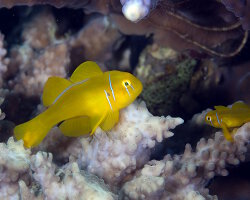
The poison gobyDiscover the poison goby (Gobiodon citrinus), a tiny reef fish with a bright yellow body and distinctive blue markings. It lives among branching Acropora corals in the tropical waters of the Indo-Pacific.Read more
Photo of the Day
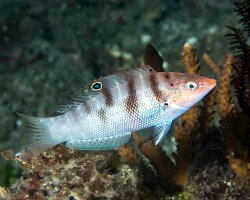
Girelle de Batu
(Coris batuensis)
(Coris batuensis)
 Copyright © 2007-2026 auxBulles.com - All rights reserved. Legal notices.
Photo credits - Our partners