Sealife guideThe dotted sea slugPeltodoris atromaculata
Last updated on 04/15/2026 at 10:18 PM
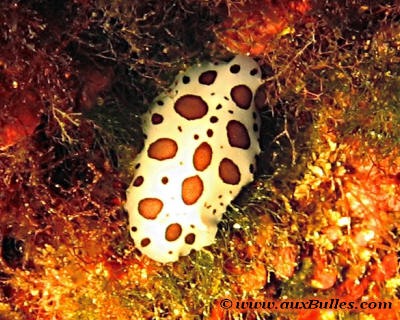
The dotted sea slug (Peltodoris atromaculata)
Taxonomy
English names
Dotted sea slug
French namesDoris dalmatienDoris maculéDoris léopard
Spanish namesVaquita suiza
Scientific namePeltodoris atromaculata (Bergh, 1880)
Description
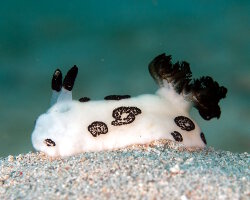
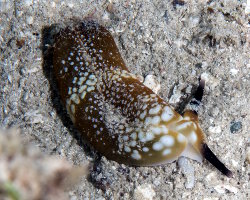
The dotted sea slug is characterized by its white body covered with numerous brownish spots of varying sizes, which gives it its nickname.
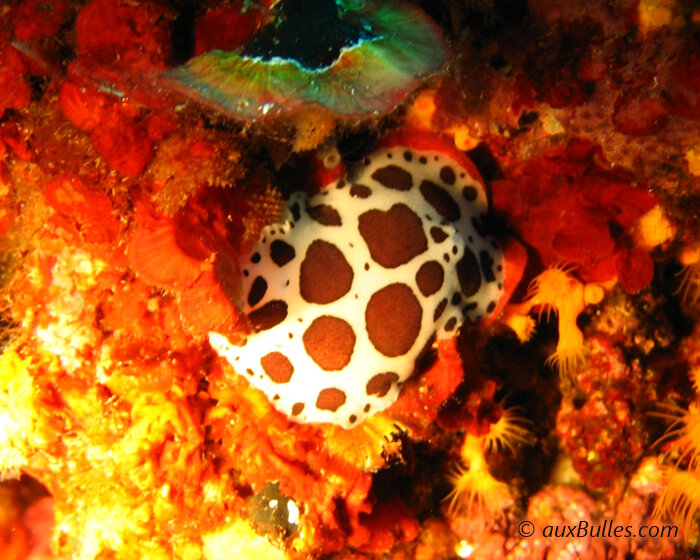
The dotted sea slug is mainly found in the Mediterranean sea on the surface of rocky substrates
The dotted sea slug has an oval shape and possesses two retractable, club-shaped rhinophores, transversely ridged, located at the front of its body, as well as eight retractable plume-shaped gills arranged in a circle around the anus. The rhinophores allow it to detect scents in the seawater and locate its food. Both the rhinophores and the gills are white, blending with its spotted body.
The dotted sea slug usually measures around 2 inches but can reach up to 4.7 inches in length.
Geographic range
The dotted sea slug is mainly found in the Mediterranean sea, but some specimens have been observed in the Atlantic ocean, particularly in areas near the Mediterranean.
It is more commonly found in temperate waters rich in sponges, its primary food source, which largely determines its geographic distribution.
Habitat
The dotted sea slug inhabits rocky substrates and can be found from the surface down to about 130 feet deep.
It is often seen under stones, in crevices, or on rocky walls covered with sponges, where it feeds and hides.
Diet
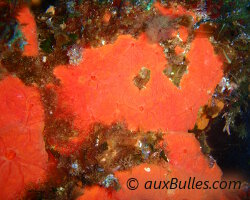
The dotted sea slug feeds exclusively on the
stony sponge (
Petrosia ficiformis), on which it is not uncommon to find several dotted sea slug together.
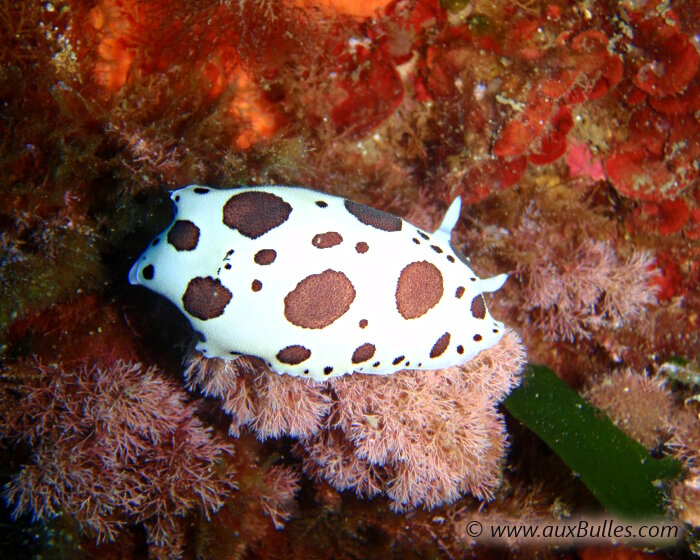
The dotted sea slug is easily recognized by its speckled coloration, which gives it its name
This dietary specialization makes the dotted sea slug dependent on the availability of this sponge, limiting the areas where it can establish itself.
Reproduction
The dotted sea slug is
hermaphroditic. Its egg laying takes the form of a coiled gelatinous ribbon, often attached to rocky substrates or
sponges and can contain several hundred eggs.
Did you know ?
The dotted sea slug belongs to the order of nudibranchs, characterized by their external plume-shaped gills.
Like many nudibranchs, it can accumulate chemical compounds from its prey to protect itself from predators.
Tips for observing
Keep your eyes open! You won't fail to spot the dotted sea slug, recognizable by its white body speckled with dark spots.
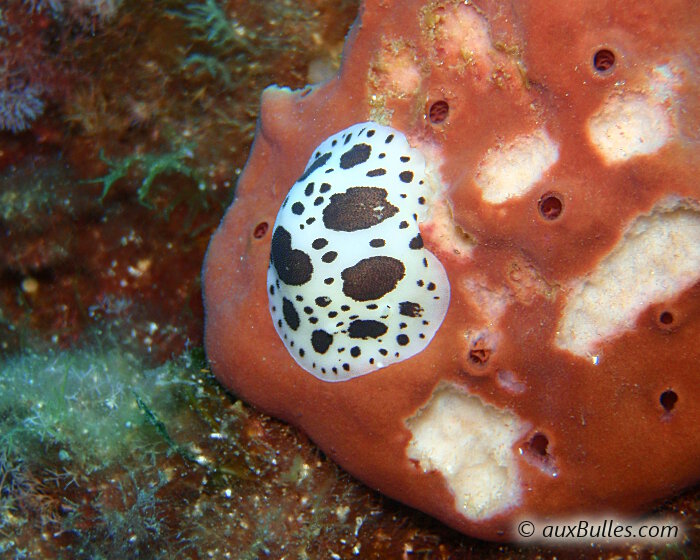
The dotted sea slug leaves traces on the sponge after grazing on it
Stay alert and you may see its plume-shaped gills at the back or its rhinophores at the front of the body, which it extends as soon as any danger has passed.
Within the same family
Discover also
The marine species in the Mediterranean Sea