

Sealife guideHammerhead sharksSharks
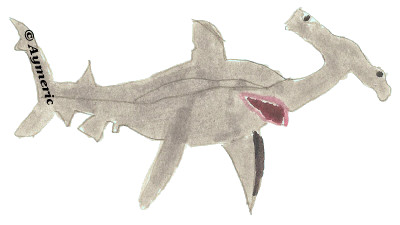
The hammerhead shark © Aymeric
Classification
- Common name: Hammerhead shark
- French name: Requin marteau
- Scientific name: 11 species of hammerhead sharks
- Family: Sphyrnidae
- Order: Carcharhiniformes
- Class: Elasmobranchs
There are 11 species of hammerhead sharks grouped within the Sphyrnidae family, namely:
- the great hammerhead shark [Sphyrna mokarran]
- the whitefin hammerhead shark [Sphyrna couardi]
- the smooth hammerhead shark [Sphyrna zygaena]
- the scalloped bonnethead shark [Sphyrna corona]
- the scoophead shark [Sphyrna media]
- the scalloped hammerhead shark [Sphyrna lewini]
- the small-eyed hammerhead shark [Sphyrna tudes]
- the winghead shark [Eusphyra blochii]
- the bonnethead shark [Sphyrna tiburo]
- the Carolina hammerhead shark [Sphyrna gilberti]
- the shovelbill shark [Sphyrna alleni]
Morphology
The hammerhead shark gets its name from its flattened T-shaped head that resembles a hammer. Its eyes are located at each end of its hammer-shaped head. It has large teeth.
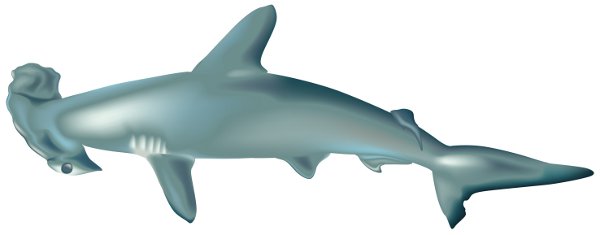
Hammerhead shark morphology © Roman Dekan | Fotolia.com
The hammerhead shark can reach more than 13 feet in length.
Geographical distribution
Hammerhead sharks live in the warm seas and oceans of the world. They can be found at depths of up to 330 feet.
Habitat
The hammerhead shark is a pelagic fish that can live either solitary, like the great hammerhead shark, or in schools, like the scalloped hammerhead shark, forming groups of up to a hundred individuals.
Diet
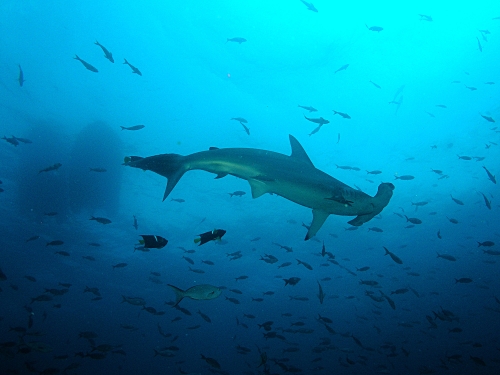
The hammerhead shark has exceptional vision © Ilan Ben Tov | Fotolia.com
With an exceptional field of vision thanks to the placement of its eyes and its sensory abilities, the hammerhead shark is a formidable hunter. It feeds on rays, tuna, crustaceans, and cephalopods.
Reproduction
The gestation period of hammerhead sharks is slightly longer than that of humans, about 9 to 12 months. They can give birth to 10 to 40 pups. At birth, young hammerhead sharks already measure about 24 inches in length.
Did you know ?
The hammerhead shark is capable of making very tight turns, tighter than other shark species.
One of the most widespread hammerhead sharks is the scalloped hammerhead shark, a species recognizable by its widely expanded T-shaped head. Found in tropical and subtropical waters worldwide, it inhabits both coastal areas and deeper waters. This medium-sized shark is known for its social behavior, sometimes forming large schools, especially around seamounts.
Featured hammerhead sharks3 species
Bonnethead shark
(Sphyrna tiburo)
(Sphyrna tiburo)
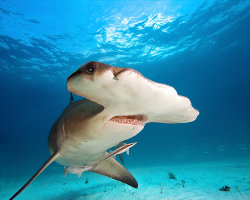
Great hammerhead shark
(Sphyrna mokarran)
(Sphyrna mokarran)

Scalloped hammerhead
(Sphyrna lewini)
(Sphyrna lewini)
Explore other sharks
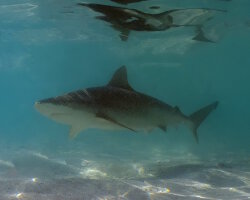
Blacknose shark
(Carcharhinus acronotus)
(Carcharhinus acronotus)
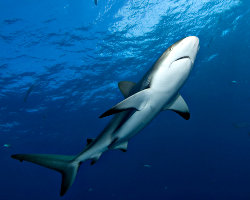
Caribbean reef shark
(Carcharhinus perezi)
(Carcharhinus perezi)
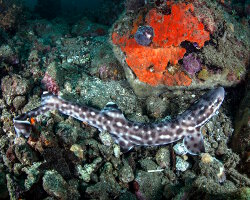
Coral catshark
(Atelomycterus marmoratus)
(Atelomycterus marmoratus)
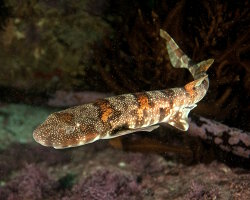
Dark shyshark
(Haploblepharus pictus)
(Haploblepharus pictus)
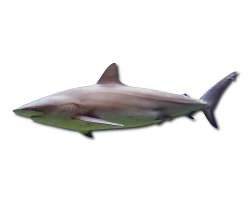
Dusky shark
(Carcharhinus obscurus)
(Carcharhinus obscurus)
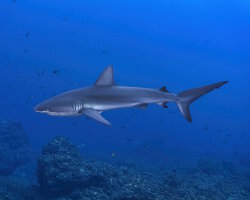
Galapagos shark
(Carcharhinus galapagensis)
(Carcharhinus galapagensis)
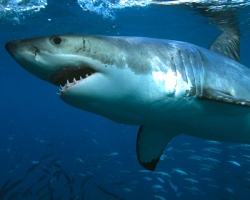
Great white shark
(Carcharodon carcharias)
(Carcharodon carcharias)
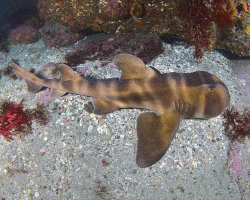
Japanese bullhead shark
(Heterodontus japonicus)
(Heterodontus japonicus)
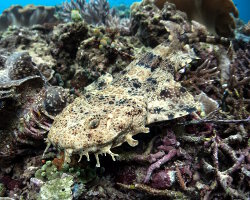
Japanese wobbegong
(Orectolobus japonicus)
(Orectolobus japonicus)
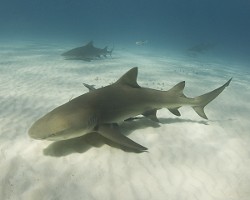
Lemon shark
(Negaprion brevirostris)
(Negaprion brevirostris)
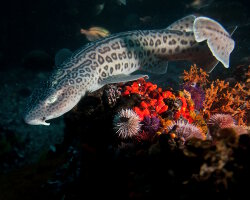
Leopard catshark
(Poroderma pantherinum)
(Poroderma pantherinum)
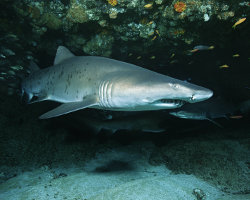
Sand tiger shark
(Carcharias taurus)
(Carcharias taurus)
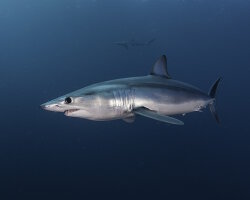
Short fin mako
(Isurus oxyrinchus)
(Isurus oxyrinchus)
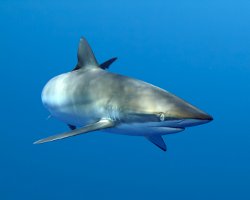
Silky Shark
(Carcharhinus falciformis)
(Carcharhinus falciformis)
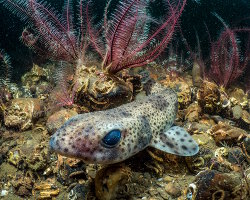
Small-spotted catshark
(Scyliorhinus canicula)
(Scyliorhinus canicula)
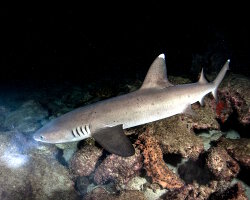
Whitetip reef shark
(Triaenodon obesus)
(Triaenodon obesus)
Our latestUpdates
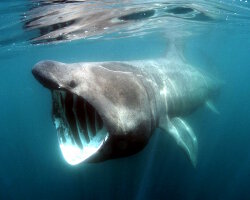
The basking sharkDiscover the basking shark (Cetorhinus maximus), the world's second-largest fish. This huge shark feeds on plankton by filtering large amounts of water.Read more
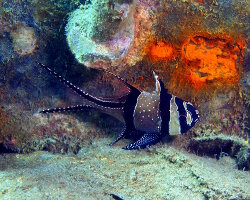
The Banggai cardinalfishDiscover the Banggai cardinalfish (Pterapogon kauderni), a small marine fish endemic to the Banggai Islands, known for its black-and-white stripes and unique reproductive behavior.Read more
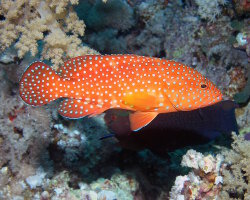
The coral hindDiscover the coral hind (Cephalopholis miniata), a colorful Indo-Pacific grouper known for its reddish-orange body covered with small blue spots.Read more
Photo of the Day
Ver de feu
(Hermodice carunculata)
(Hermodice carunculata)
 Copyright © 2007-2026 auxBulles.com - All rights reserved. Legal notices.
Photo credits - Our partners