

Sealife guideThe saucereye porgyCalamus calamus
Last updated on 03/22/2025 at 10:34 PM
Taxonomy
English names
Saucereye porgy
French namesDaubenet lotoSarde à plume
Spanish namesPluma calamoPez de plumaPluma
Scientific nameCalamus calamus (Valenciennes, 1830)
FamilySparidae
OrderPerciformes
ClassActinopterygii
Description
The saucereye porgy has an oval, laterally compressed body with coloration ranging from silvery-gray to bluish on its back, yellowish tones near the head, and slightly pinkish reflections on its flanks.
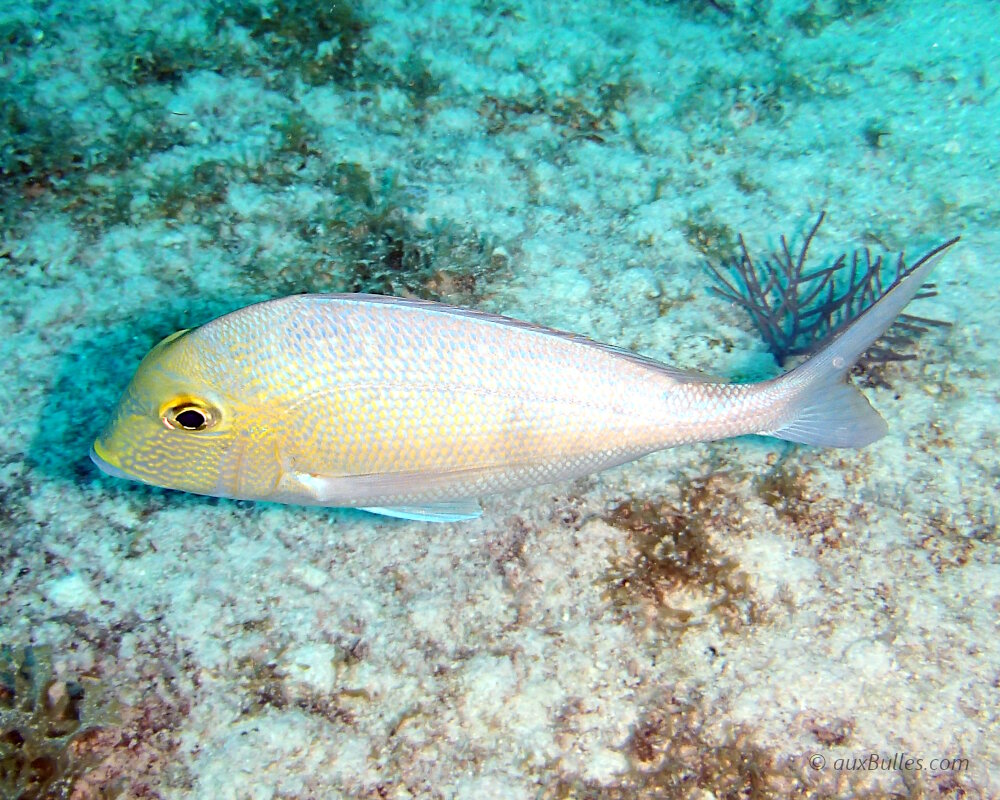
The saucereye porgy (Calamus calamus)
The saucereye porgy is a medium-sized species, typically measuring around 12 inches in length, though some individuals can reach up to 20 inches.
Geographic range
The saucereye porgy inhabits the warm waters of the western Atlantic ocean, from North Carolina down to the northern coasts of Brazil, including Florida and the Caribbean sea. It is commonly found in coral reefs around various islands, such as Guadeloupe.
Habitat
The saucereye porgy primarily dwells in rocky bottoms, coral reefs, and seagrass beds at depths ranging from 30 to 330 feet.
Diet
The saucereye porgy is an opportunistic carnivore that primarily feeds on mollusks, crustaceans, and other benthic invertebrates. With its strong teeth, it can crush the shells of bivalves and gastropods.
Reproduction
Like many members of the Sparidae family, the saucereye porgy is a protogynous hermaphrodite, meaning individuals are born female and transition to male as they age. Spawning occurs mainly in spring and summer when individuals gather in reef areas to reproduce. The eggs are then dispersed by ocean currents before hatching.
Did you know ?
The saucereye porgy is listed as many other marine species within The IUCN Red List of threatened species. The saucereye porgy appears in the IUCN Red List since 2014 within the category Least Concern !
Within the same genus
Within the same family
Discover also
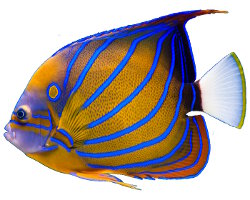
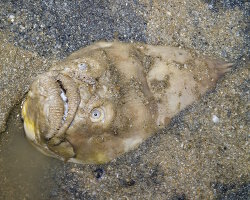
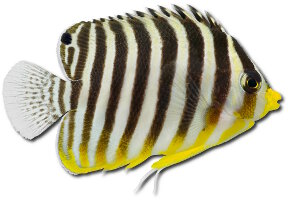
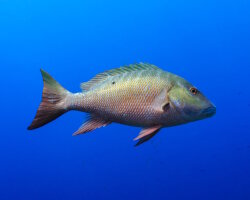
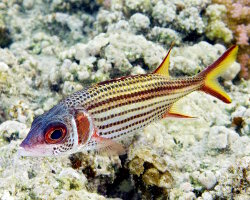
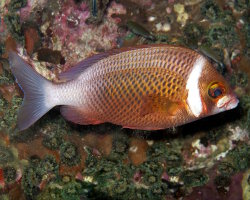
The marine species in the Northwestern Atlantic


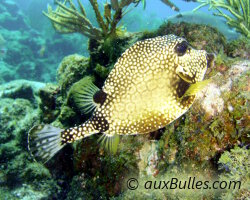
Dive centers

'Les Ilets' dive center

Noa dive center

Our latestUpdates
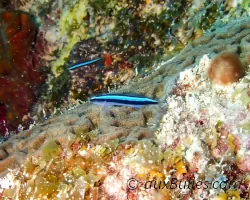
The neon gobyDiscover the neon goby (Elacatinus oceanops), a small western Atlantic reef fish known for its brilliant blue stripe and its role as a cleaner fish that removes parasites from other fish.Read more
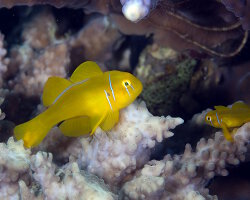
The poison gobyDiscover the poison goby (Gobiodon citrinus), a tiny reef fish with a bright yellow body and distinctive blue markings. It lives among branching Acropora corals in the tropical waters of the Indo-Pacific.Read more
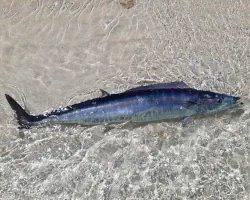
The wahooDiscover the wahoo (Acanthocybium solandri), a powerful pelagic predator found in tropical and subtropical oceans. Recognizable by its streamlined body and distinctive blue vertical stripes, it is a fast swimmer that feeds mainly on fish and squid.Read more
Photo of the Day

Fou à pieds rouges
(Sula sula)
(Sula sula)
 Copyright © 2007-2026 auxBulles.com - All rights reserved. Legal notices.
Photo credits - Our partners