Sealife guideThe map pufferArothron mappa
Last updated on 12/02/2025 at 12:40 AM
Taxonomy
English names
Map pufferMap pufferfish
French namesPoisson ballon griffonné
Spanish namesPez globo mapa
Scientific nameArothron mappa (Lesson, 1831)
Description
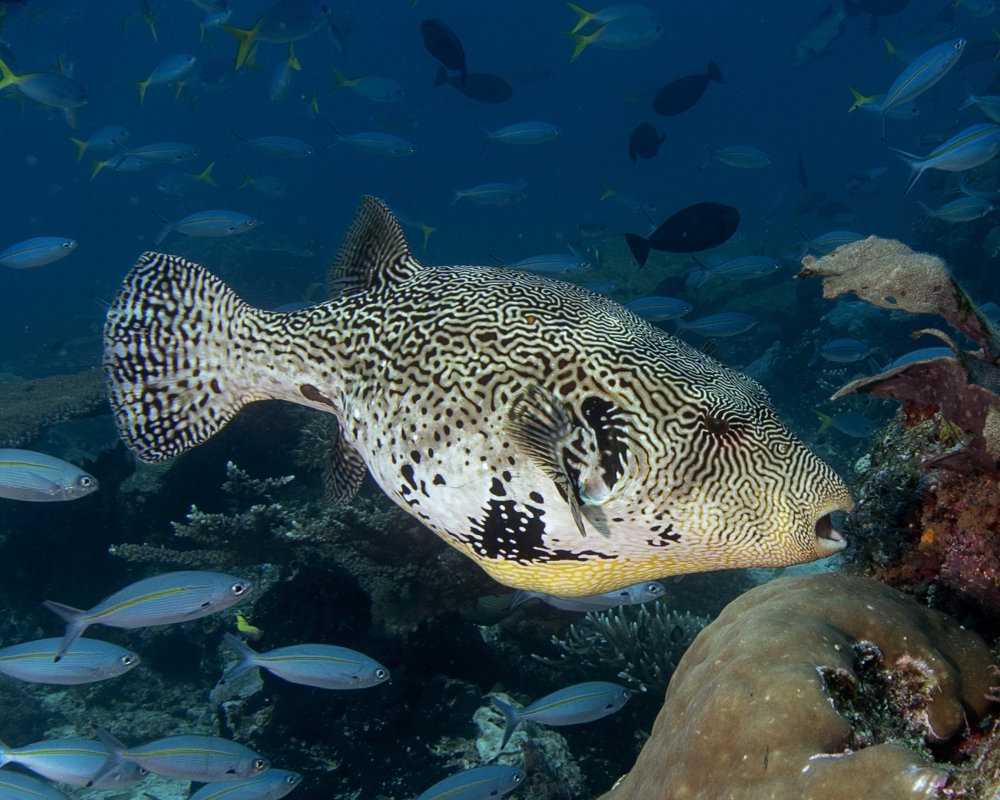
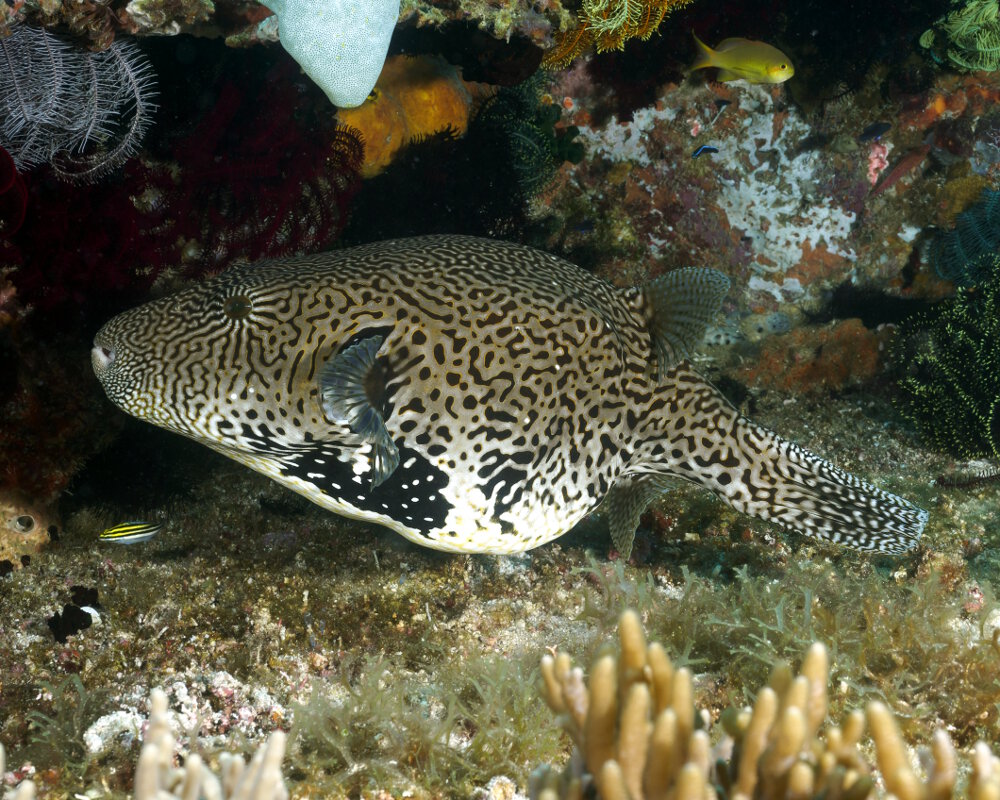
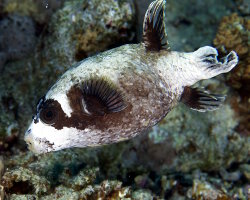
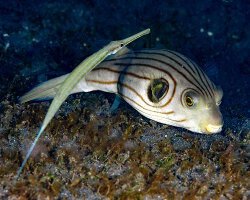
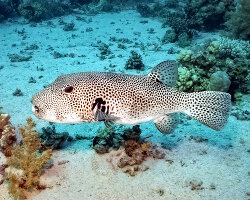
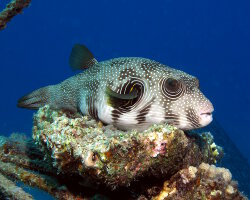
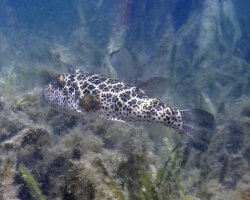
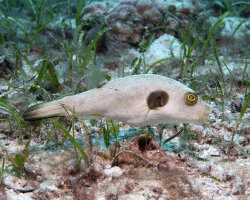
The map puffer is distinguished by its thick, rounded body, typical of pufferfish, which allows it to inflate when it feels threatened to intimidate its predators. Its thick skin is scaleless and covered with irregular patterns resembling a geographic map, which explains its name.
Its strong beak, formed by fused teeth, is perfectly suited for crushing the shells of crabs, mollusks, and other invertebrates. Its fins are short but efficient, providing excellent maneuverability rather than high speed. Finally, its prominent, mobile eyes allow it to easily detect prey and danger, making it well adapted to life on coral reefs.
The map puffer is a large fish, reaching an average adult length of about 20 inches.
Geographic range
The map puffer is a species widely distributed throughout the Indo-Pacific region, from the coasts of East Africa, notably Mozambique and South Africa, to the central Pacific islands such as Samoa. It is also found in the Indian Ocean, the Red Sea, Southeast Asia, and as far as the northern coasts of
Australia.
The map puffer is also observed farther north in certain areas of Japan, particularly around the Ryukyu Islands, and farther south toward New Caledonia and Queensland,
Australia. This wide distribution shows that the map puffer can adapt to various tropical environments, provided that coral reefs remain healthy.
Habitat
The map puffer mainly lives in coral reefs, lagoons, and reef slopes, generally at depths of up to 100 feet. It is most often seen alone, moving slowly near the bottom.
Diet
The map puffer primarily feeds on benthic invertebrates, meaning animals that live on or near the reef floor. Its diet mainly includes
crustaceans,
mollusks,
sponges, and various small organisms attached to rocks and corals. It may also occasionally consume algae.
With the help of its powerful beak, formed by fused teeth, the map puffer can crush hard shells and feed on prey that is inaccessible to many other fish.
Did you know ?
The map puffer is listed as many other marine species within The
IUCN Red List of threatened species. The map puffer appears in the
IUCN Red List since 2014 within the category Least Concern !
Within the same genus
Within the same family
Discover also
The marine species in the Indo-Pacific