

Sealife guideThe greater amberjackSeriola dumerili
Last updated on 10/29/2025 at 11:52 PM
Taxonomy
English names
Greater amberjackGreater yellowtailAmberjack
French namesSériole couronnée
Spanish namesPez de limónMedregal coronado
Scientific nameSeriola dumerili (Risso, 1810)
FamilyCarangidae
OrderCarangiformes
ClassActinopterygii
Geographic range
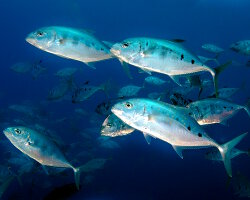
The greater amberjack is widely distributed in temperate and tropical seas around the world. It occurs in the western Atlantic, from Nova Scotia down to Brazil, including the Gulf of Mexico, Bermuda and the Caribbean sea, as well as in the eastern Atlantic, from Portugal and the Canary islands south to Angola and throughout the Mediterranean.
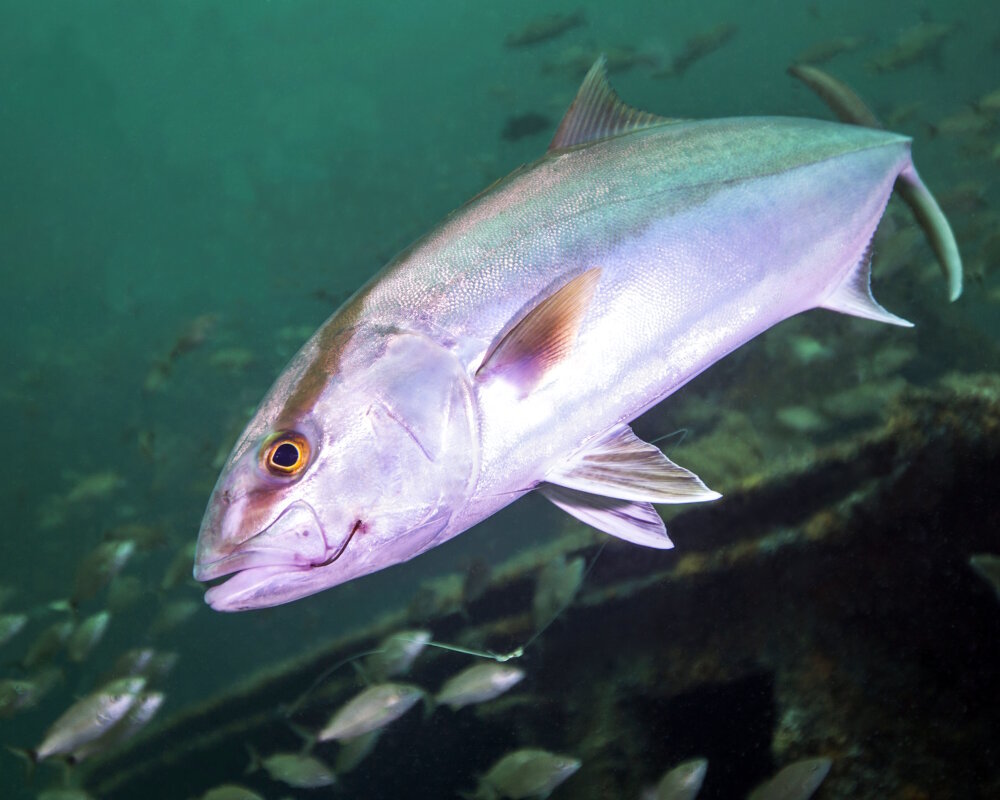
The greater amberjack (Seriola dumerili) © Michael Wood | Dreamstime.com
The greater amberjack is also found in the Indian ocean, from the east coast of Africa to the Mascarene islands, and in the Pacific ocean, from southern Japan to French Polynesia.
Habitat
The greater amberjack is a pelagic fish that prefers deep coastal areas, reef slopes and shipwrecks, typically at depths between about 200 and 1,000 feet, but it can also move closer to the surface.
Did you know ?
The greater amberjack is listed as many other marine species within The IUCN Red List of threatened species. The greater amberjack appears in the IUCN Red List since 2015 within the category Least Concern !
Within the same family
Discover also


Our latestUpdates
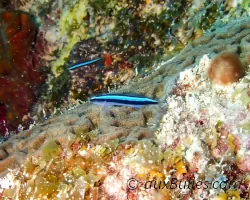
The neon gobyDiscover the neon goby (Elacatinus oceanops), a small western Atlantic reef fish known for its brilliant blue stripe and its role as a cleaner fish that removes parasites from other fish.Read more
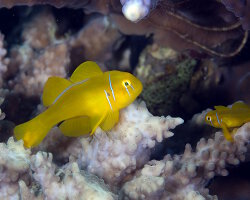
The poison gobyDiscover the poison goby (Gobiodon citrinus), a tiny reef fish with a bright yellow body and distinctive blue markings. It lives among branching Acropora corals in the tropical waters of the Indo-Pacific.Read more
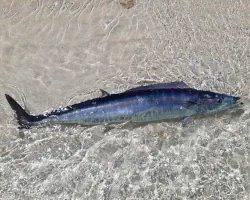
The wahooDiscover the wahoo (Acanthocybium solandri), a powerful pelagic predator found in tropical and subtropical oceans. Recognizable by its streamlined body and distinctive blue vertical stripes, it is a fast swimmer that feeds mainly on fish and squid.Read more
Photo of the Day

Fou à pieds rouges
(Sula sula)
(Sula sula)
 Copyright © 2007-2026 auxBulles.com - All rights reserved. Legal notices.
Photo credits - Our partners