Sealife guideThe Garibaldi damselfishHypsypops rubicundus
Last updated on 08/08/2026 at 01:42 AM
Taxonomy
English names
Garibaldi damselfishGaribaldi
French namesDemoiselle Garibaldi
Spanish namesJaqueta garibaldi
Scientific nameHypsypops rubicundus (Girard, 1854)
Description
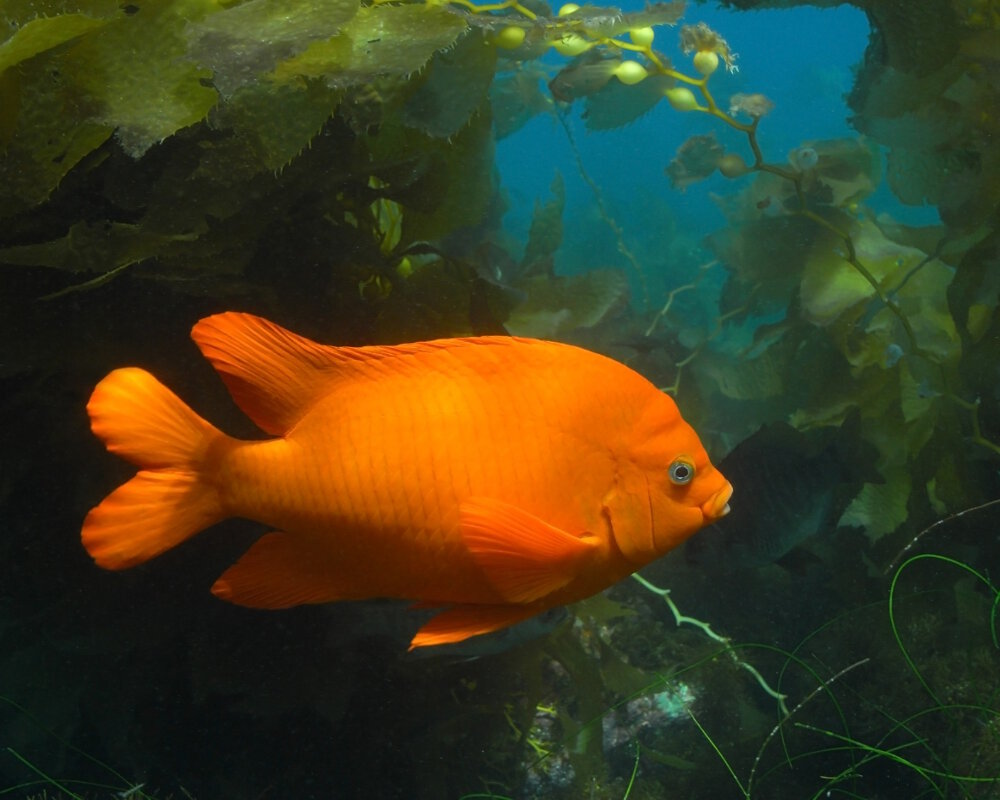
The Garibaldi damselfish is a bright orange fish with a heart-shaped tail. The juvenile Garibaldi damselfish is distinguished by its orange coloration covered with bright blue spots, as well as by its fins edged with bluish margins.
As an adult, the Garibaldi damselfish reaches a length of around 12 inches.
Geographic range
The Garibaldi damselfish is found in the waters of the eastern Pacific ocean along the coasts of California, from Monterey Bay in the north to the Baja California Peninsula in the south.
It is particularly common in the warmer waters of Southern California and around the Channel islands off the coast of Los Angeles.
Habitat
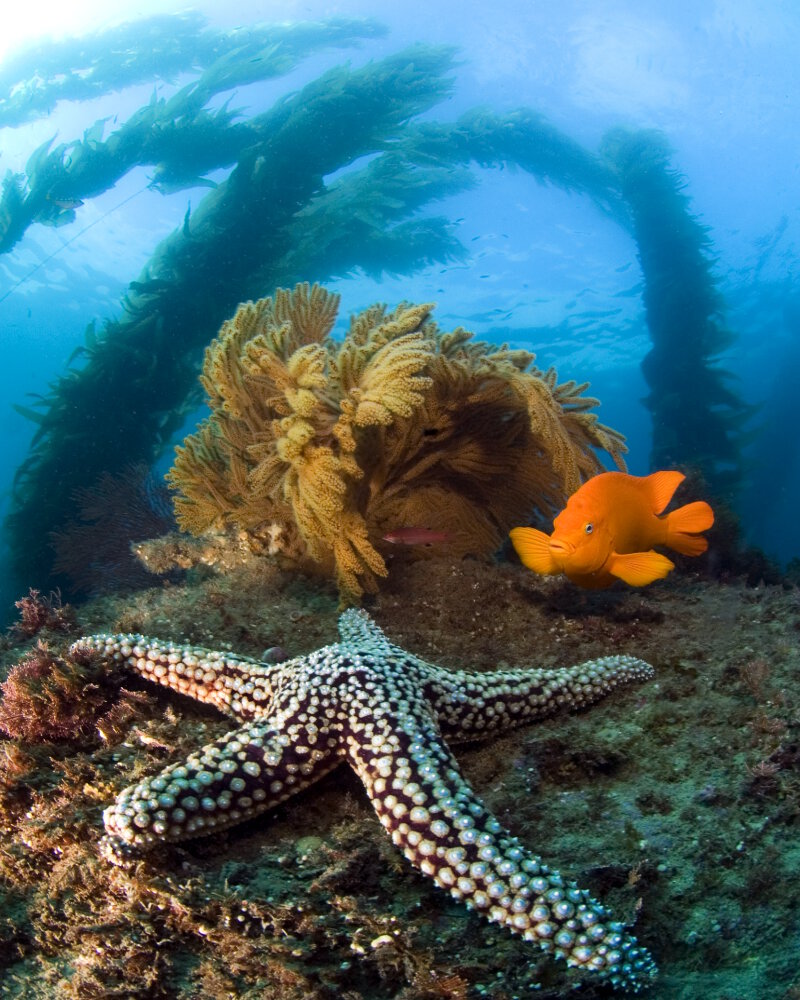
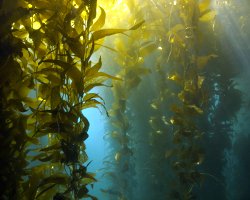
The Garibaldi damselfish inhabits giant kelp forests along the Californian coast.
The Garibaldi damselfish is a sedentary territorial fish that coexists with other individuals as long as they do not cross the boundaries of their territories. Thus, two individuals can be close to each other while each remains within its own territory !
Diet
The Garibaldi damselfish feeds on
sponges and algae growing in its rocky habitat, but also on small marine animals such as tube-dwelling
worms, small
crustaceans, nudibranchs and bryozoans.
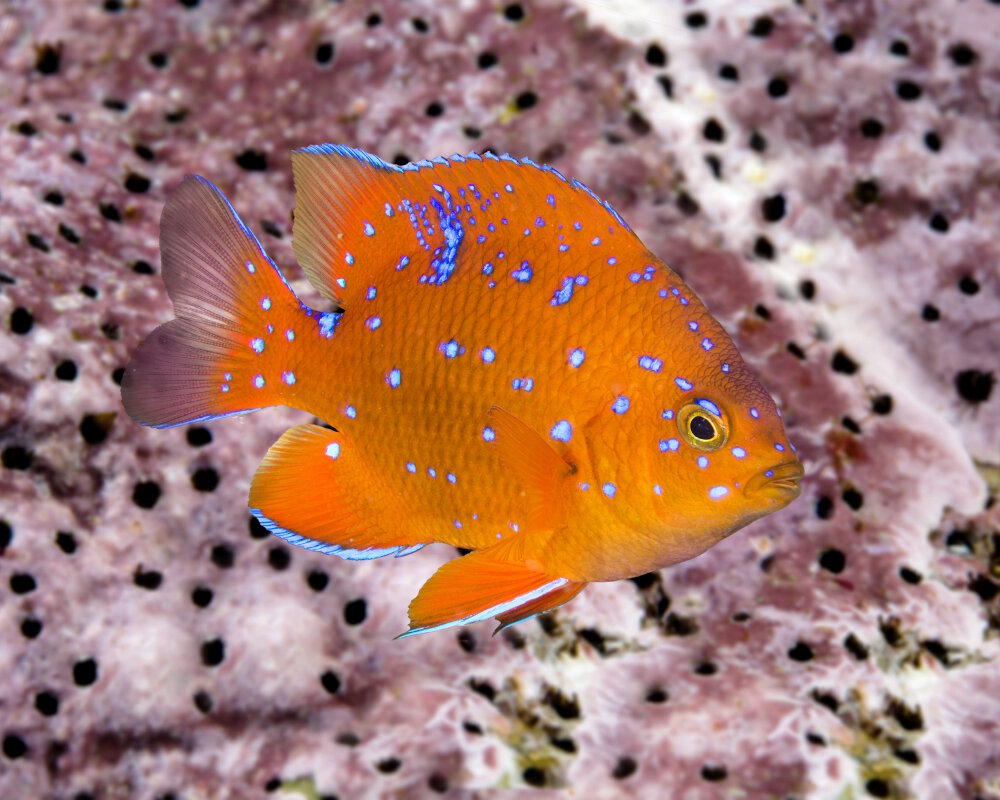
The juvenile Garibaldi damselfish is distinguished by its orange coloration covered with blue spots
© Kelpfish | Dreamstime.comIts sponge-based diet probably contributes to its bright coloration.
Reproduction
Garibaldi damselfish periodically gather in the waters above reefs, providing an opportunity for females and males to meet and choose a mate !
In spring, after selecting a suitable rocky area on the reef, the male carefully prepares the nest that will later receive thousands of eggs by removing debris, moving away wandering
sea stars or
sea urchins, and removing all plants except a few species of red algae.
The male then performs a courtship dance while producing a low-pitched sound to attract a female ready to spawn. The female searches for a nest and signals her readiness with all her fins extended.
The female is very selective and may often visit around ten nests before making her choice.
Once the eggs have been laid by the female, they are fertilized by the male. The nest can contain eggs from several females and is fiercely defended by the male against any intruder or visitor that comes too close, including divers !
Did you know ?
The Garibaldi damselfish gets its name from the Italian general Giuseppe Garibaldi, who fought for the unification of Italy and was known for wearing bright red shirts. When biologists discovered this vivid orange-red fish with a bold temperament in Californian waters, they naturally gave it his name !
Tips for observing
Do not get too close to a Garibaldi damselfish nest, otherwise the male may aggressively warn you away while defending it !
Because of its very attractive coloration, the Garibaldi damselfish is highly appreciated by aquarium enthusiasts. To protect this endemic fish species of the Californian coast, it was designated the official marine fish of California in 1995.
Within the same family
Bleeker's damsel
(Chrysiptera bleekeri)
Goldback damselfish
(Pomacentrus nigromanus)
Longfin damselfish
(Stegastes diencaeus)
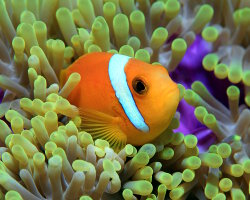
Maldive anemonefish
(Amphiprion nigripes)
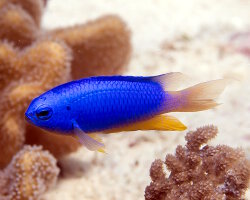
Neon damselfish
(Pomacentrus coelestis)
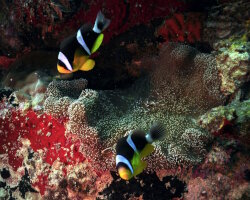
Seychelles anemonefish
(Amphiprion fuscocaudatus)
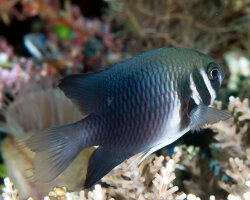
Western barhead damselfish
(Neoglyphidodon thoracotaeniatus)
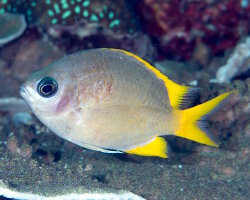
Yellow chromis
(Chromis analis)
Discover also
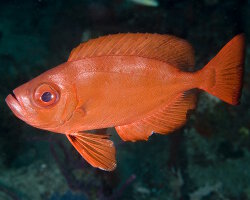
Atlantic bigeye
(Priacanthus arenatus)
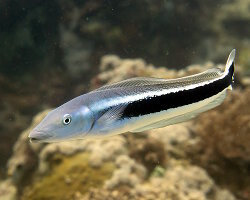
Blue tilefish
(Malacanthus latovittatus)
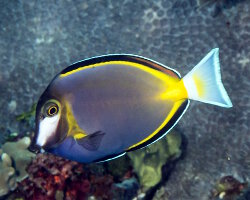
Japanese surgeonfish
(Acanthurus japonicus)
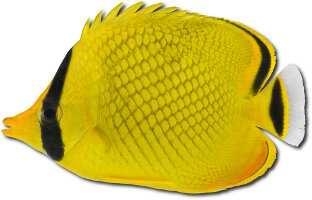
Latticed butterfly
(Chaetodon rafflesii)
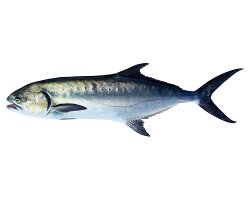
Leerfish
(Lichia amia)
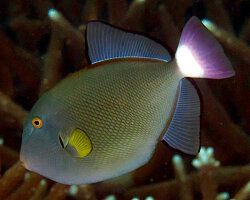
Pinktail triggerfish
(Melichthys vidua)
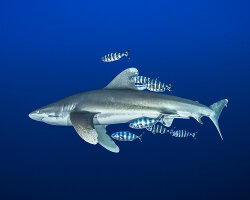
Rudderfish
(Naucrates ductor)
Splendid toadfish
(Sanopus splendidus)
The marine species in the Eastern Pacific
California sheephead
(Bodianus pulcher)
California spiny lobster
(Panulirus interruptus)
Frilled shark
(Chlamydoselachus anguineus)
Giant kelp
(Macrocystis pyrifera)
Giant tube worm
(Riftia pachyptila)
Horn shark
(Heterodontus francisci)
Mexican hogfish
(Bodianus diplotaenia)
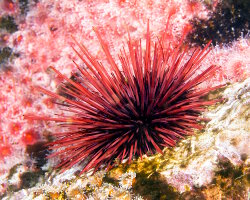
Red sea urchin
(Mesocentrotus franciscanus)