

Sealife guideThe bigeye tunaThunnus obesus
Last updated on 01/26/2026 at 11:55 PM
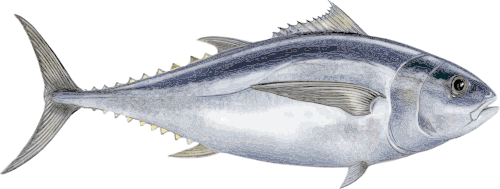
The bigeye tuna (Thunnus obesus)
Taxonomy
English names
Bigeye tuna
French namesThon obèseThon aux grands yeuxThon ventru
Scientific nameThunnus obesus (Lowe, 1839)
FamilyScombridae
OrderPerciformes
ClassActinopterygii
Description
Bigeye tuna is also known as the big-eyed tuna. It is a fish with a torpedo-shaped body, a dark metallic blue back, yellow flanks and a silvery belly.
As an adult, bigeye tuna can reach a maximum length of about 7.5 feet and a maximum weight of approximately 463 pounds.
Geographic range
Bigeye tuna is found in tropical and subtropical waters of the Atlantic, Pacific and Indian oceans. Depending on their age, bigeye tuna gradually migrate from tropical areas toward regions with more moderate water temperatures. Bigeye tuna is not present in the Mediterranean Sea.
Habitat
Like other tuna species, bigeye tuna is a pelagic fish but is found at greater depths, reaching up to 1,312 feet and occasionally as deep as 3,280 feet.
Bigeye tuna gather in schools around submerged objects, both living and moving such as whale sharks, as well as natural features such as underwater promontories and seamounts.
Diet
Bigeye tuna is a carnivorous fish and a formidable predator that hunts other fish, squids and crustaceans.
Its main predators include marine mammals, larger fish such as marlins, swordfish and sailfish, as well as sharks and seabirds that feed on tuna at different stages of their growth.
Reproduction
To reproduce, bigeye tuna migrate toward tropical waters. After birth, young tuna continue to develop in warm tropical waters before migrating to colder regions.
Did you know ?
Bigeye tuna is listed on the IUCN Red List due to the dangerous decline of populations in the Atlantic Ocean and the western Pacific Ocean caused by overfishing and the lack of sustainable management. Populations in the eastern Pacific Ocean remain low even though they are not currently overfished. Finally, only the Indian Ocean population appears to be relatively preserved.
Within the same genus
Within the same family

Discover also

Our latestUpdates
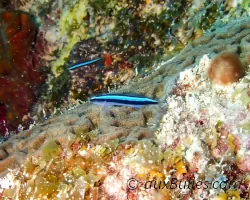
The neon gobyDiscover the neon goby (Elacatinus oceanops), a small western Atlantic reef fish known for its brilliant blue stripe and its role as a cleaner fish that removes parasites from other fish.Read more
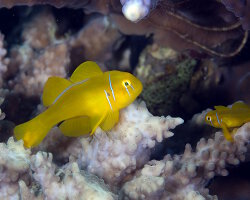
The poison gobyDiscover the poison goby (Gobiodon citrinus), a tiny reef fish with a bright yellow body and distinctive blue markings. It lives among branching Acropora corals in the tropical waters of the Indo-Pacific.Read more
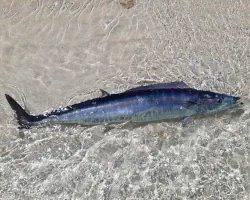
The wahooDiscover the wahoo (Acanthocybium solandri), a powerful pelagic predator found in tropical and subtropical oceans. Recognizable by its streamlined body and distinctive blue vertical stripes, it is a fast swimmer that feeds mainly on fish and squid.Read more
Photo of the Day

Fou à pieds rouges
(Sula sula)
(Sula sula)
 Copyright © 2007-2026 auxBulles.com - All rights reserved. Legal notices.
Photo credits - Our partners