

Sealife guideThe sunflower sea starPycnopodia helianthoides
Last updated on 09/25/2025 at 11:32 PM
Taxonomy
English names
Sunflower sea starSun sea star
French namesEtoile de mer soleilSoleil de merétoile de mer tournesol
Scientific namePycnopodia helianthoides (Brandt, 1835)
FamilyAsteriidae
OrderForcipulatida
ClassAsteroidea
Description
The sunflower sea star is among the largest sea stars in the world, with a diameter that can exceed 3 feet.
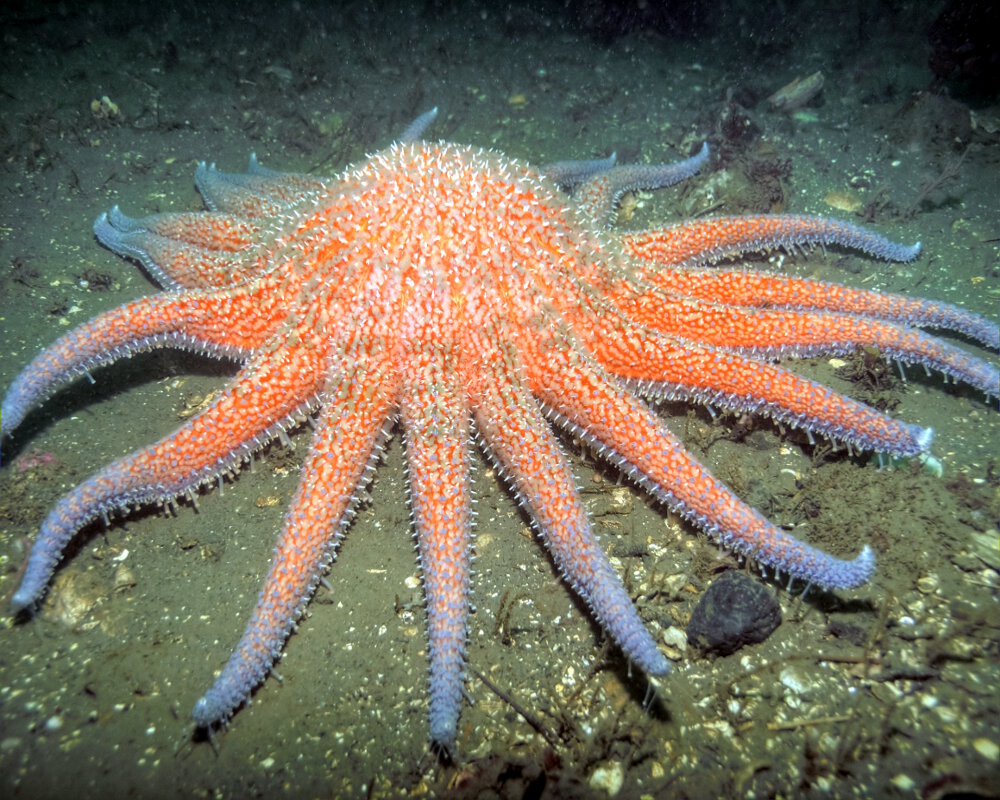
The sunflower sea star is generally purple, orange or red in color © Derek Holzapfel | Dreamstime.com
The sunflower sea star is generally purple, orange or red in color, with a rough texture caused by its numerous spines.
Like all sea stars, the sunflower sea star has a star-shaped form, but in this case with a central disk-shaped body and a greater number of arms—between 16 and 24—that radiate like a sun or a sunflower.
Geographic range
The sunflower sea star inhabits the waters of the eastern Pacific ocean along the North American coast, ranging from Alaska in the north to Baja California in the south. It is found along the coasts of California, the states of Oregon and Washington, as well as the province of British Columbia in Canada.
Habitat
The sunflower sea star prefers relatively cold, nutrient-rich waters and can be found at depths ranging from the surface down to about 300 feet. It is often found at the base of giant kelp forests, where it plays an important role in maintaining the ecosystem.
Diet
The sunflower sea star is a formidable predator that feeds mainly on mollusks, crustaceans, small fish and other marine species. It captures its prey by wrapping its arms around it and slowly moving it toward its mouth, located at the center of its underside.
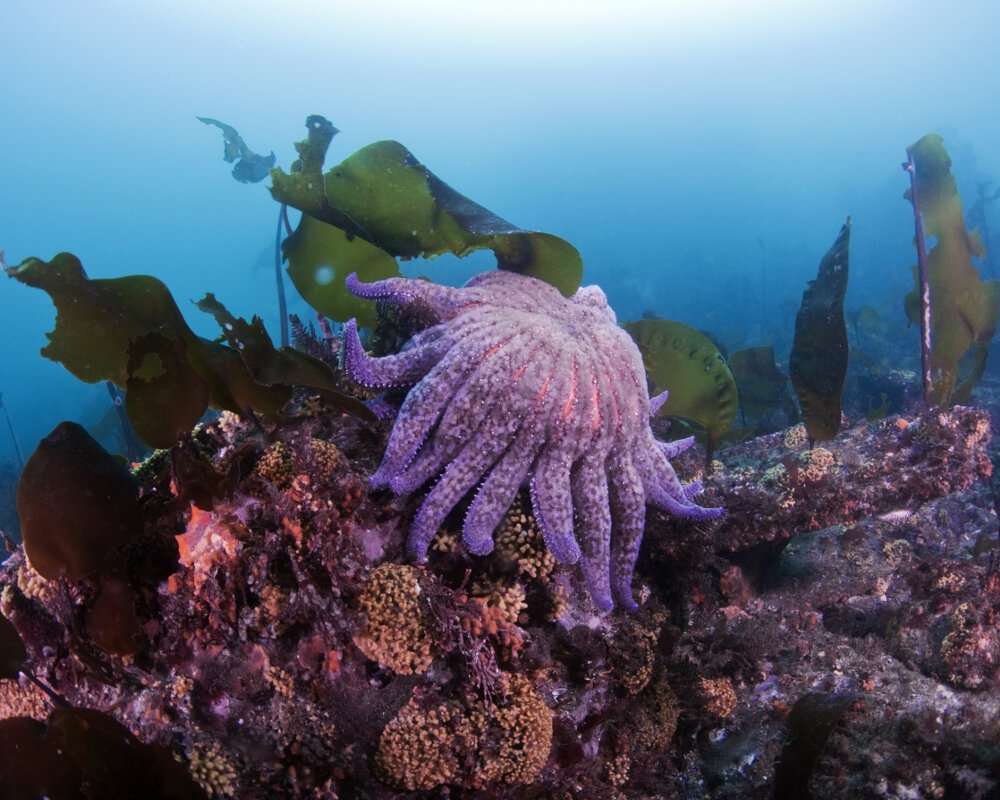
A purple sunflower sea star (Pycnopodia helianthoides) © Greg Amptman | Dreamstime.com
Reproduction
The sunflower sea star reproduces both sexually and asexually, meaning it can regenerate from a single arm, especially when injured, giving it a significant survival advantage.
Did you know ?
Unfortunately, the sunflower sea star has been severely affected by a syndrome known as sea star wasting disease (SSWD), which caused high mortality rates and a massive population decline in certain regions, making its conservation a major concern.
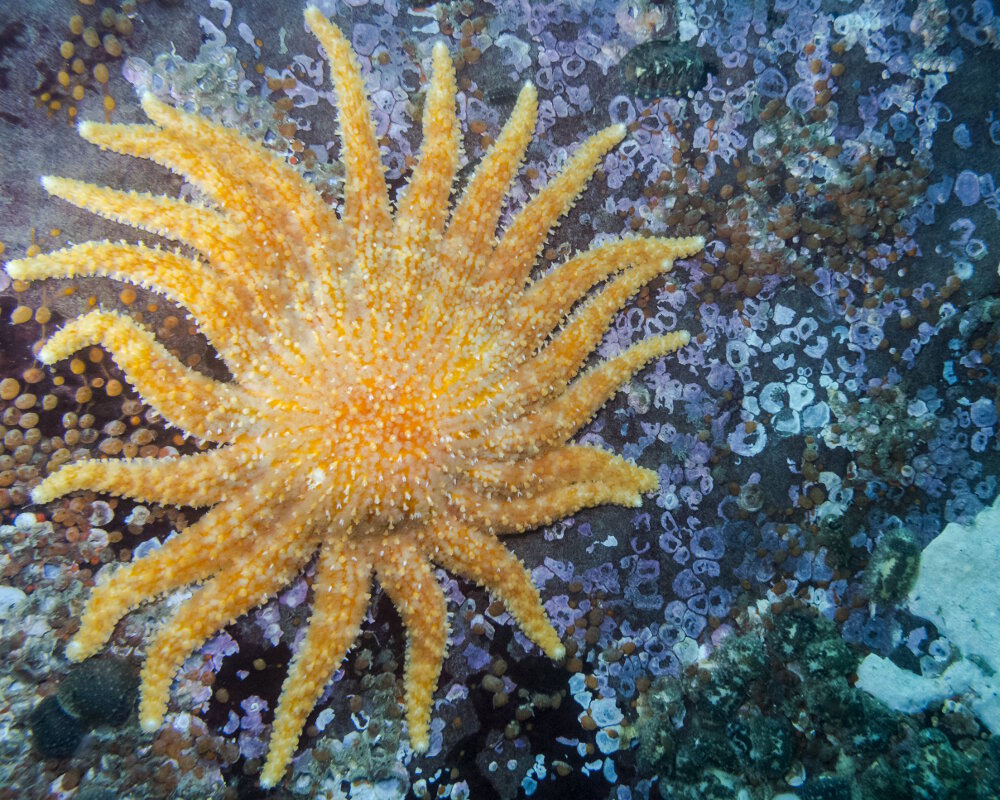
An orange sunflower sea star (Pycnopodia helianthoides) © Derek Holzapfel | Dreamstime.com
The sunflower sea star is listed as many other marine species within The IUCN Red List of threatened species. The sunflower sea star appears in the IUCN Red List since 2021 within the category Critically Endangered !
Within the same family
Discover also
The marine species in the Eastern Pacific

Our latestUpdates
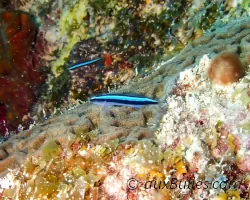
The neon gobyDiscover the neon goby (Elacatinus oceanops), a small western Atlantic reef fish known for its brilliant blue stripe and its role as a cleaner fish that removes parasites from other fish.Read more
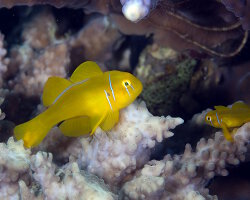
The poison gobyDiscover the poison goby (Gobiodon citrinus), a tiny reef fish with a bright yellow body and distinctive blue markings. It lives among branching Acropora corals in the tropical waters of the Indo-Pacific.Read more
The wahooDiscover the wahoo (Acanthocybium solandri), a powerful pelagic predator found in tropical and subtropical oceans. Recognizable by its streamlined body and distinctive blue vertical stripes, it is a fast swimmer that feeds mainly on fish and squid.Read more
Photo of the Day

Fou à pieds rouges
(Sula sula)
(Sula sula)
 Copyright © 2007-2026 auxBulles.com - All rights reserved. Legal notices.
Photo credits - Our partners