

Sealife guideThe arctic ternSterna paradisaea
Last updated on 01/08/2026 at 11:38 PM
Taxonomy
English names
Arctic tern
French namesSterne arctiqueSterne à longue queue
Spanish namesCharrán ártico
Scientific nameSterna paradisaea (Pontoppidan, 1763)
FamilyLaridae
OrderCharadriiformes
Description
The Arctic tern has a sleek and elegant body shape, perfectly adapted for long-distance flight. It features mostly light gray and white plumage, contrasted by a well-defined black cap during the breeding season. Its bill is slender and entirely bright red, without a black tip and its legs are also red. The tail, very long and deeply forked, extends well beyond the wings when at rest, making it an important identification feature.
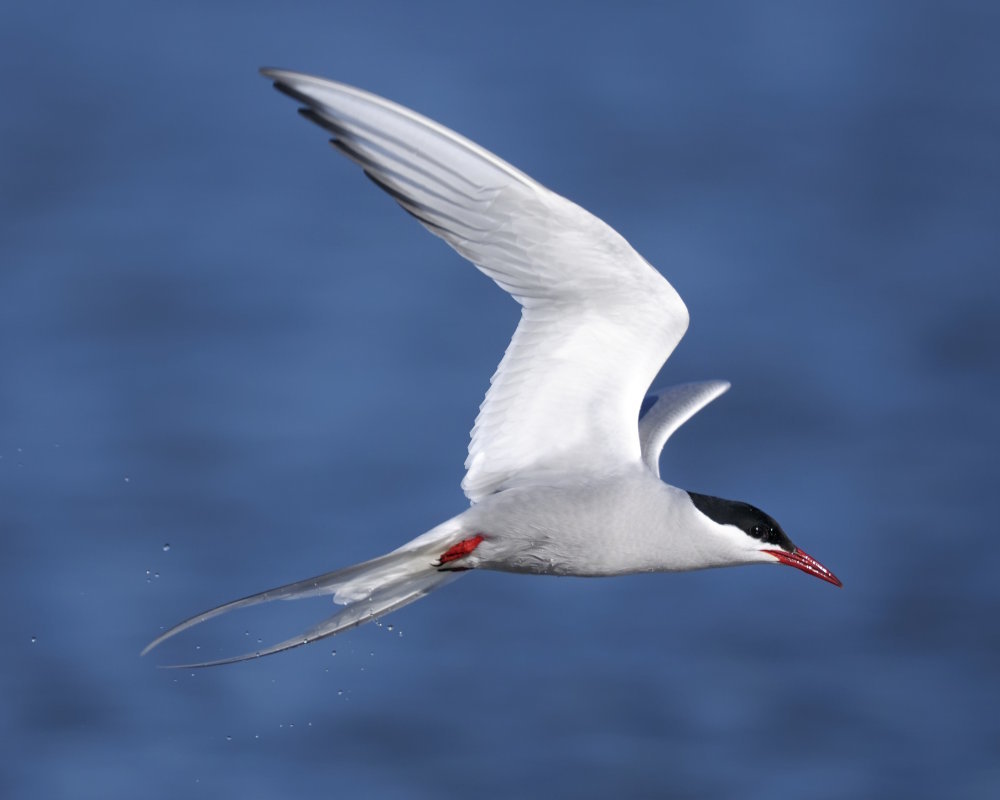
The arctic tern (Sterna paradisaea) © Hakoar | Dreamstime.com
Measuring about 13–14 inches in length with a wingspan of approximately 30–33 inches, the Arctic tern has long, narrow wings that provide exceptional aerodynamic efficiency, essential for its remarkable migrations between the Arctic and the Antarctic.
Geographic range
The Arctic tern primarily nests in the Arctic and subarctic regions of the Northern Hemisphere, along coasts, on islands and in coastal tundra areas of Europe, Asia and North America. After breeding, it undertakes a spectacular migration to the Southern Hemisphere, reaching the waters of the Antarctic where it spends the Northern Hemisphere winter.
Diet
The Arctic tern primarily feeds on small fish, supplemented by marine invertebrates. Its diet mainly includes small fish such as sand lance, juvenile herring, or capelin, as well as crustaceans and occasionally mollusks.
To catch its prey, it practices surface diving, spotting victims while hovering in the air before quickly plunging into the water. Opportunistic, its diet can vary depending on the region and availability of food, both in Arctic breeding areas and along its vast migratory routes.
Reproduction
Arctic terns breed in Arctic and subarctic regions, nesting directly on the ground, either on small coastal islands or on the mainland in open tundra areas. The pair builds a simple depression nest, sometimes lined with vegetation, shells, or small stones. The female usually lays 2 to 3 eggs, brownish and speckled, perfectly camouflaged to avoid predators.
Both parents take turns incubating the eggs for about three weeks and feeding the chicks as soon as they hatch. The young leave the nest after 3 to 4 weeks but often remain under parental protection for a few more days before flying out to the sea. To protect their nest and chicks, Arctic terns exhibit very aggressive behavior, attacking any intruders or predators that come too close.
Did you know ?
The Arctic tern travels from one pole to the other every year, from the Arctic to the Antarctic, holding the record for the longest animal migration.
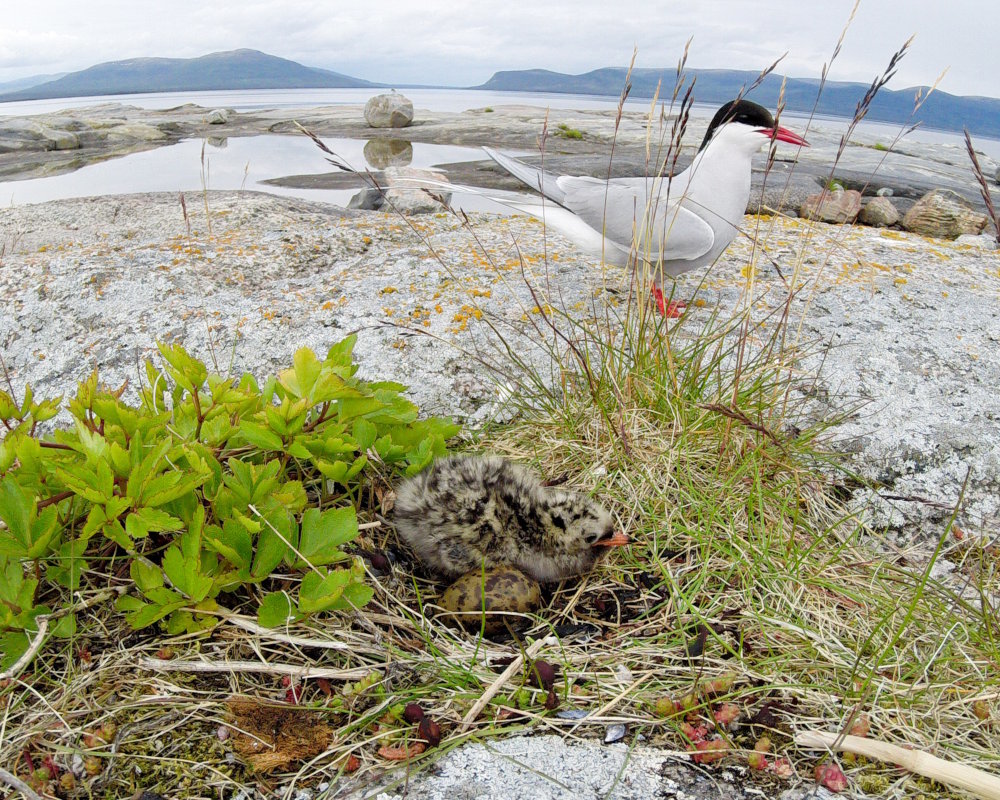
An Arctic tern next to its nest with a chick and an egg © Vasiliy Vishnevskiy | Dreamstime.com
Key distinguishing features between the Arctic and Antarctic tern
Characteristic
Arctic tern
Sterna paradisaea
Sterna paradisaea
Antarctic tern
Sterna vittata
Sterna vittata
Main distribution
Arctic
Antarctic
Migration
World record
Limited
Bill
Bright red
Red with black tip
Tail
Very long
Shorter
Plumage
Lighter
Darker
The arctic tern is listed as many other marine species within The IUCN Red List of threatened species. The arctic tern appears in the IUCN Red List since 2018 within the category Least Concern !
Within the same genus

Within the same family


Discover also


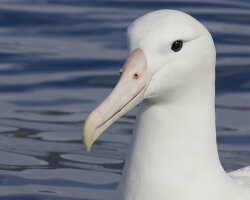

Our latestUpdates
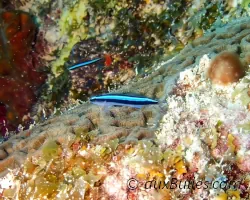
The neon gobyDiscover the neon goby (Elacatinus oceanops), a small western Atlantic reef fish known for its brilliant blue stripe and its role as a cleaner fish that removes parasites from other fish.Read more
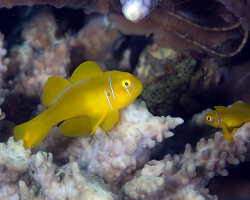
The poison gobyDiscover the poison goby (Gobiodon citrinus), a tiny reef fish with a bright yellow body and distinctive blue markings. It lives among branching Acropora corals in the tropical waters of the Indo-Pacific.Read more
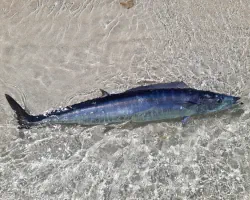
The wahooDiscover the wahoo (Acanthocybium solandri), a powerful pelagic predator found in tropical and subtropical oceans. Recognizable by its streamlined body and distinctive blue vertical stripes, it is a fast swimmer that feeds mainly on fish and squid.Read more
Photo of the Day

Fou à pieds rouges
(Sula sula)
(Sula sula)
 Copyright © 2007-2026 auxBulles.com - All rights reserved. Legal notices.
Photo credits - Our partners